
Loading cart contents...


Preparing classic trousers with cut-on waistband for fitting #F04
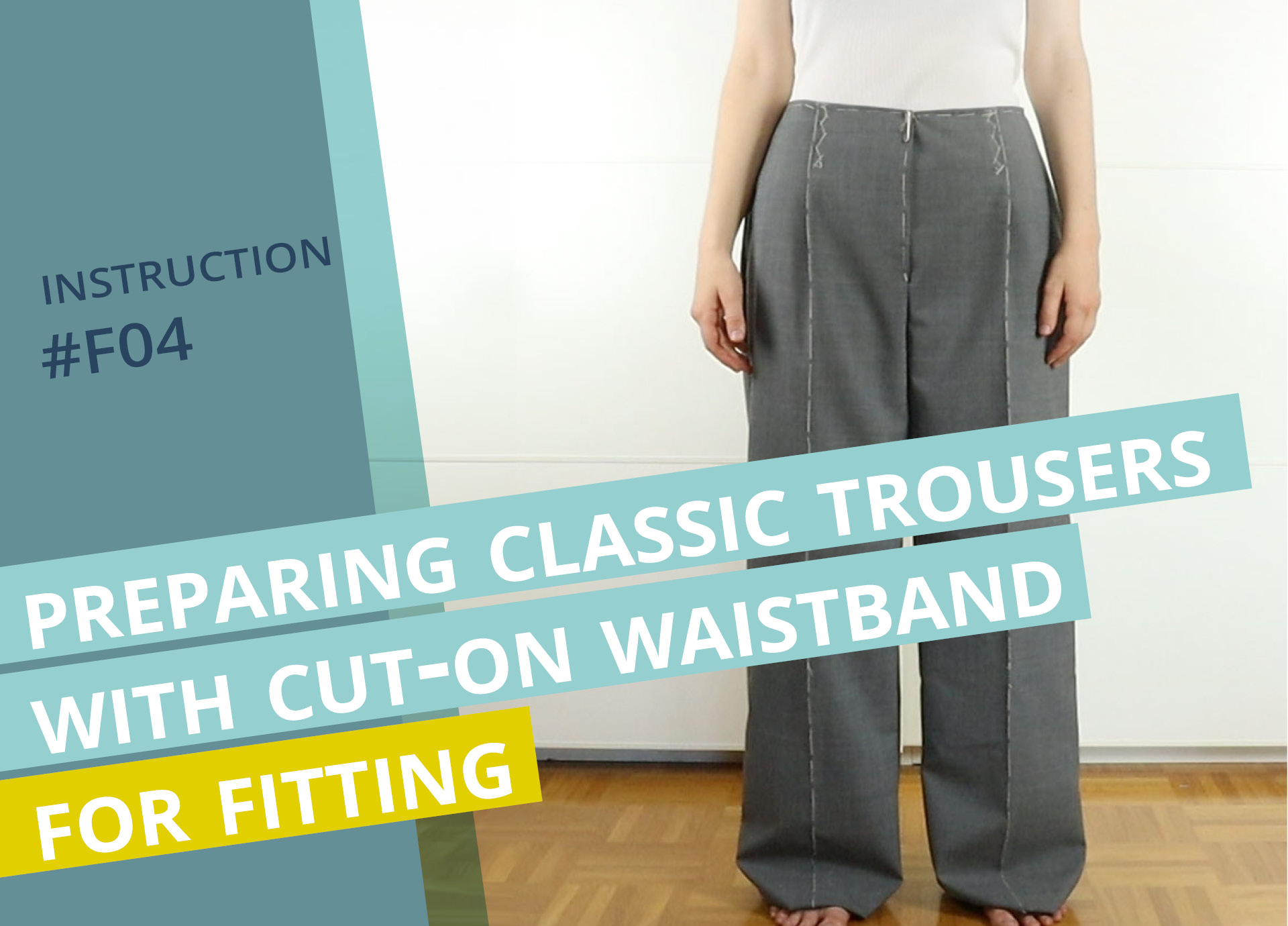
In the following step-by-step instructions, I’ll explain how I prepare a pair of classic trousers with a cut-on waistband for fitting. I will also explain how to prepare the hem if you have opted for a turn-up hem in the configuration.
Even with made-to-measure trousers, it is highly recommended that you try them on before finishing them. Customers are even ordered to come to the tailor for a fitting before they can pick up their finished garment later. Our patterns deliberately include wider seam allowances so that you can adjust them if necessary. It is important that the waistband facing is sewn on when trying on the trousers. This is the only way to give the trousers the necessary stability at the top edge and prevent them from widening when you try them on. As the trousers will be taken apart again after the fitting, I will sew the pieces together with a large machine stitch and barely lock them. However, you can also baste the seams by hand, which is particularly recommended for delicate fabrics. I wish you every success!
The video is currently only available in German. You can display the subtitle in the language of your choice via the YouTube settings.
1. This is required:
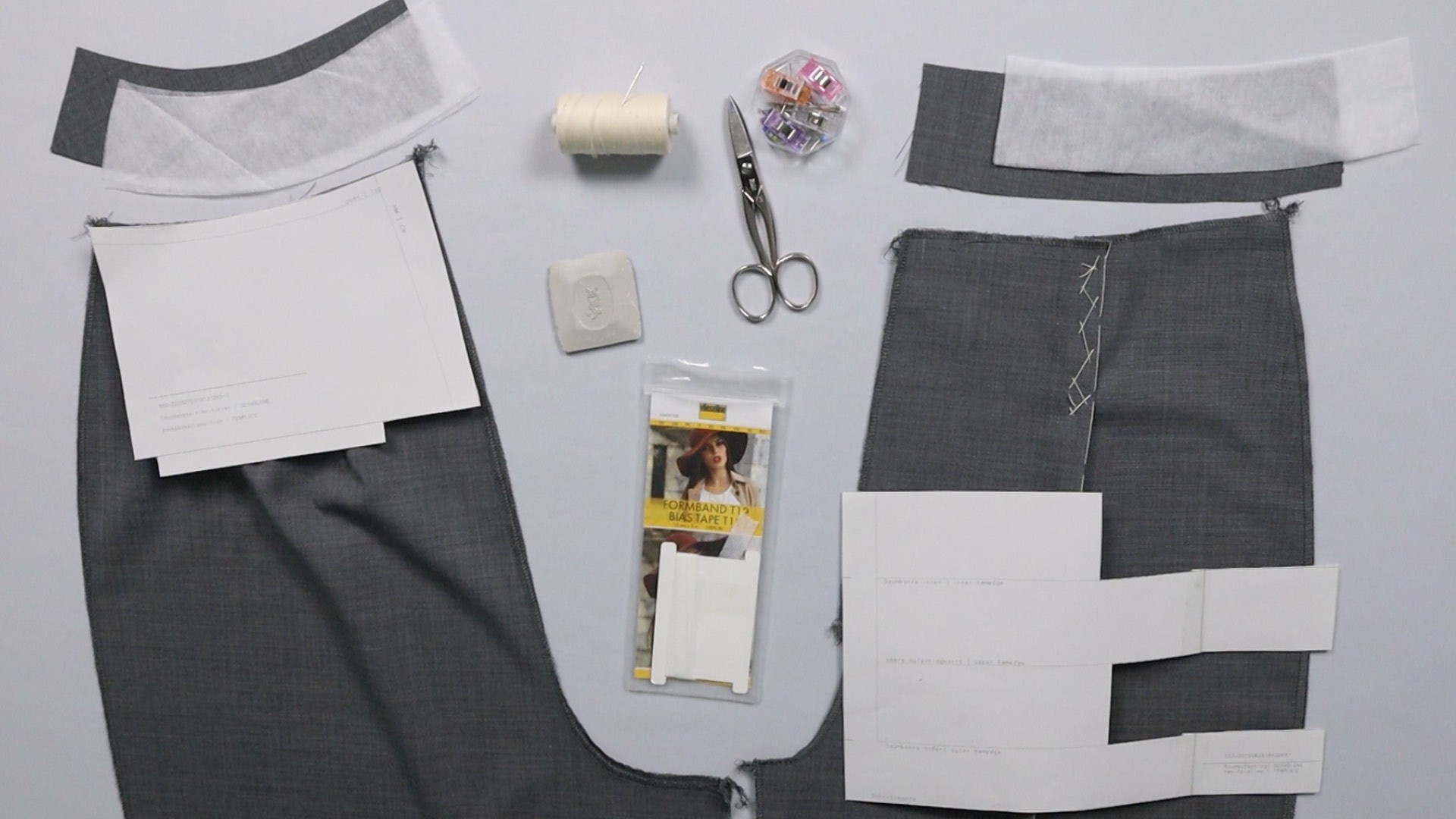
Pattern pieces made from main fabric:
- back pieces (HH) – 1 pair; the darts are already incorporated
- front pieses (VH)- 1 pair; the area for the pocket (wing pocket) is still cut for fitting.
- back waistband facing (BB HH) – 1 pair
- front waistband facing (BB VH) – 1 pair
Pattern pieces from interlining:
- Front waistband facing (EBB VH) – 1 pair
- back waistband facing (EBB HH) – 1 pair
Paper pattern pieces:
- back (HH)
- front (VH)
- front waistband facing (BB VH)
- back waistband facing (BB HH)
- if necessary, the template for the back pocket position (P-TZ HH)
- if necessary, the template for the hem turn-up (P-ZH)
Tools and aids:
- bias tape to secure the binding edge, e.g. Vlieseline T12
- pins or clips
- scissors
- chalk or marker pen
- basting thread and sewing needle if necessary
2. prepare the cut-on waistband facings
Here I am anticipating the instructions for sewing the waistband. This will save you a few work steps later on.
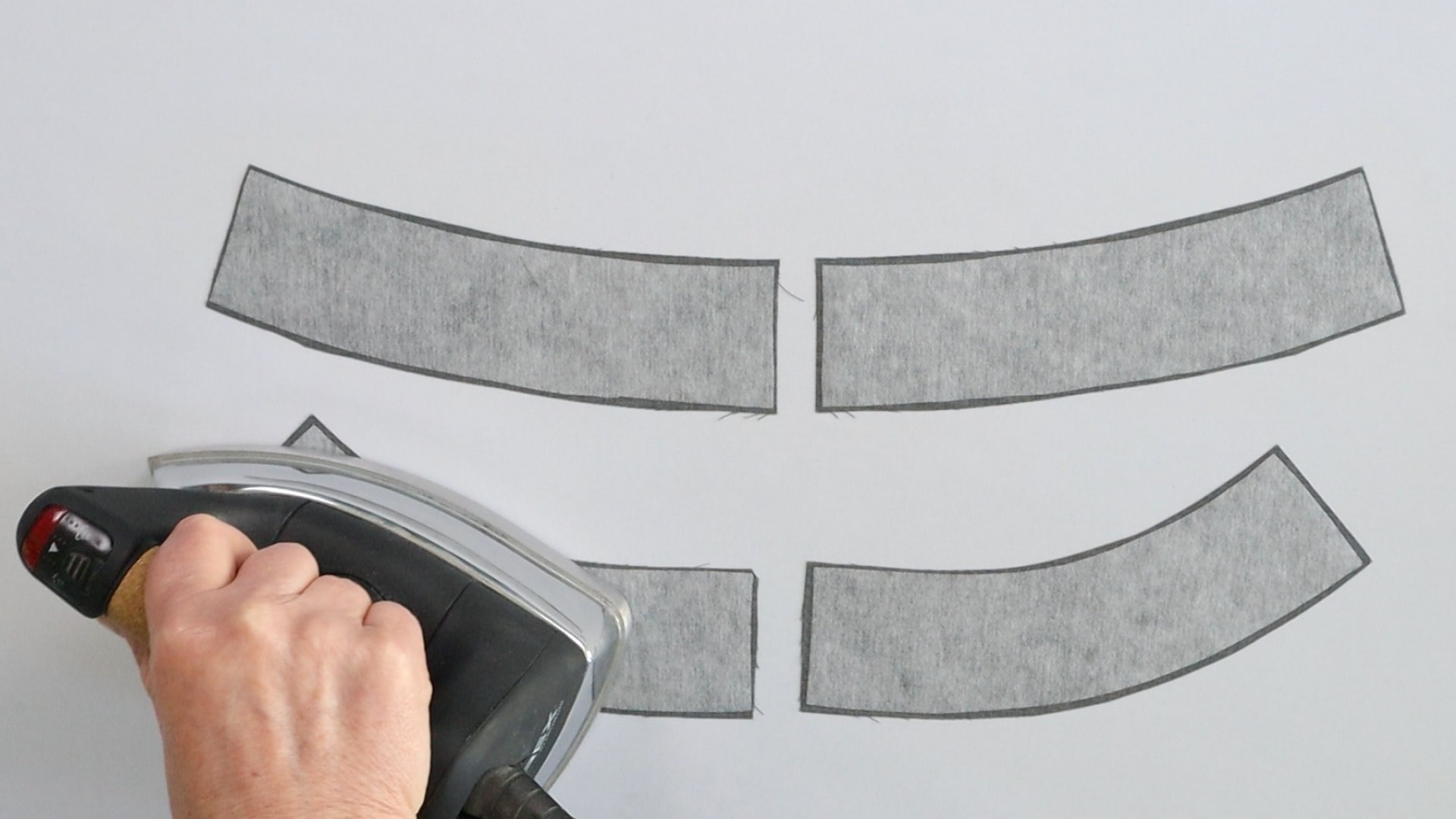
If you have not already done this when preparing the pattern pieces, first iron the interfacing onto the wrong side of the waistband facing.
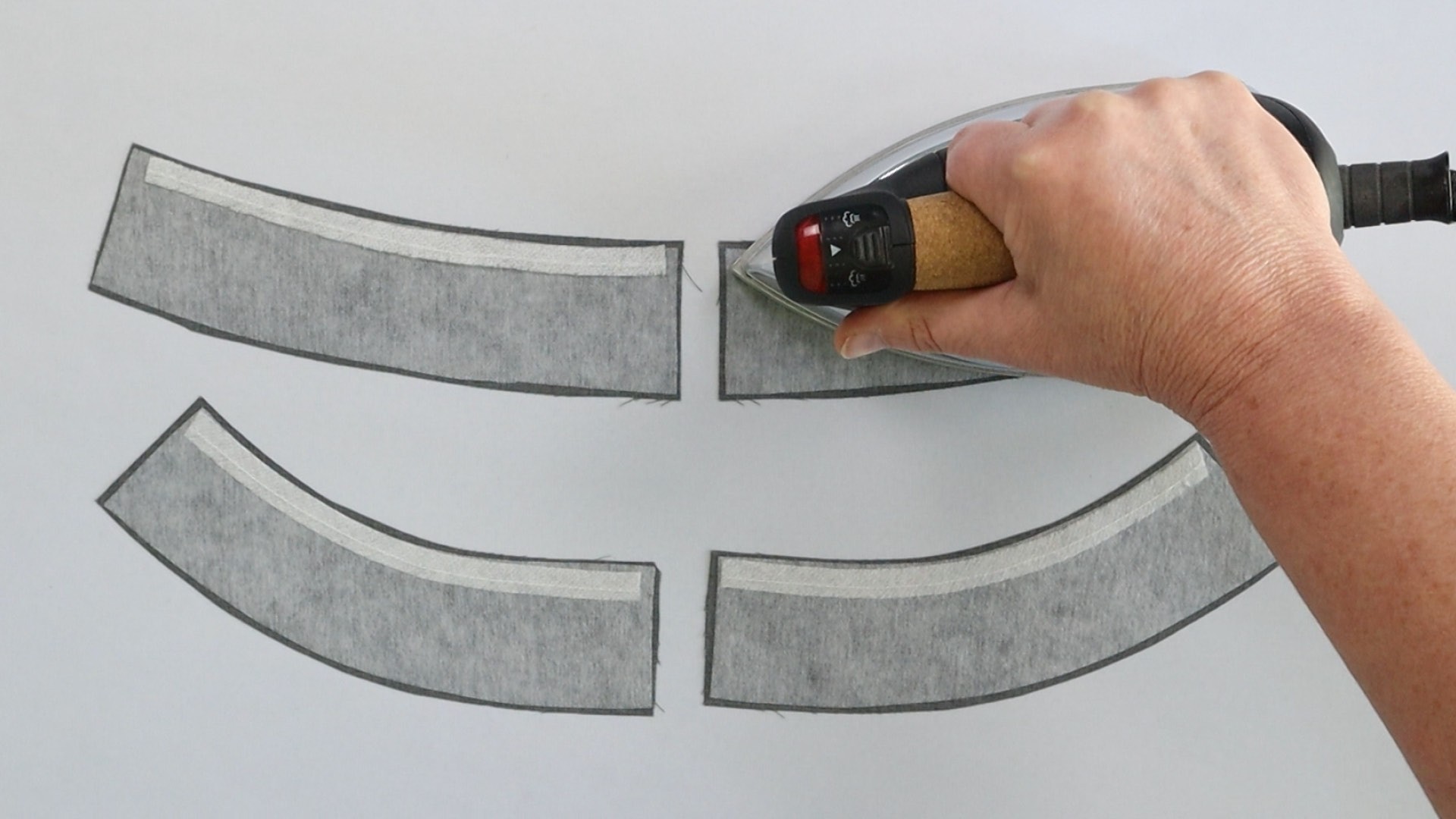
To prevent the top edge from stretching, I fix it with a bias tape, e.g. Vlieseline T12. This is easy to shape and provides additional support thanks to the thread reinforcement.
I place the tape so that the thread reinforcement is about 9 mm from the top edge – so I can sew right next to it later.
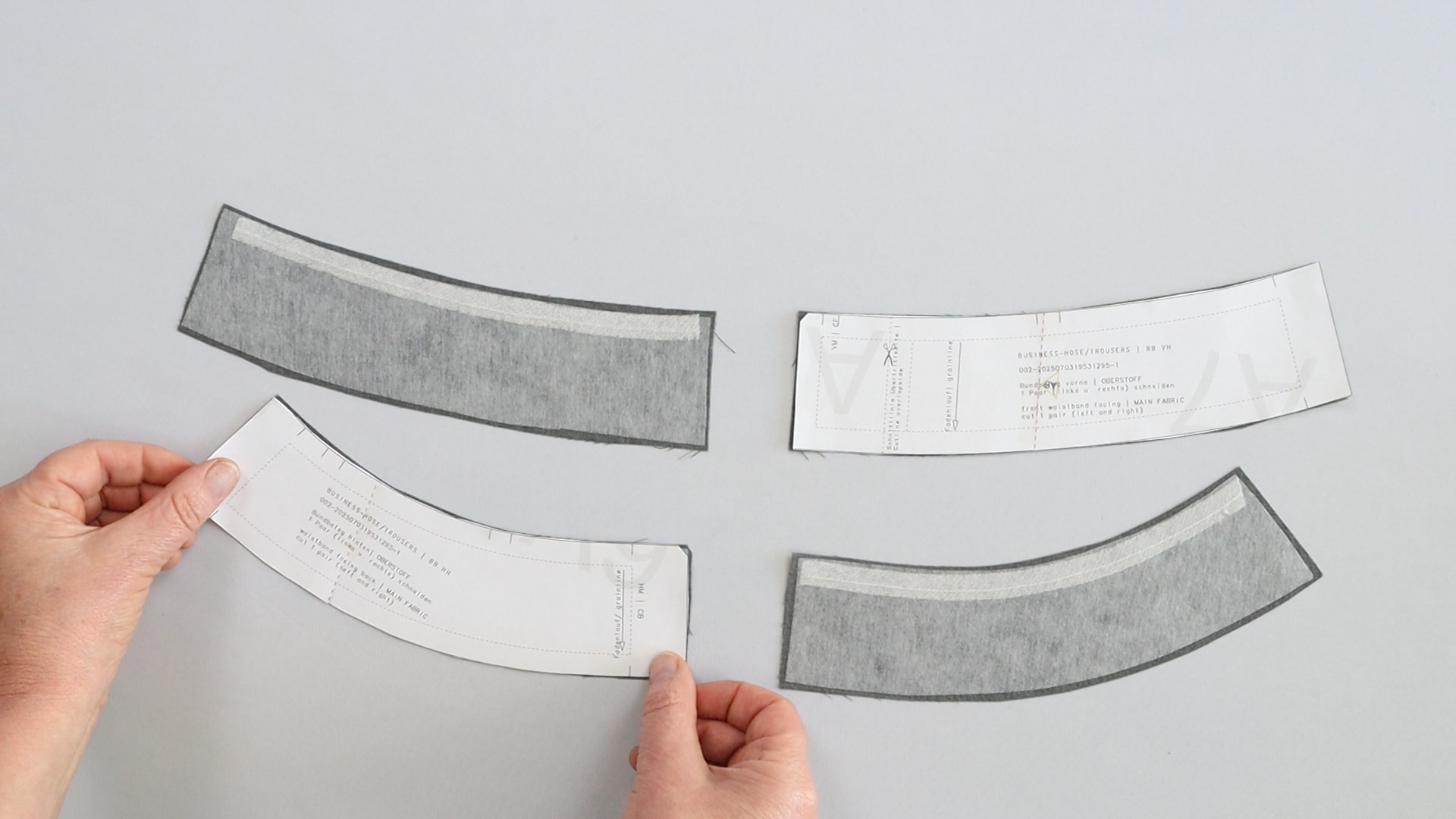
I then check that the pattern pieces have not shrunk due to ironing. At the same time, I check how much seam allowance is allowed for the side seam.
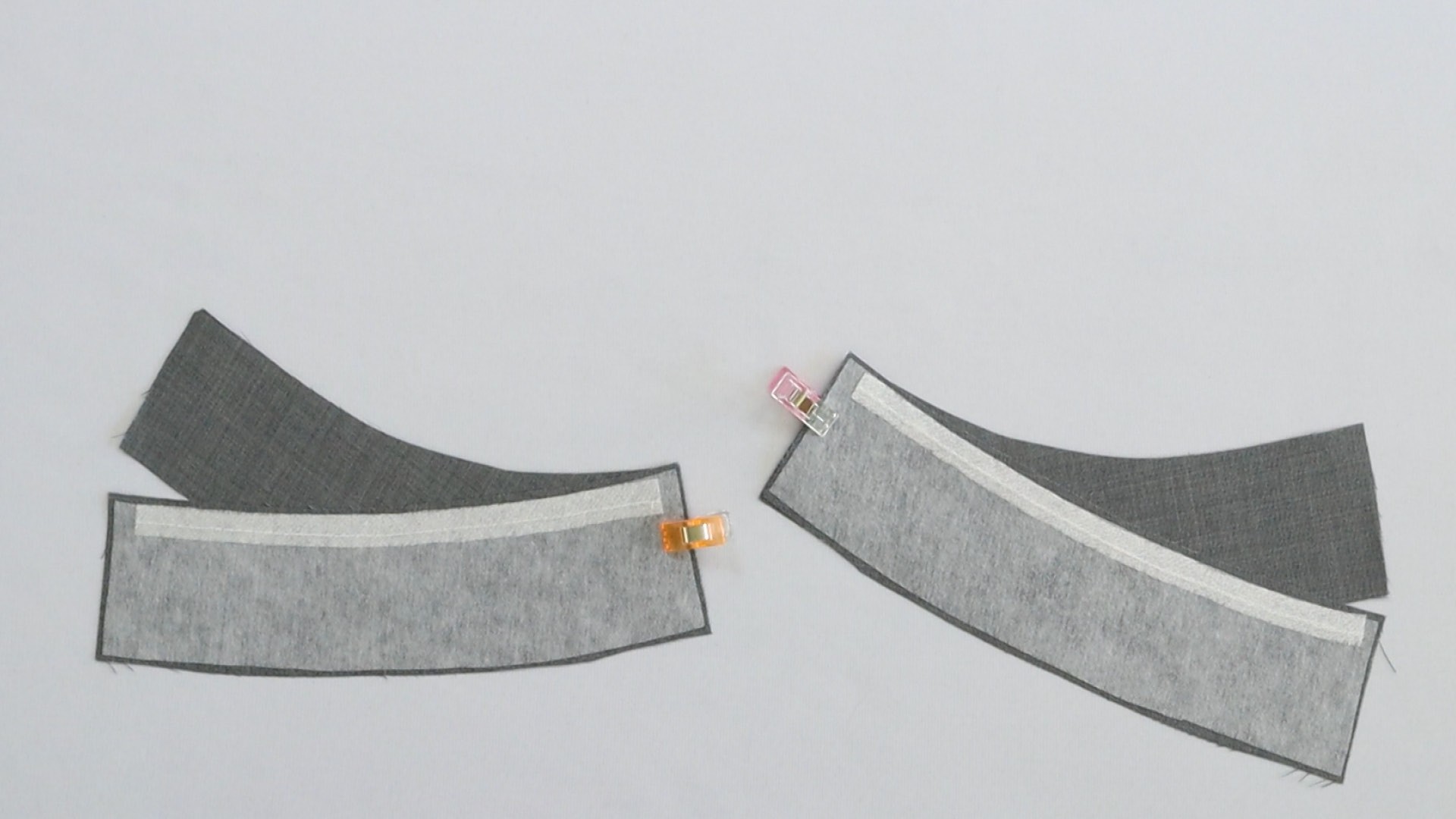
Now the back and front waistband pieces are joined at the side seam. To do this, I lay them right sides together at the side edge and pin them together.
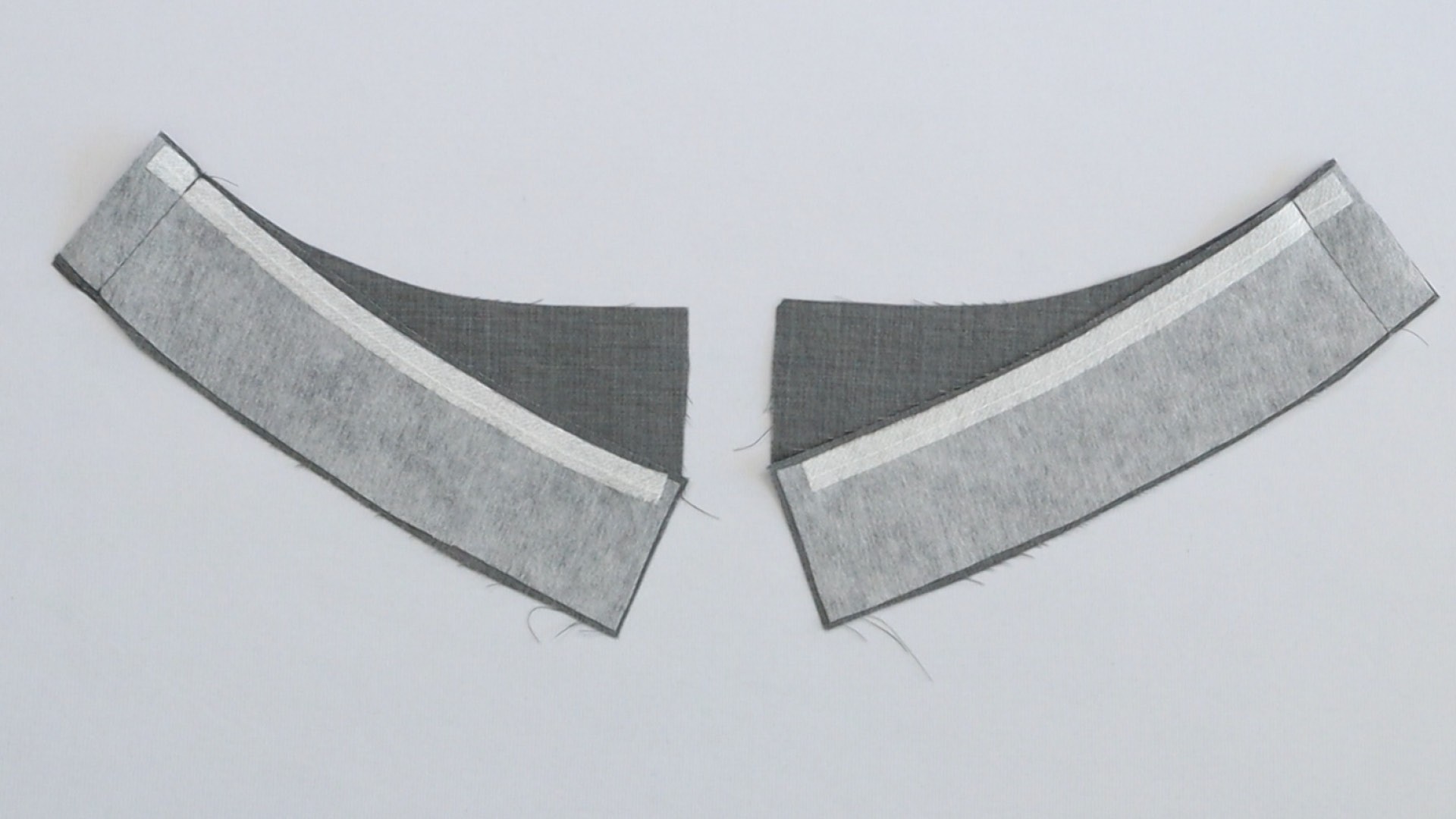
Then I sew them together with the longest possible stitch length and the intended seam width.
3. iron the back of the trousers into shape
First I iron the back trousers into shape. I have already finished the outer edges (except for the hem) with the overlock machine. You can do this at this point or later when the leg seams are closed. This is pointed out again in the corresponding instructions.
The back trouser parts are placed right sides together. I mark the knee height with a chalk line.
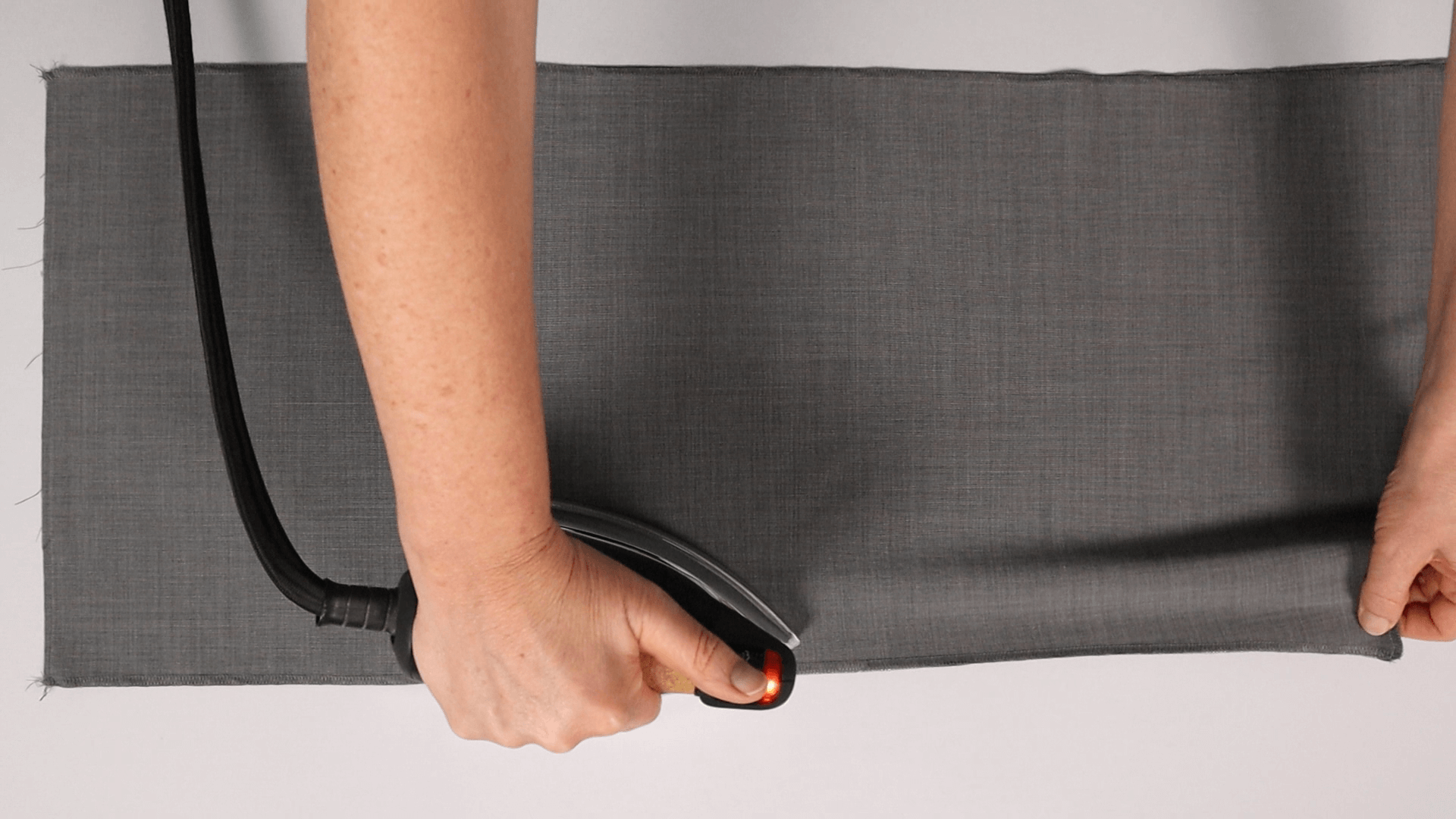
Then I place the iron on the inner leg seam in front of the knee and stretch the upper part.
The inner leg seam may be approx. 10 mm longer.
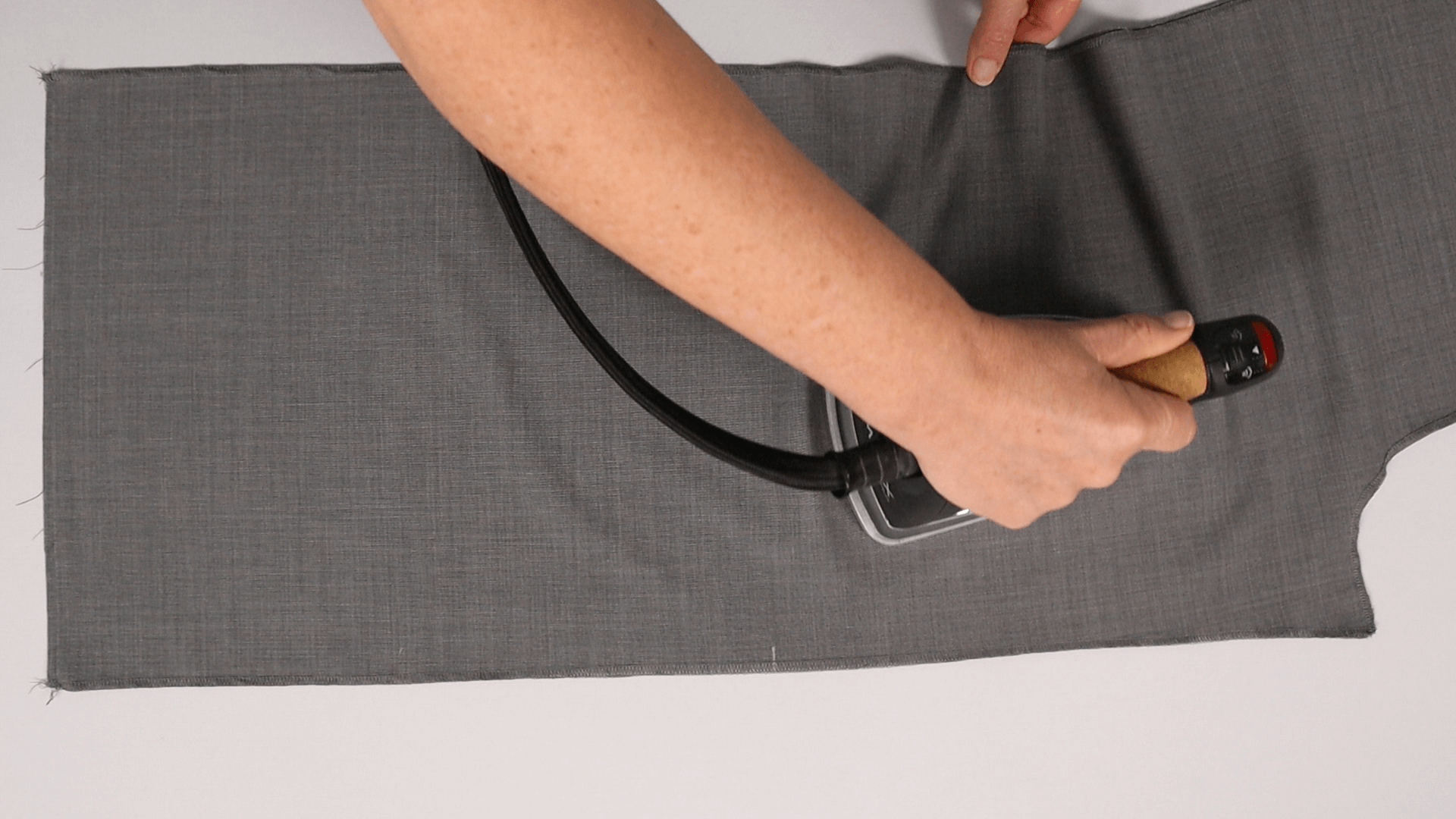
I try to iron the width slightly towards the middle of the leg below the hips. This is the place where the expanse likes to accumulate. This “short ironing” works best with woolen fabrics.
Repeat this a few times.
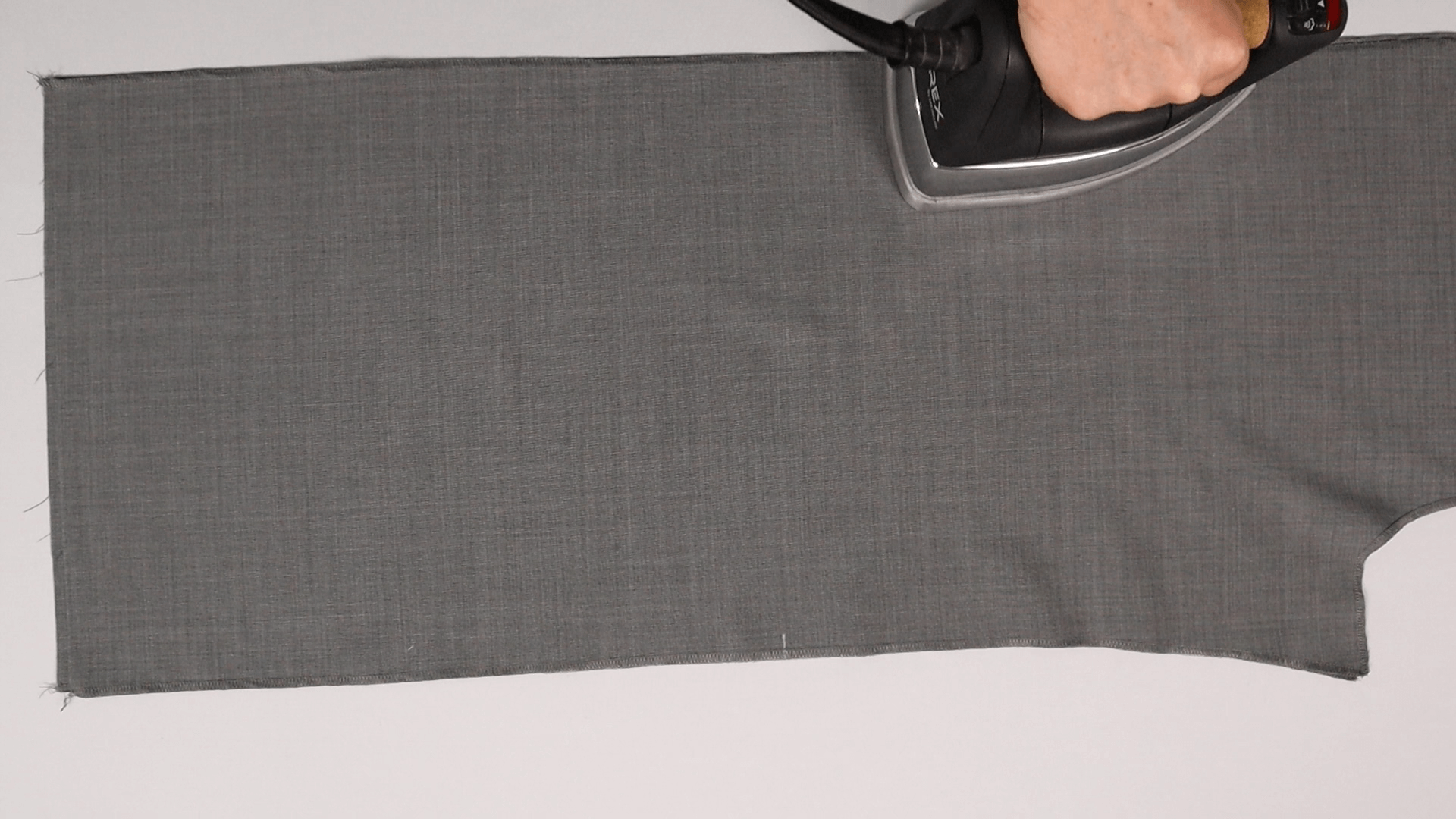
Then I lay the trousers straight again in the grainline and iron them smooth from the side seam.
I then turn the pieces over and iron the same from the other side.
4. prepare the hem for trying on the trousers
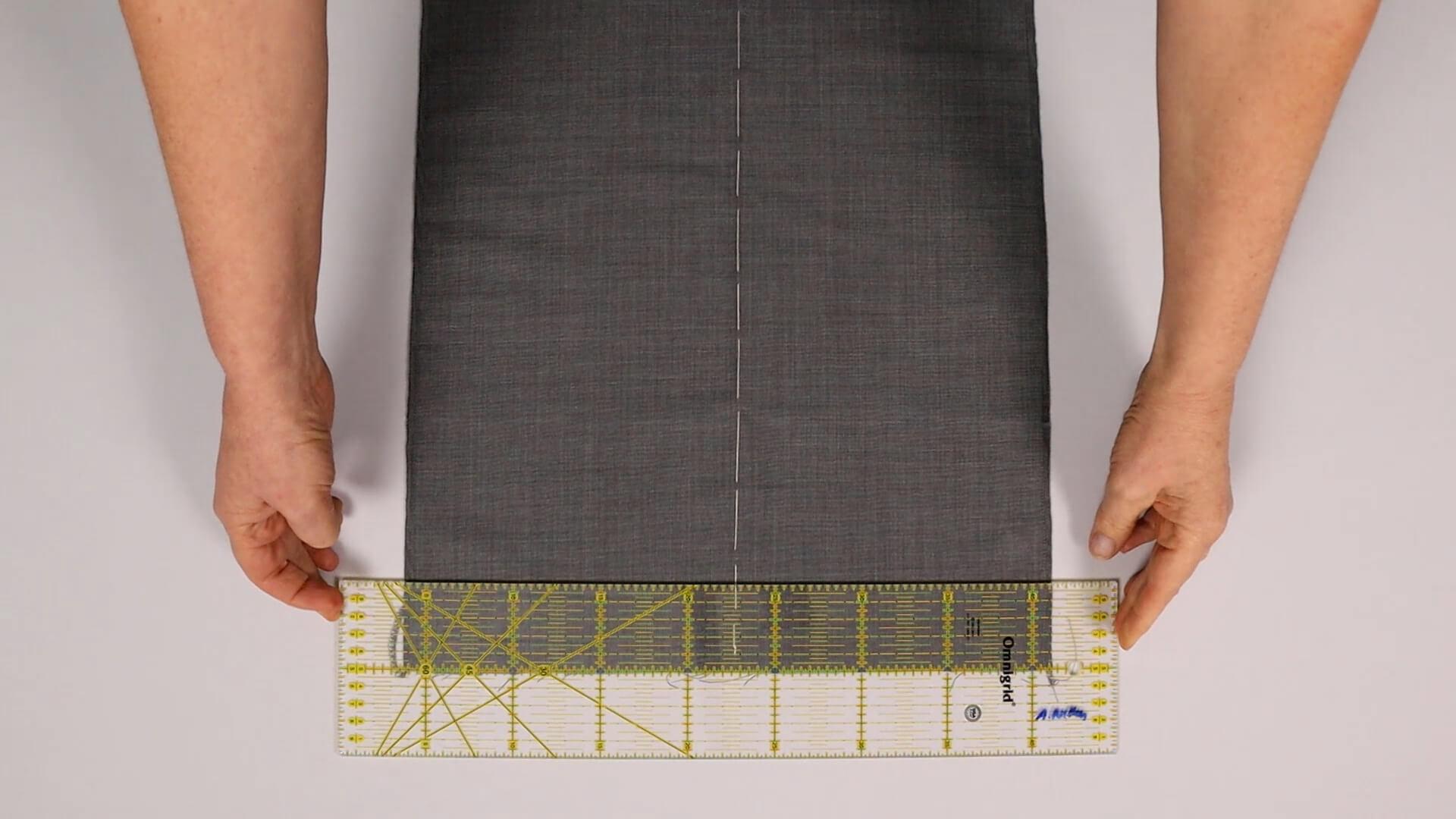
If you have opted for a normal turned-in hem, mark the hem length specified in the pattern on the right side of the fabric parallel to the hem edge. To try on the trousers, the hem is folded inwards at this line and pinned.
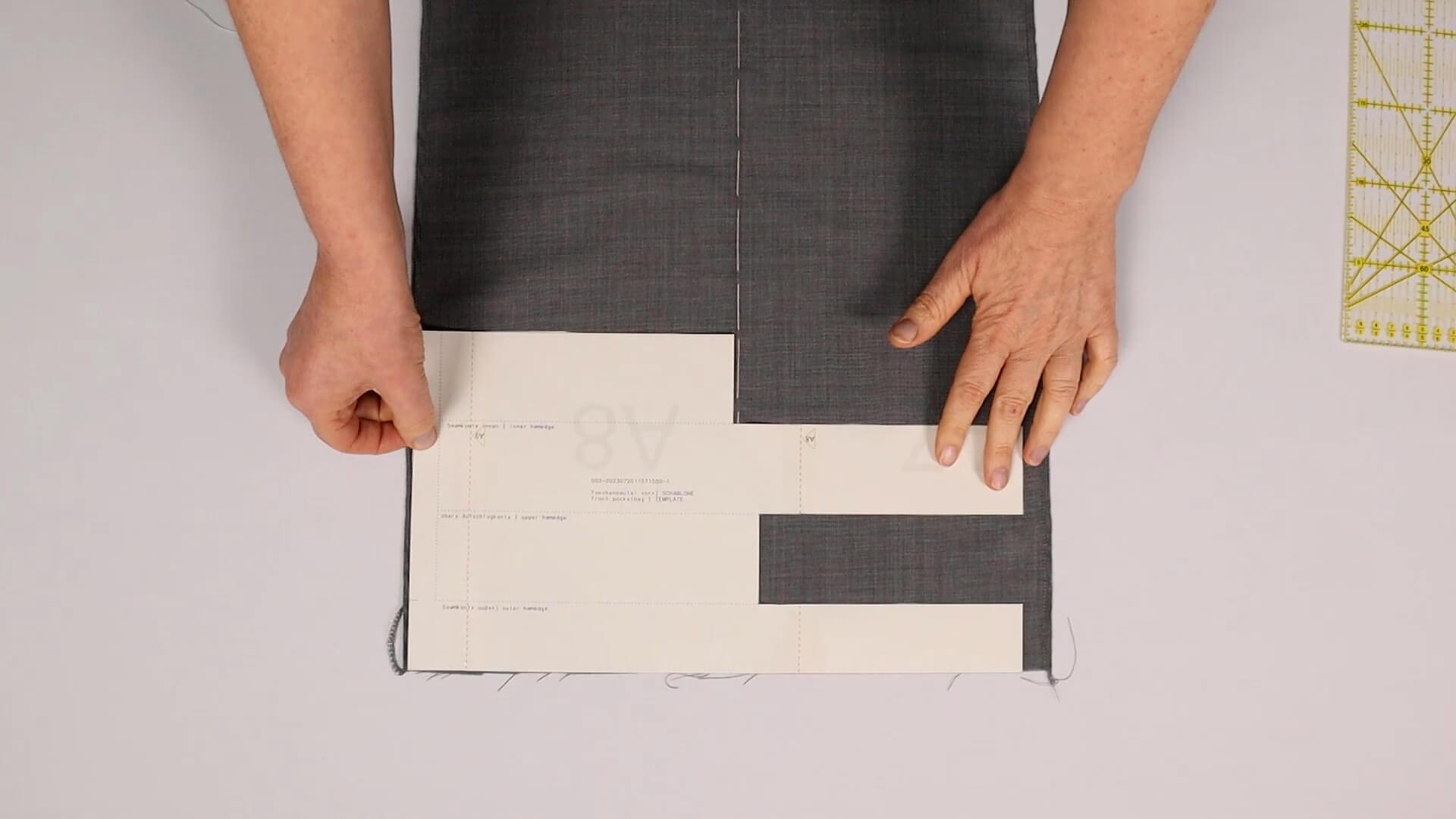
With a hem turn-up, the part that is folded inwards is very wide. The processing therefore differs from that of a normal hem. I place the template for the hem turn-up (P-H) flush with the hem edge.
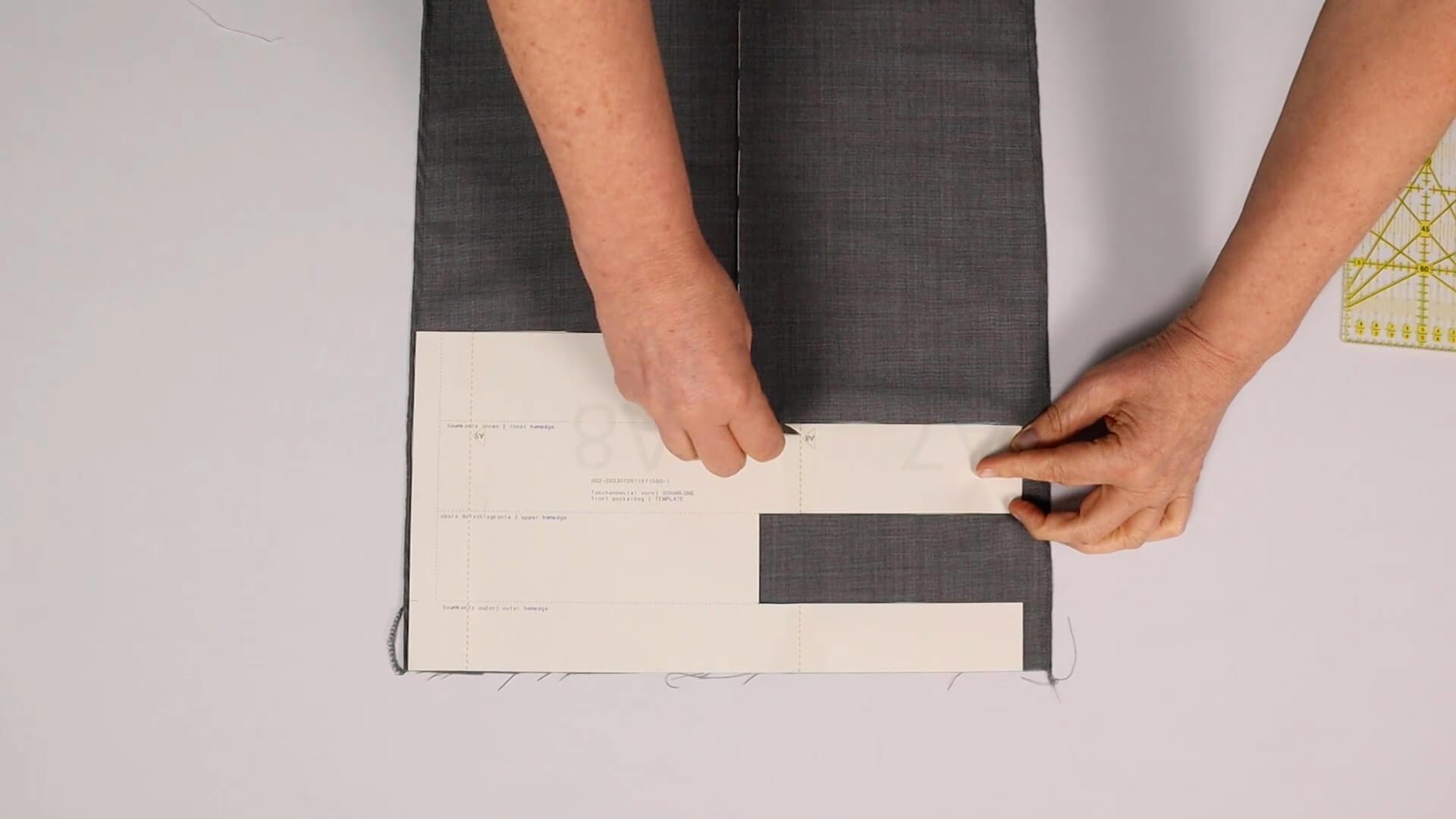
Then I transfer the marking for the inner hem edge to the right side of the fabric.
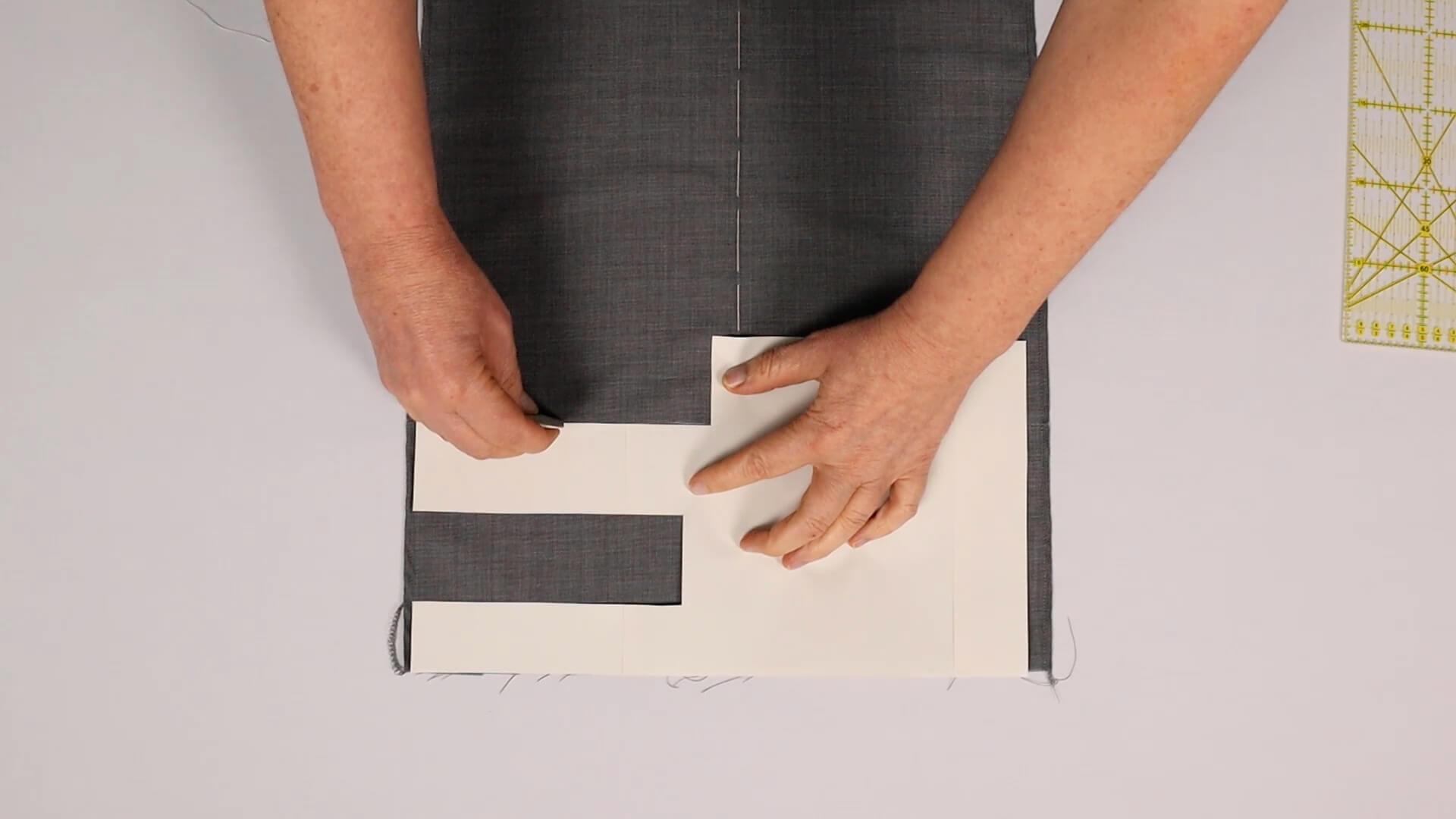
For the other side, I turn the template over and mark the inner hem edge there too.
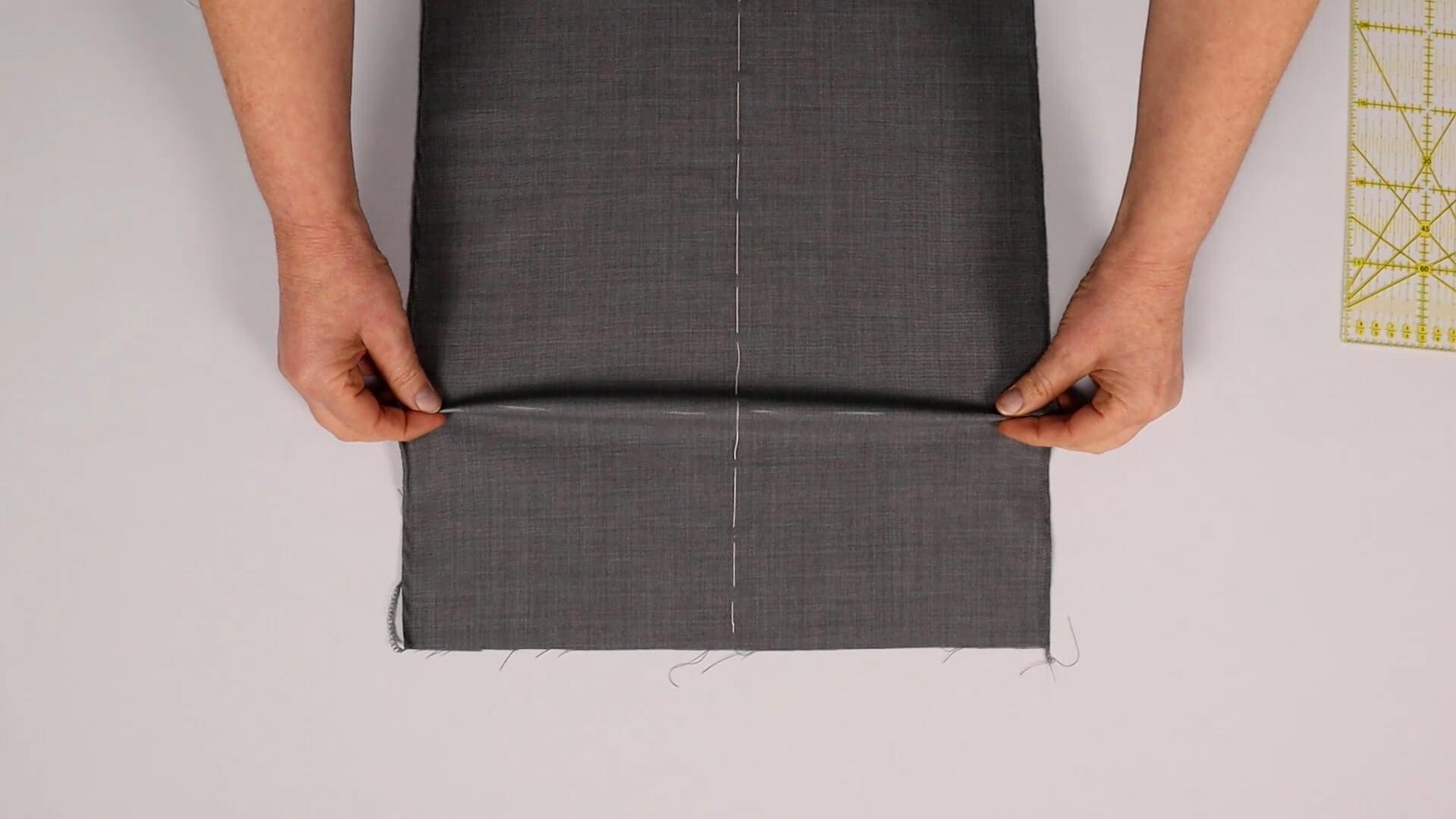
At the marking, I fold the lower part of the trouser leg inwards.
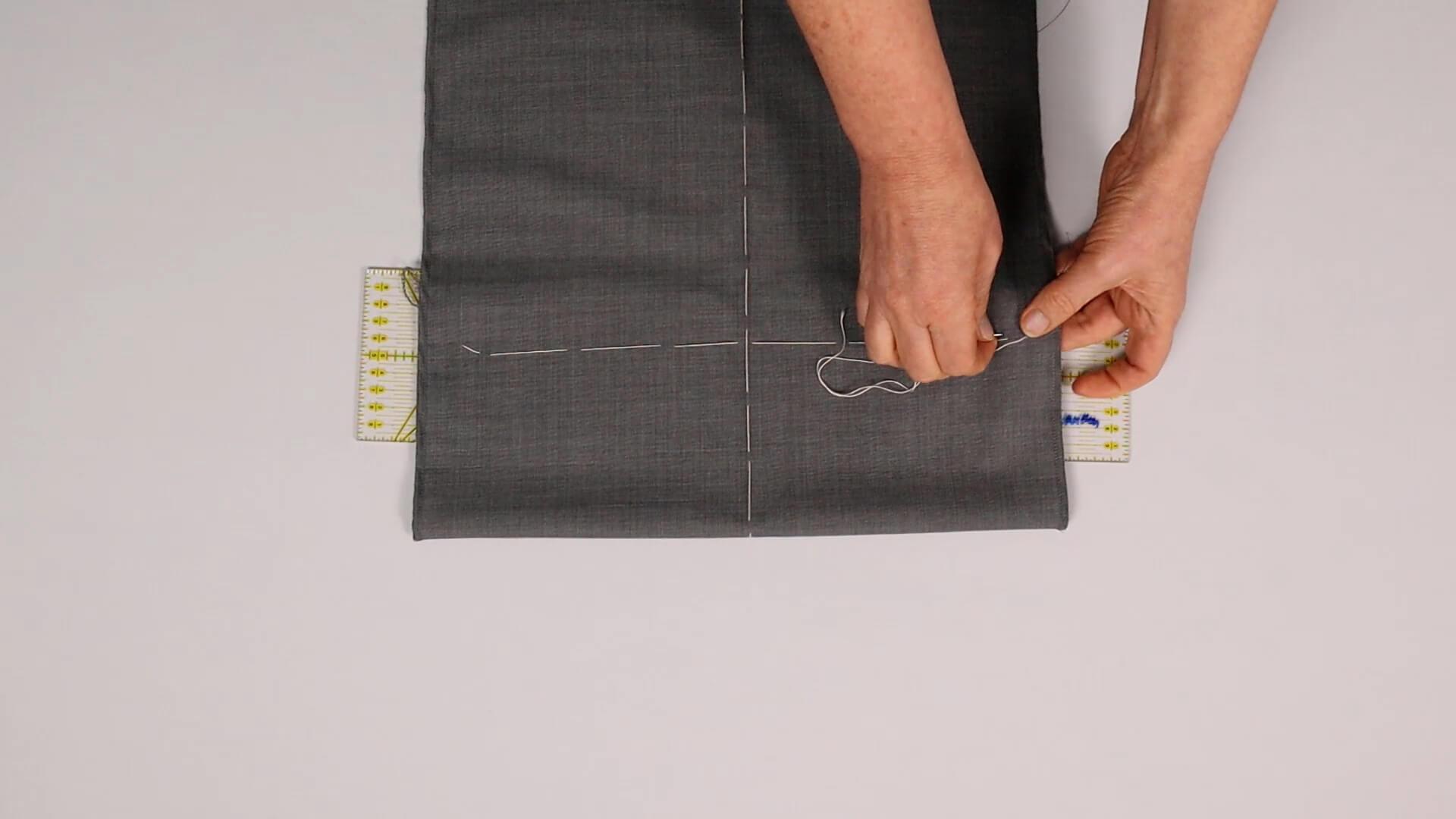
I attach the hem with a few large stitches. I put the ruler under the basting seam so that I don’t poke my ironing board.
I repeat these steps – marking, folding over, basting – with the other three pattern pieces of the front and back trousers.
5. close the leg seams
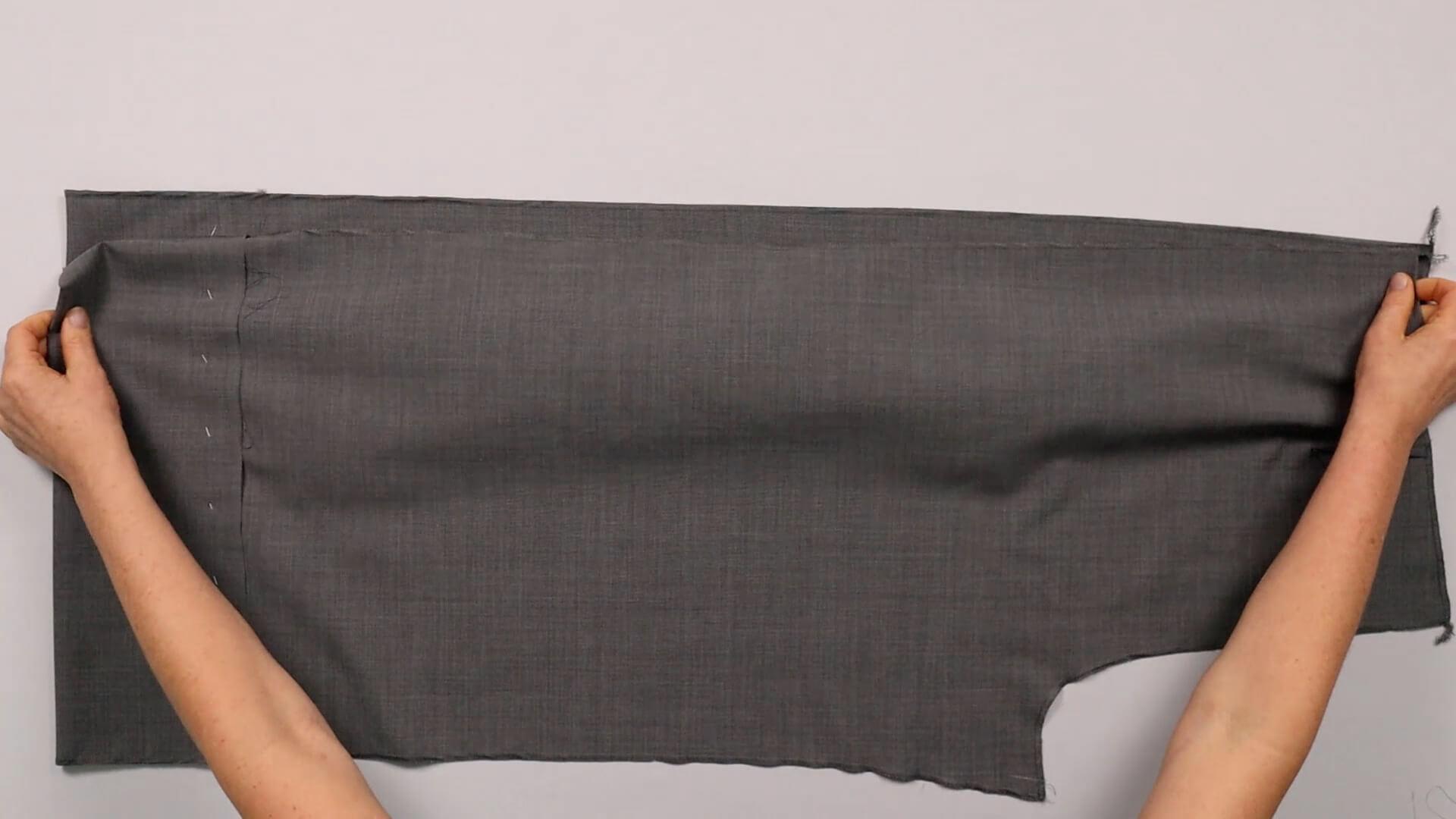
Now I close the inner and outer leg seams. To do this, I lay the front trousers in front of me with the right side facing up. Then place the back trousers right sides together on the front trousers.
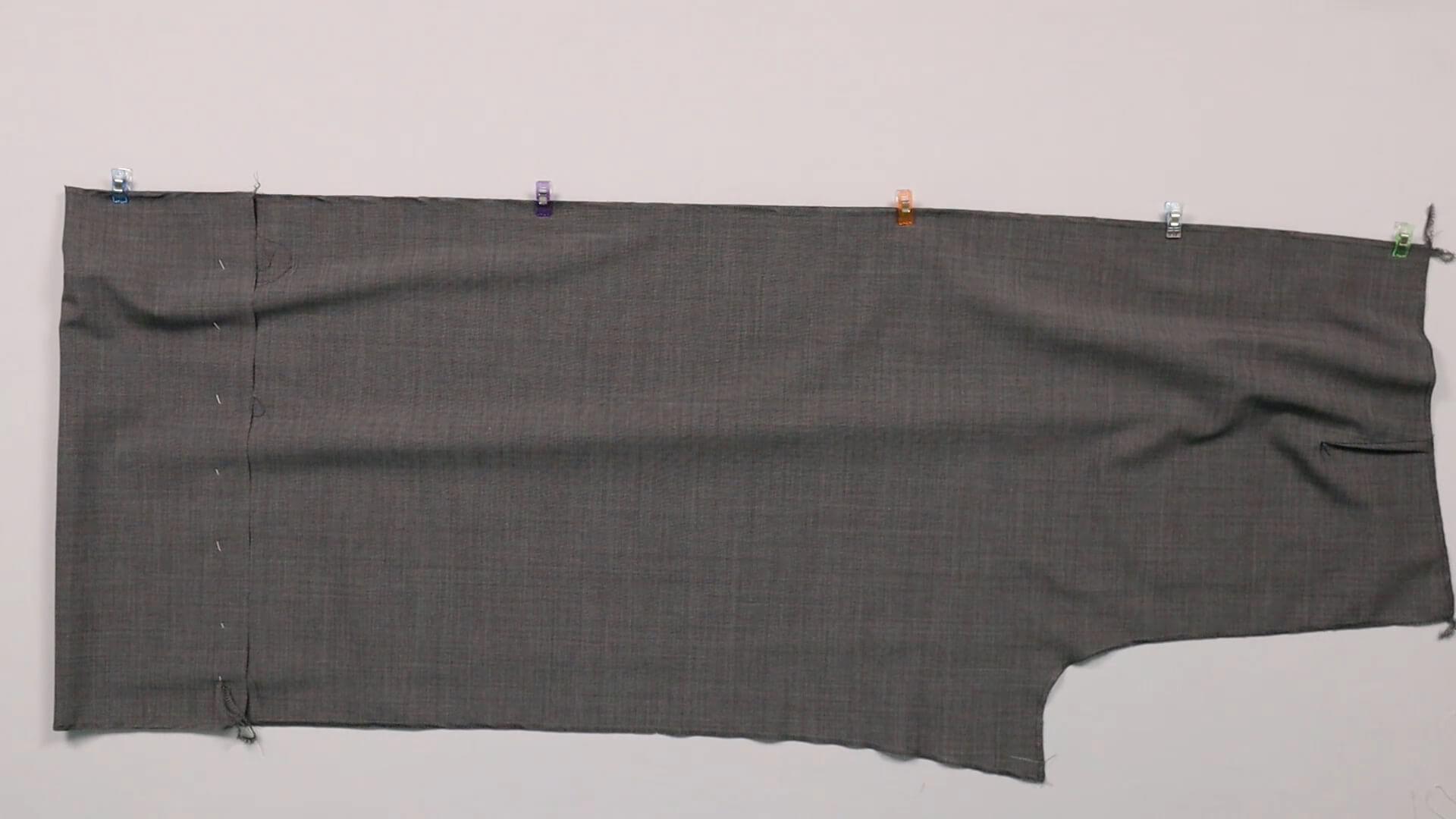
Pin the outer leg edges flush with each other.
Pay attention to the notches at knee height and in the pocket area if necessary.
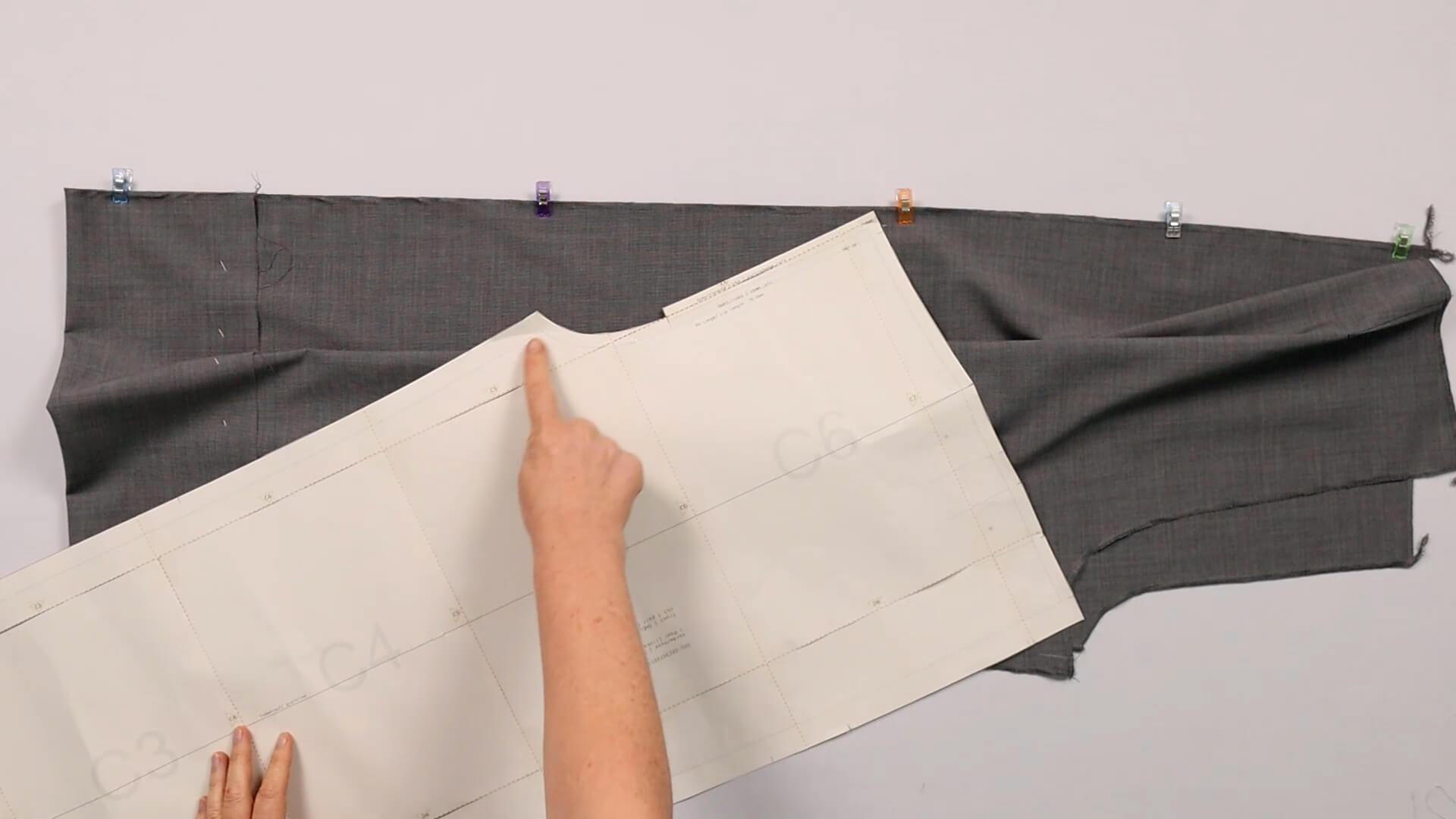
You can see from the pattern piece how wide the respective seam allowances are.
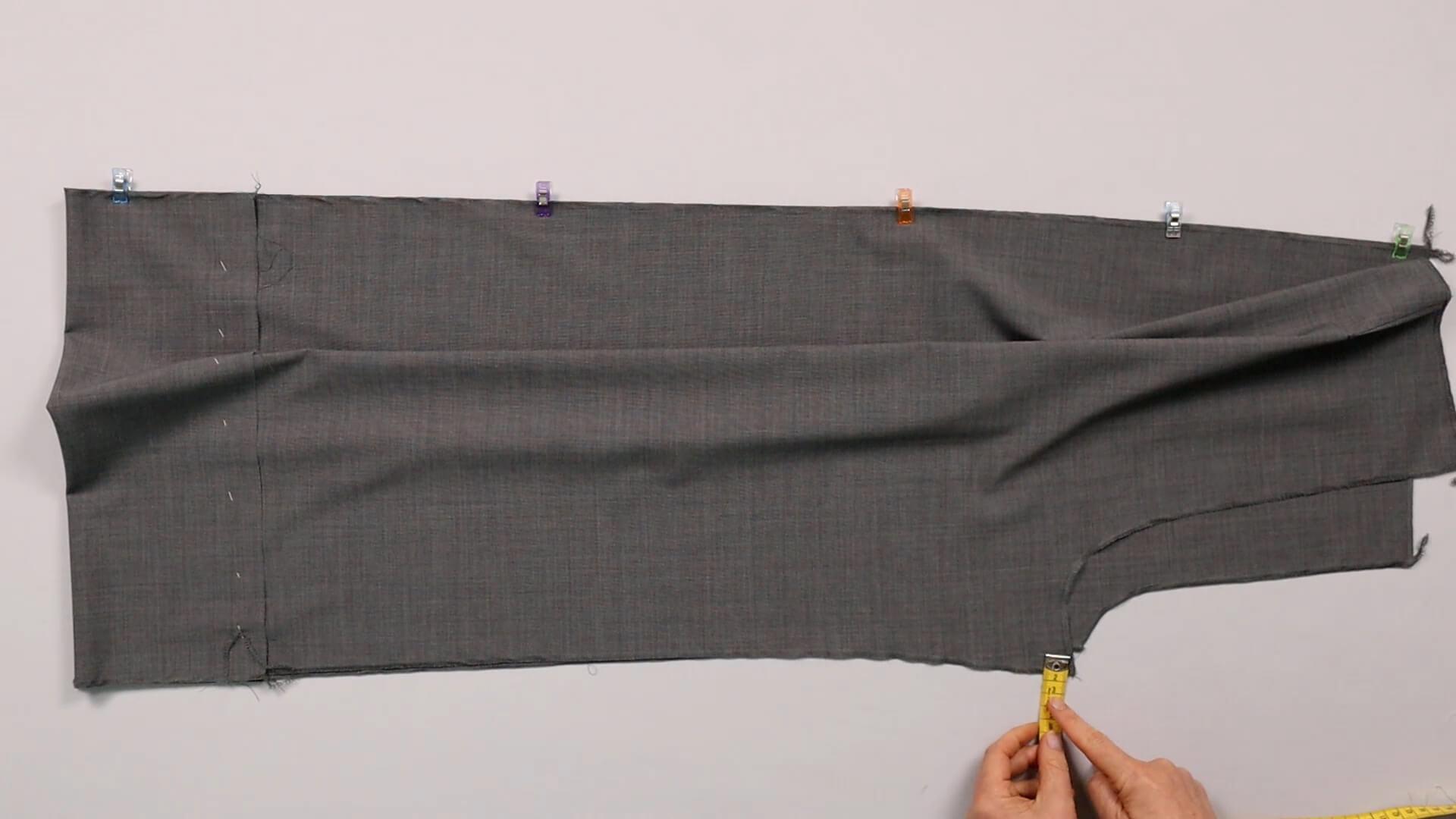
At the upper end of the inside leg seam, I mark the width of the seam allowance on the back trousers.
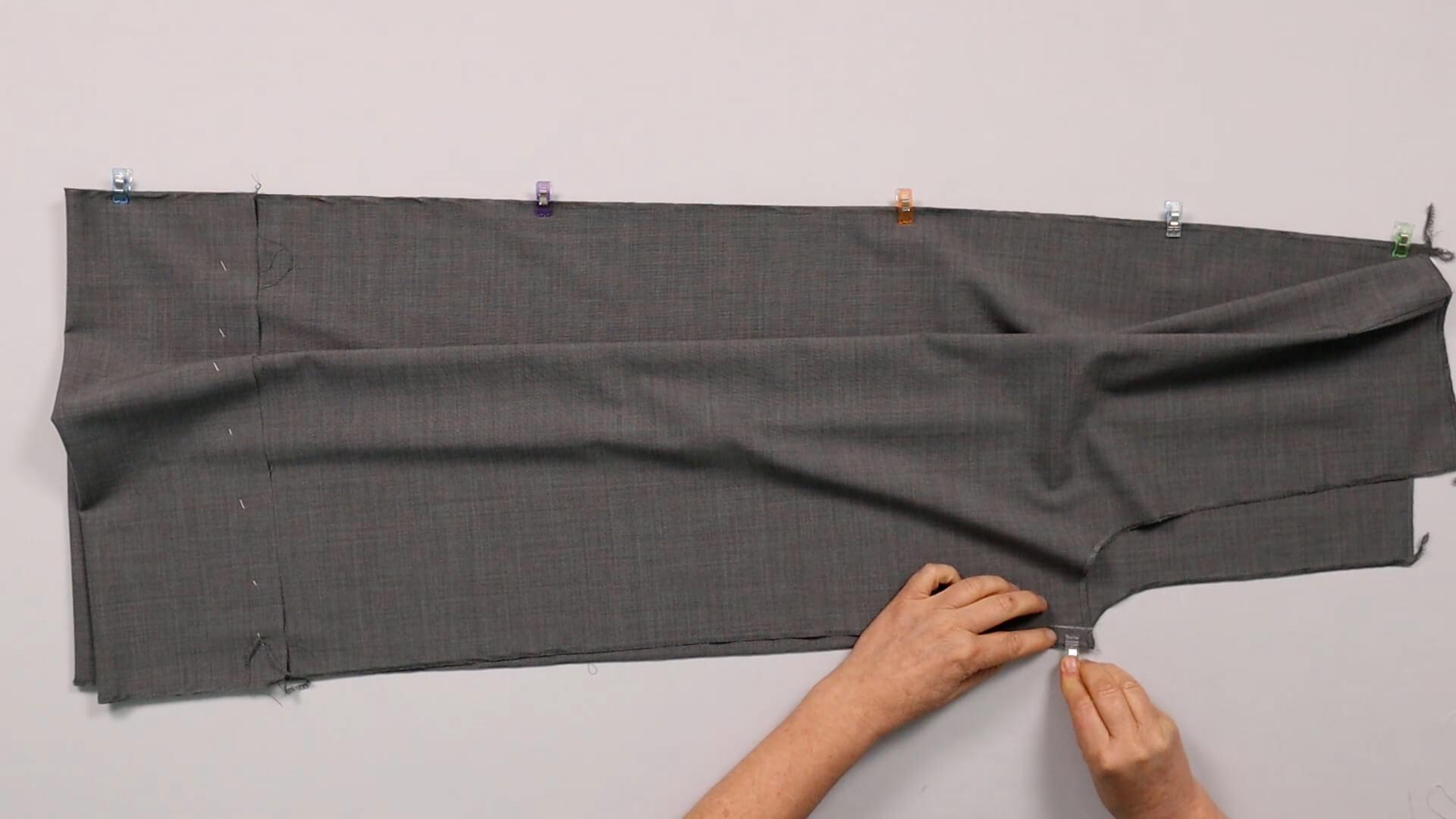
In this position, I secure the upper end of the inner leg seam with a clip or pin. The front and back trousers meet exactly at the marking in the crotch curve.
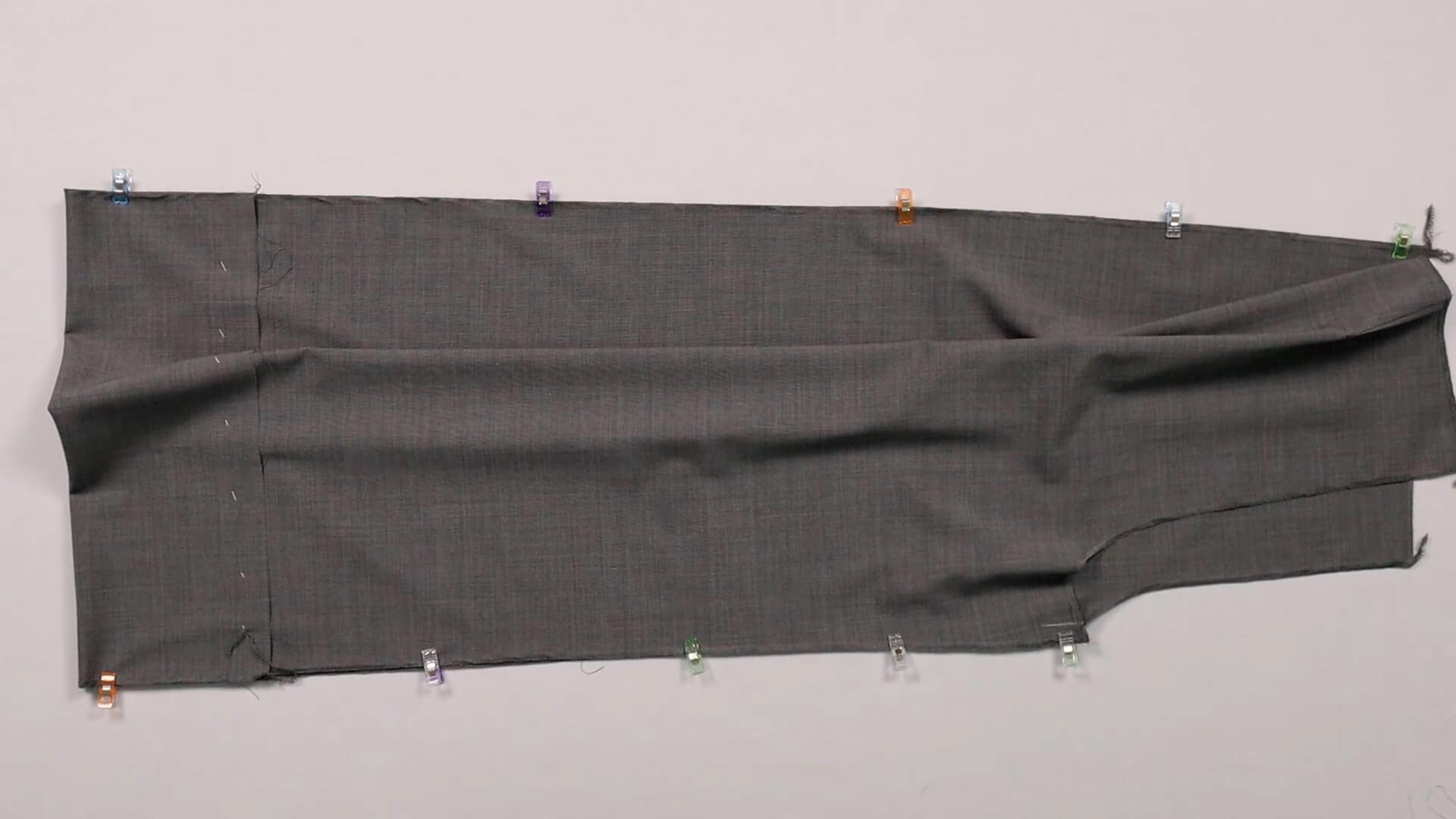
Then I pin the remaining section of the inner leg seam together. Here, too, I make sure that the notches meet at knee height.
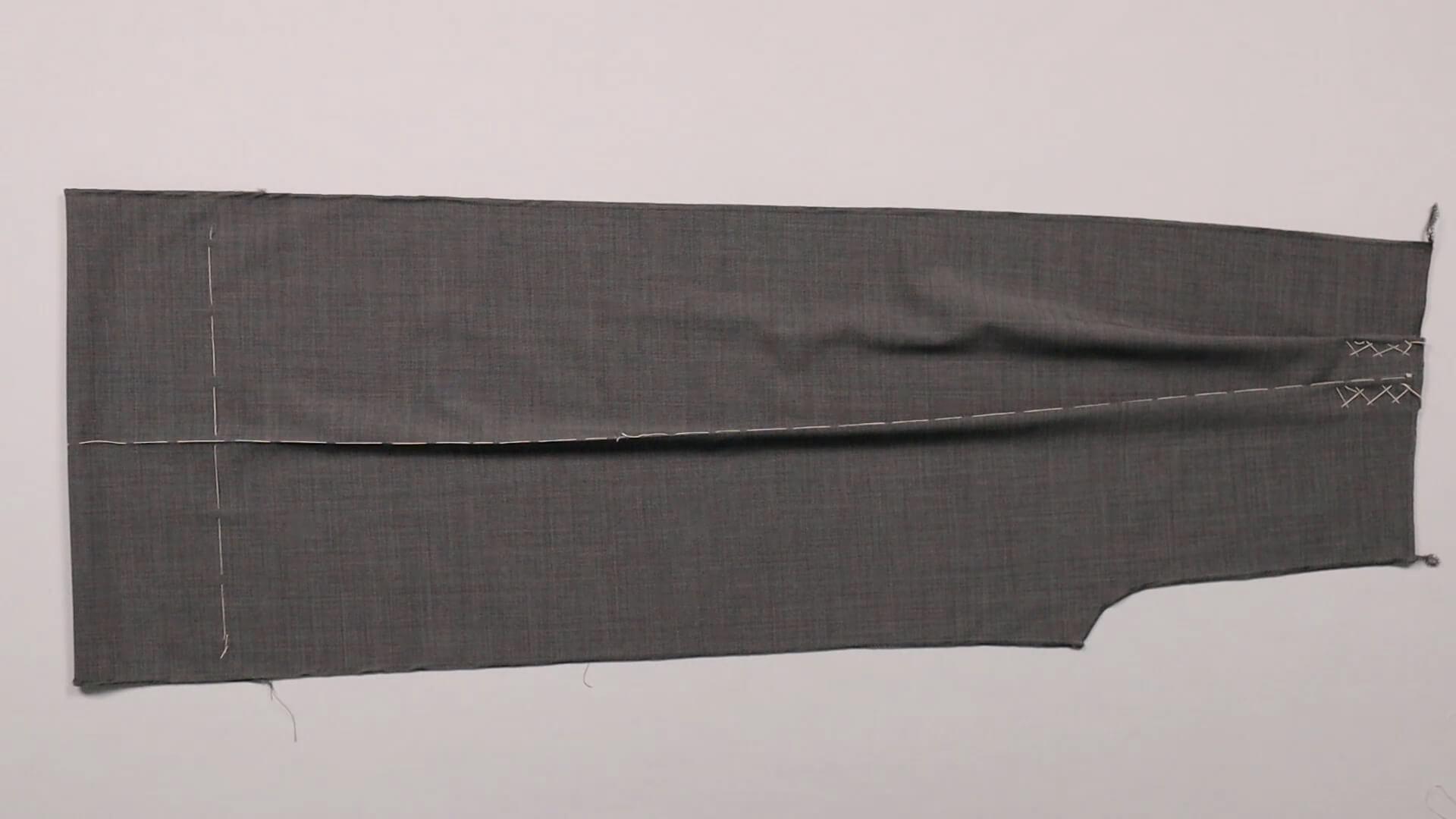
I baste both seams with a straight stitch with a long stitch length or by hand. Make sure to sew with the seam allowances indicated in the pattern.
6. mark the pocket position on the back of the trousers
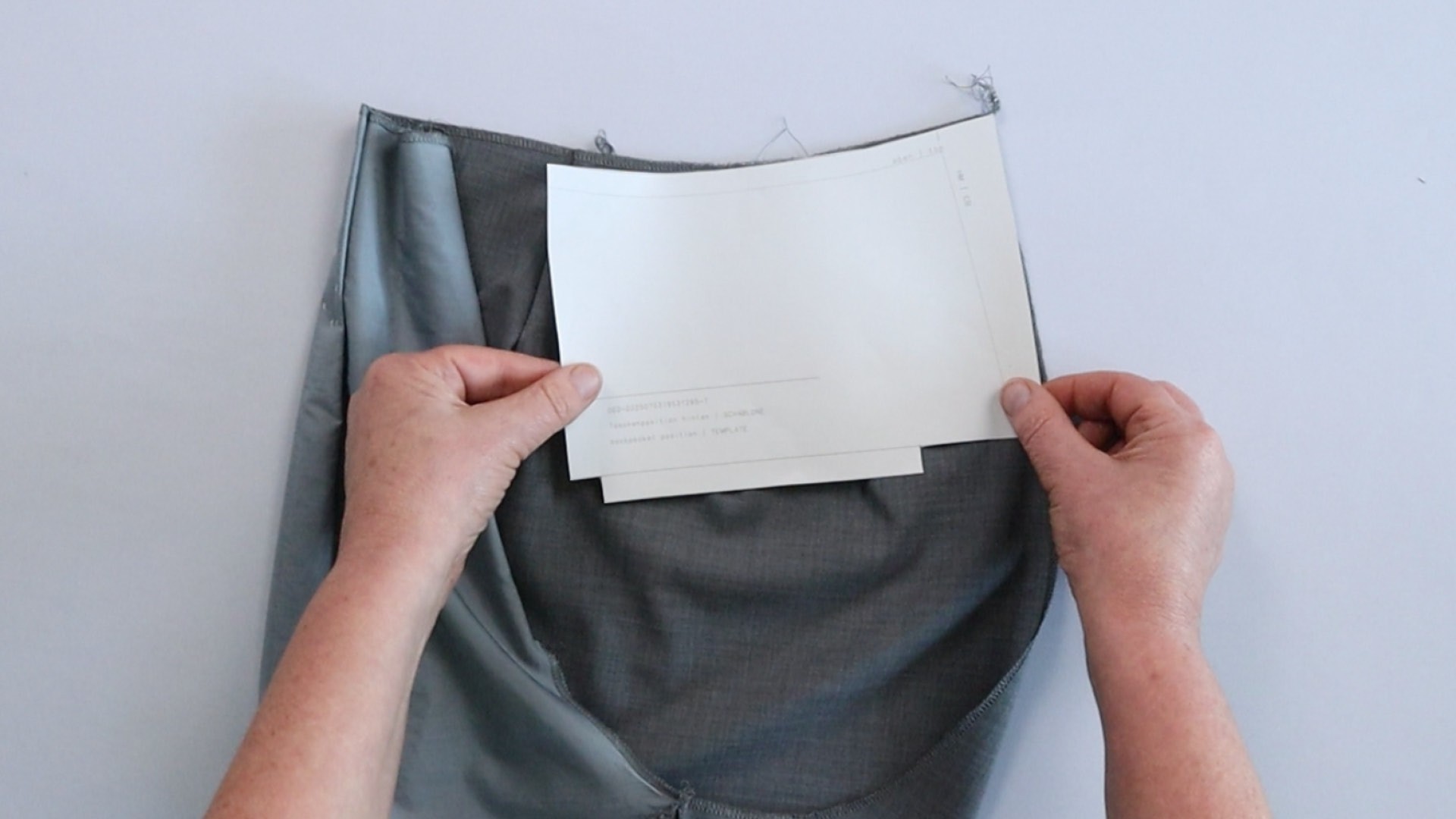
A template is provided for the position of the back trouser pocket. Here you can see the template for welt pockets. The procedure is identical for all pocket variants.
I place them flush against the center back and the top edge of the back trousers.
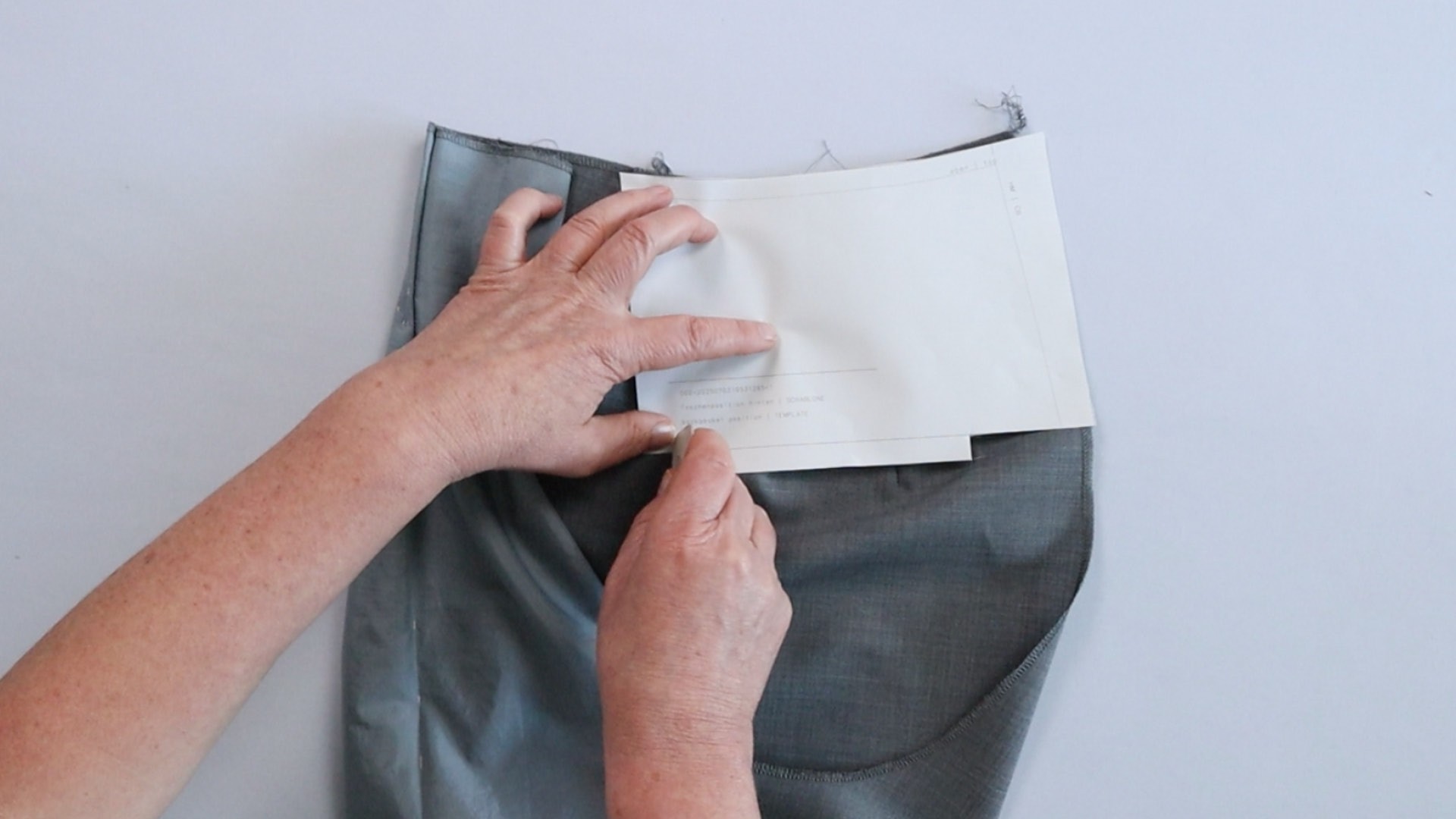
Then I mark the position of the pocket with tailor’s chalk.
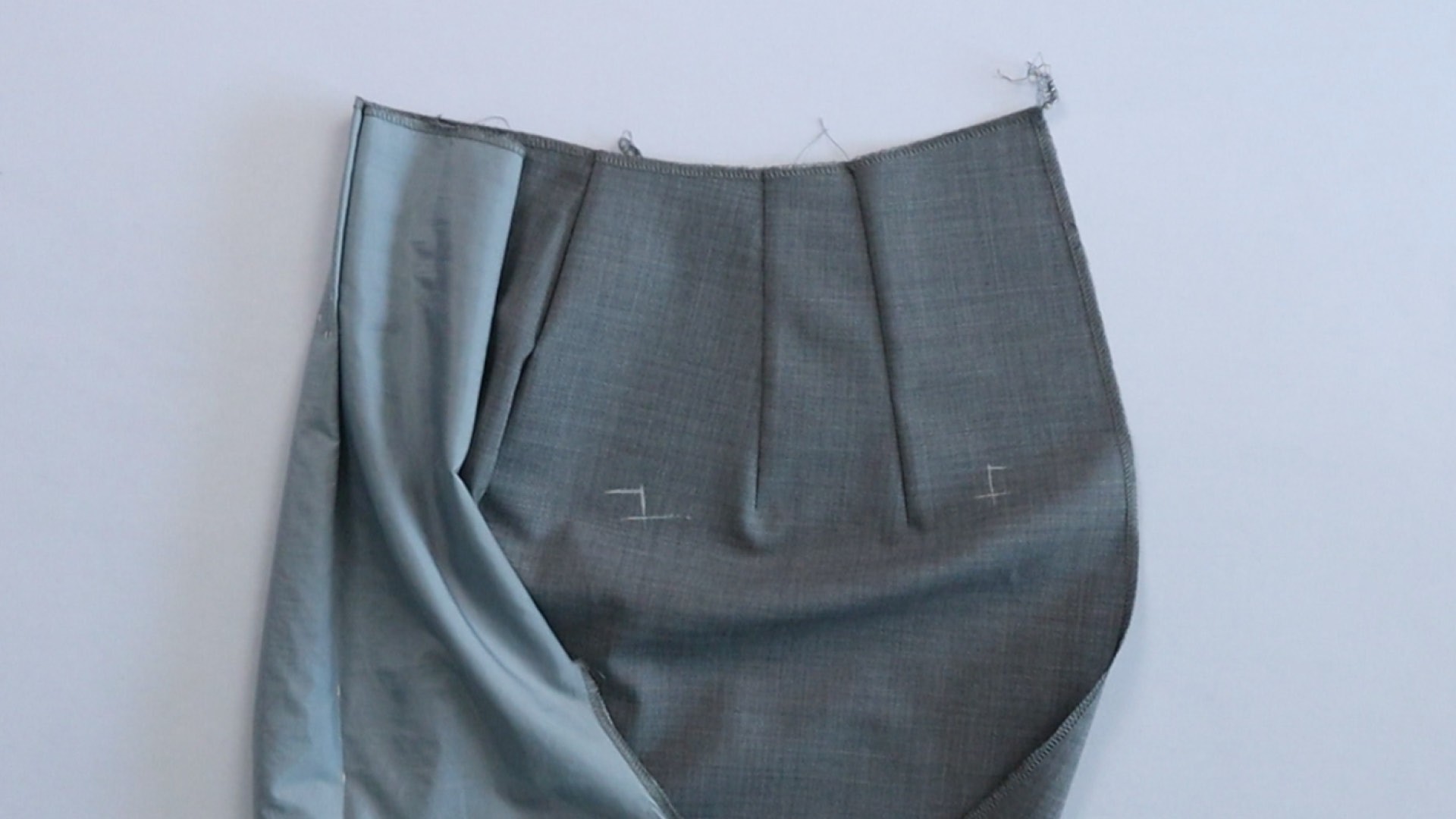
If you make these markings when you try on the trousers, you will get an idea of where the pockets will be later. If you don’t like the position so much, you can still make changes.
7. sew on the waistband facings
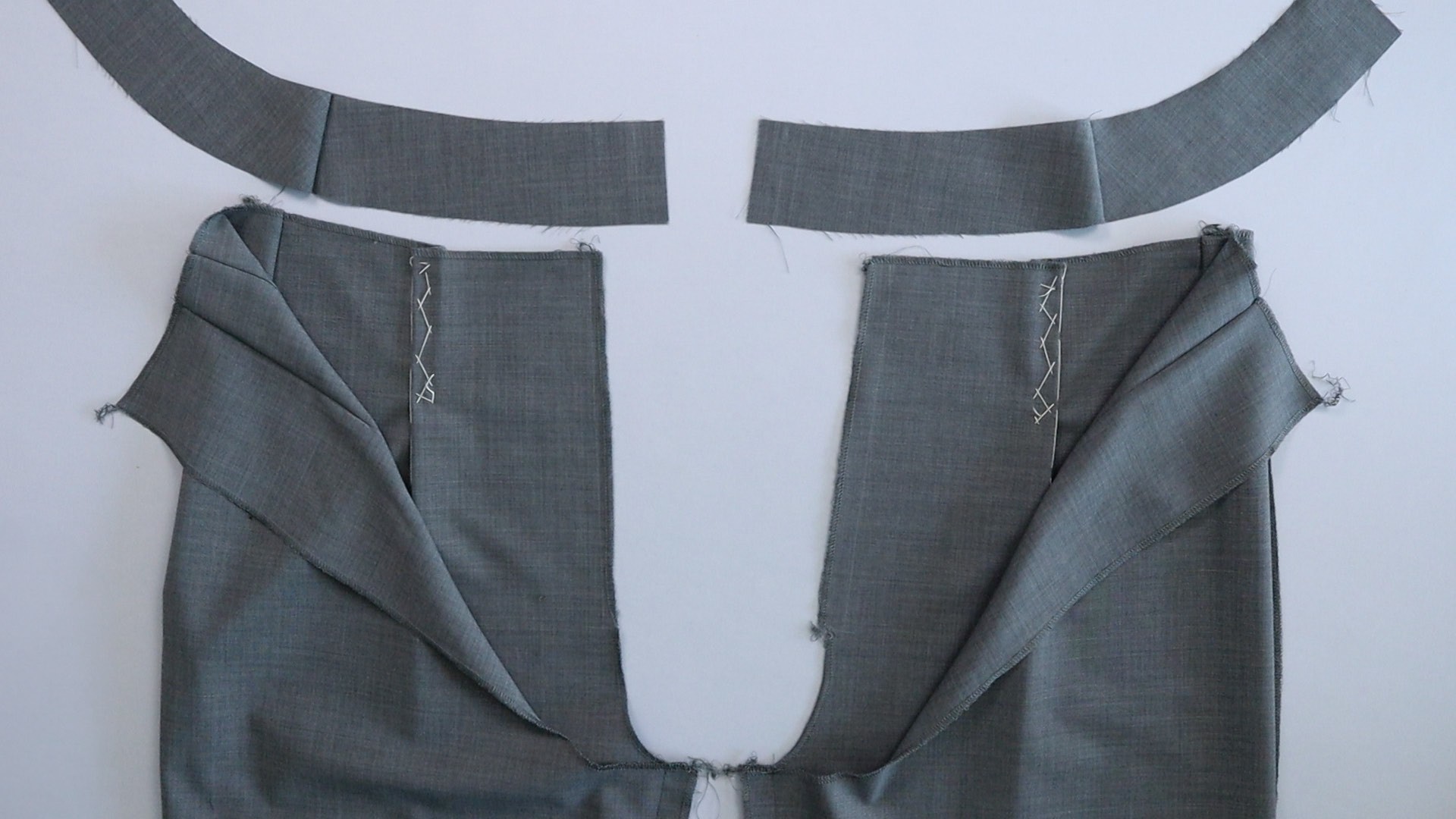
First, I lay the two trouser legs in front of me so that the front pants are lying on the table with the wrong side of the fabric facing down and the front centers facing each other. Then I place the waistband facings on top, also with the wrong side of the fabric facing down and the front centers facing each other.
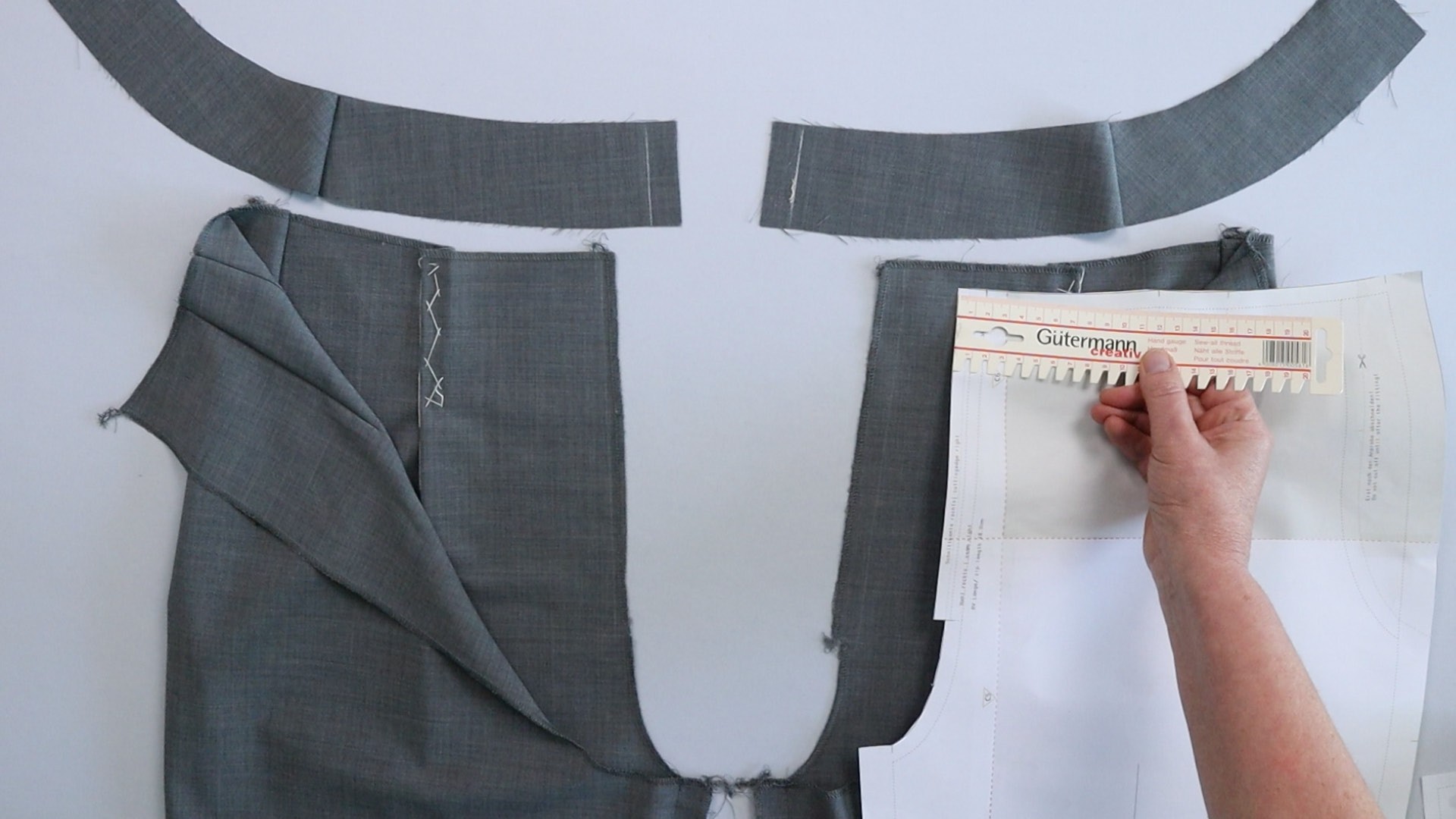
I use the corresponding pattern pieces to measure the exact distance to the edge.
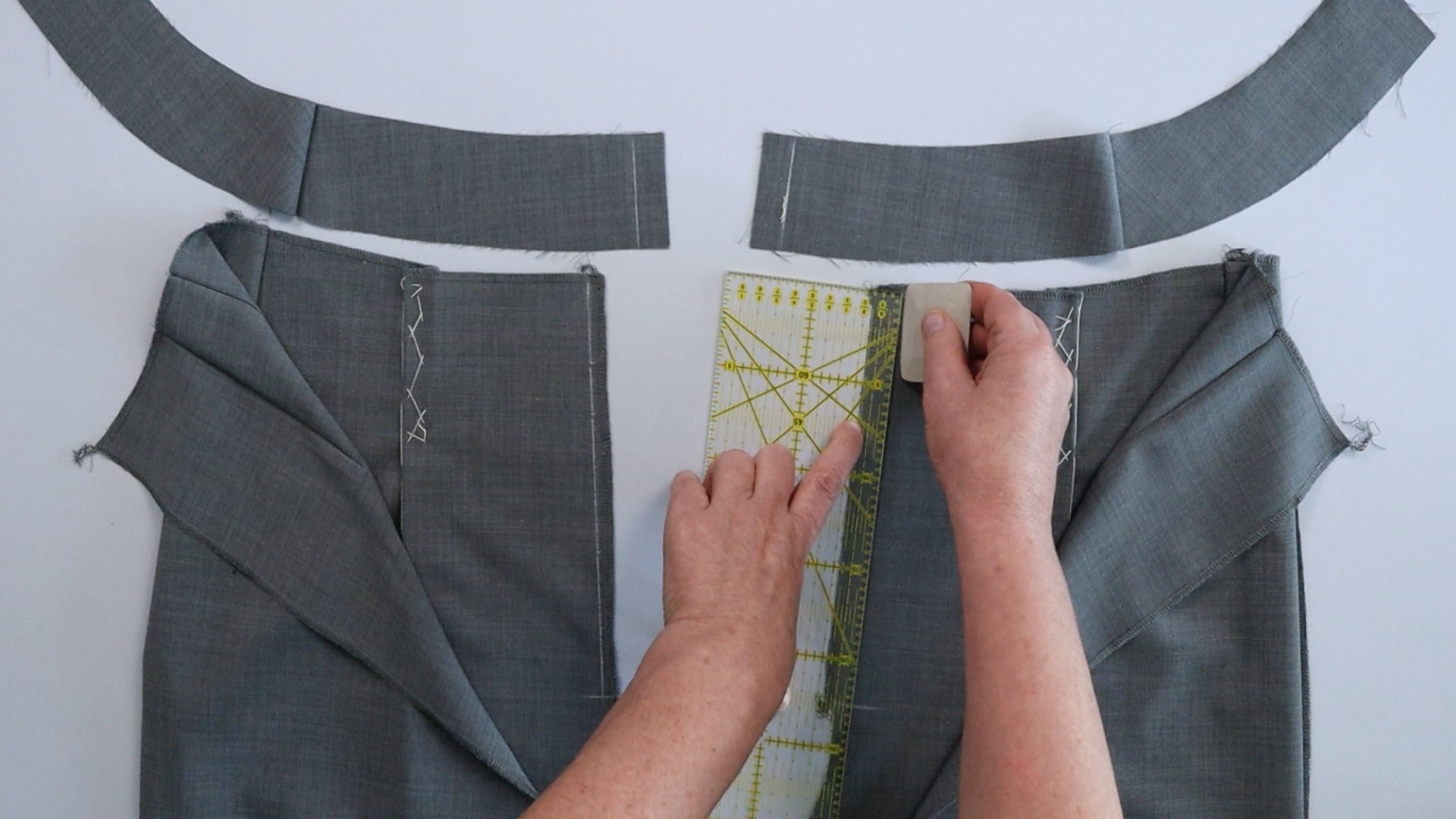
Then I mark the center front on all pieces.
As I have worked a knee lining into the front trouser pieces, the side with the fly overlap is already cut back and the distances between the edge and the center front differ on the left and right sides.
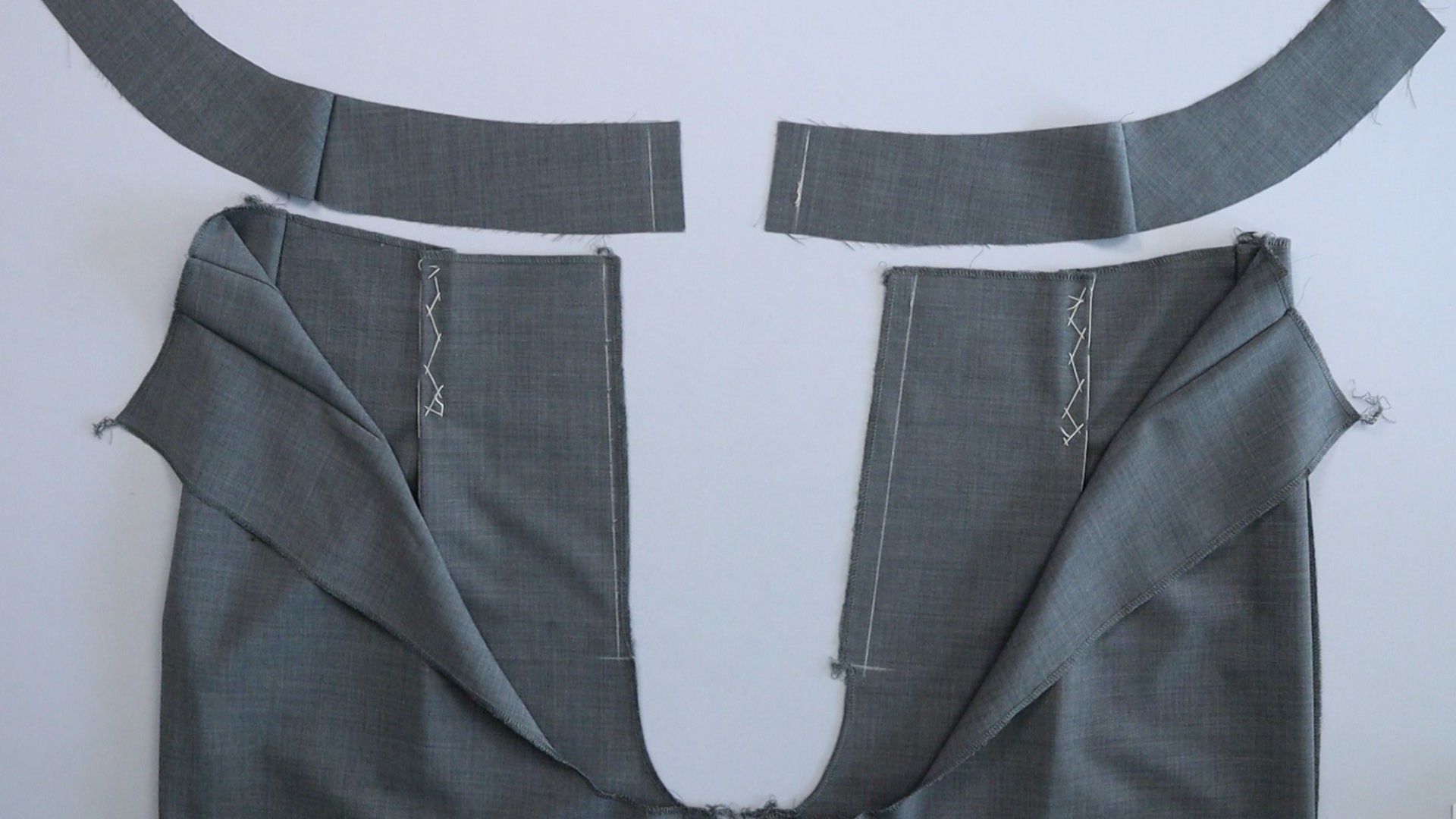
Finally, I mark the end of the slit at the front centers.
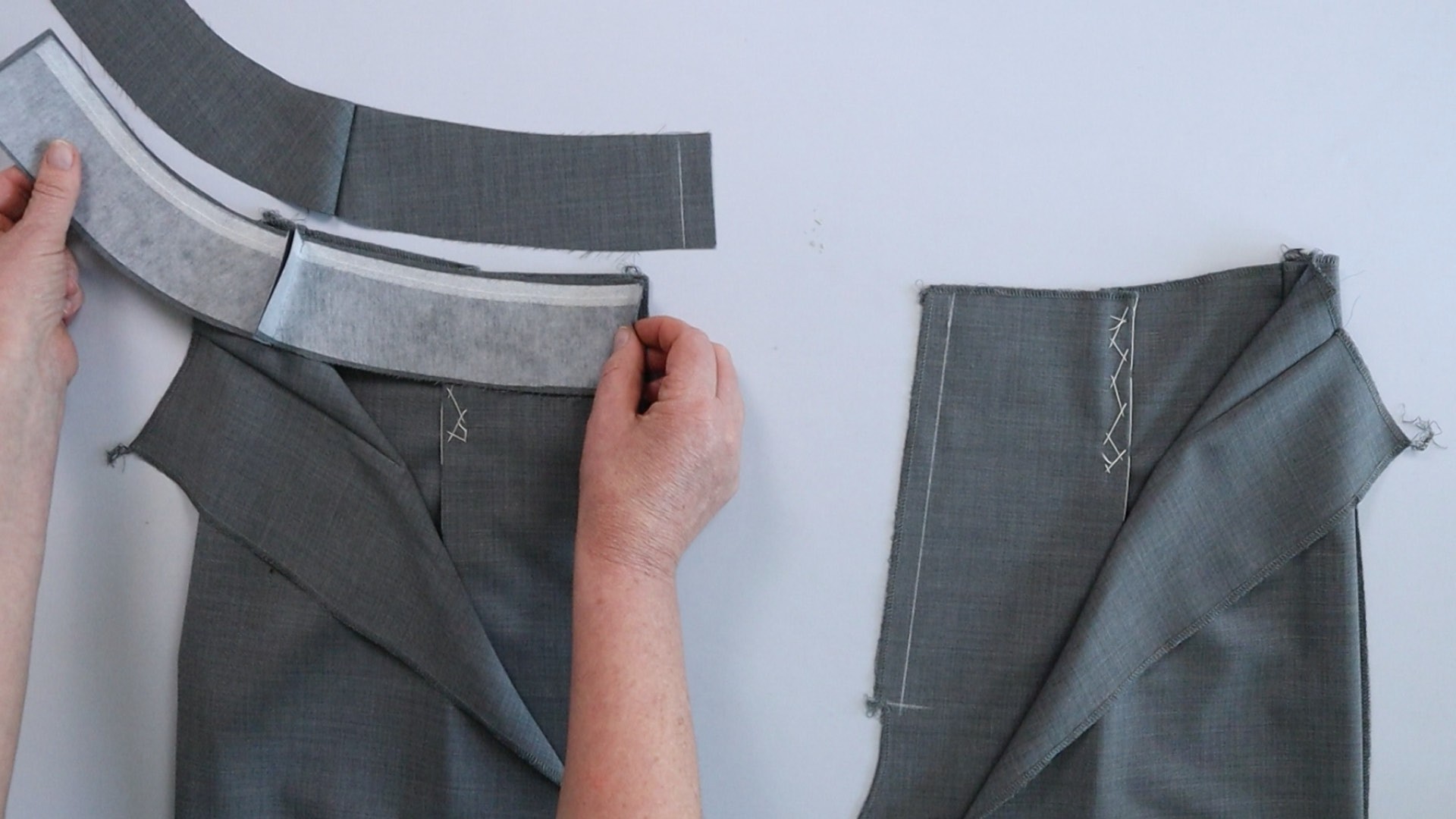
Now pin the waistband facings to the trouser panels, right sides together and flush at the top edges.
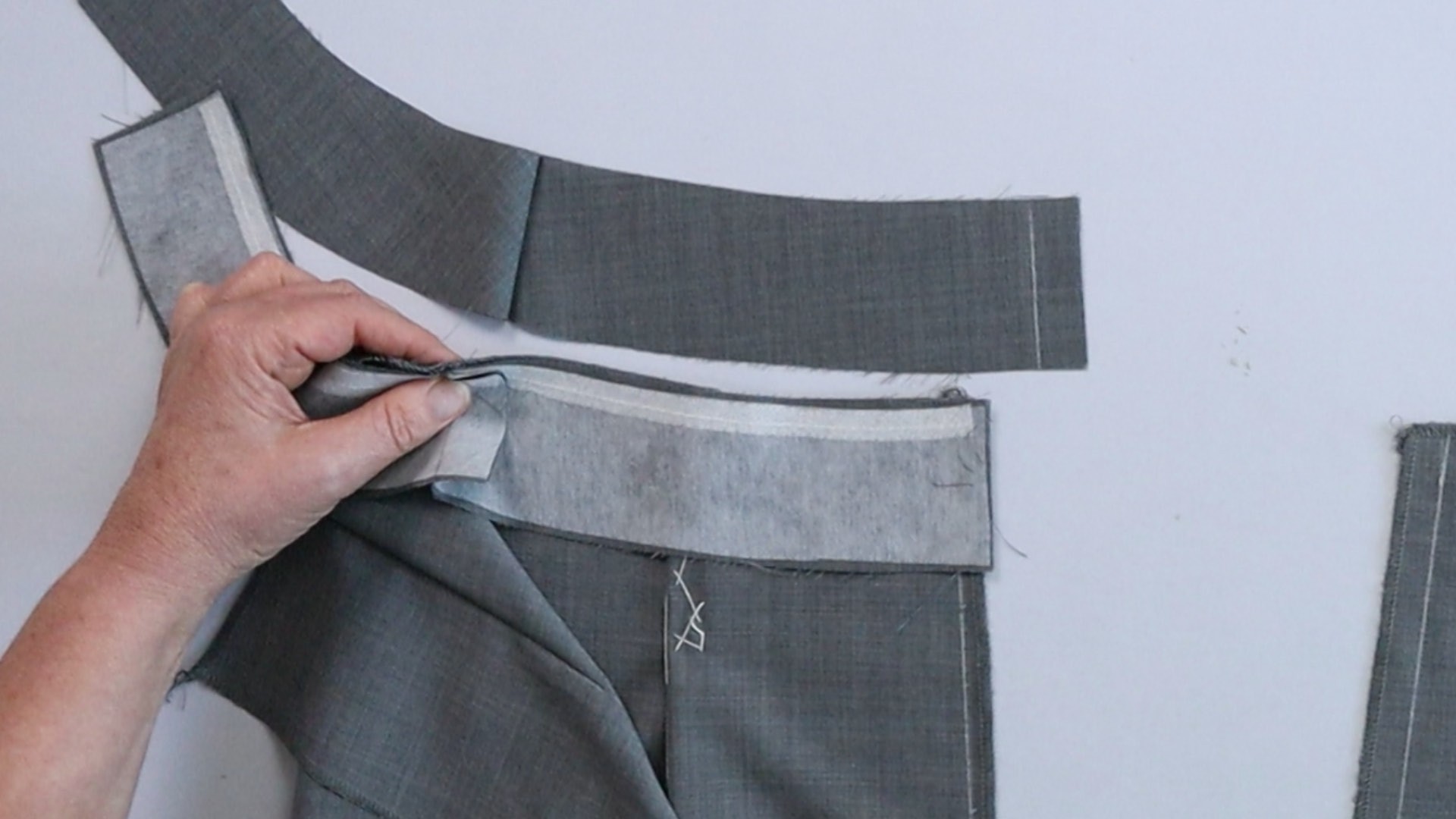
Make sure that the side seams meet exactly. Place the seam allowances from the waistband facing to the front and those of the trouser legs to the back so that the areas are not too thick.
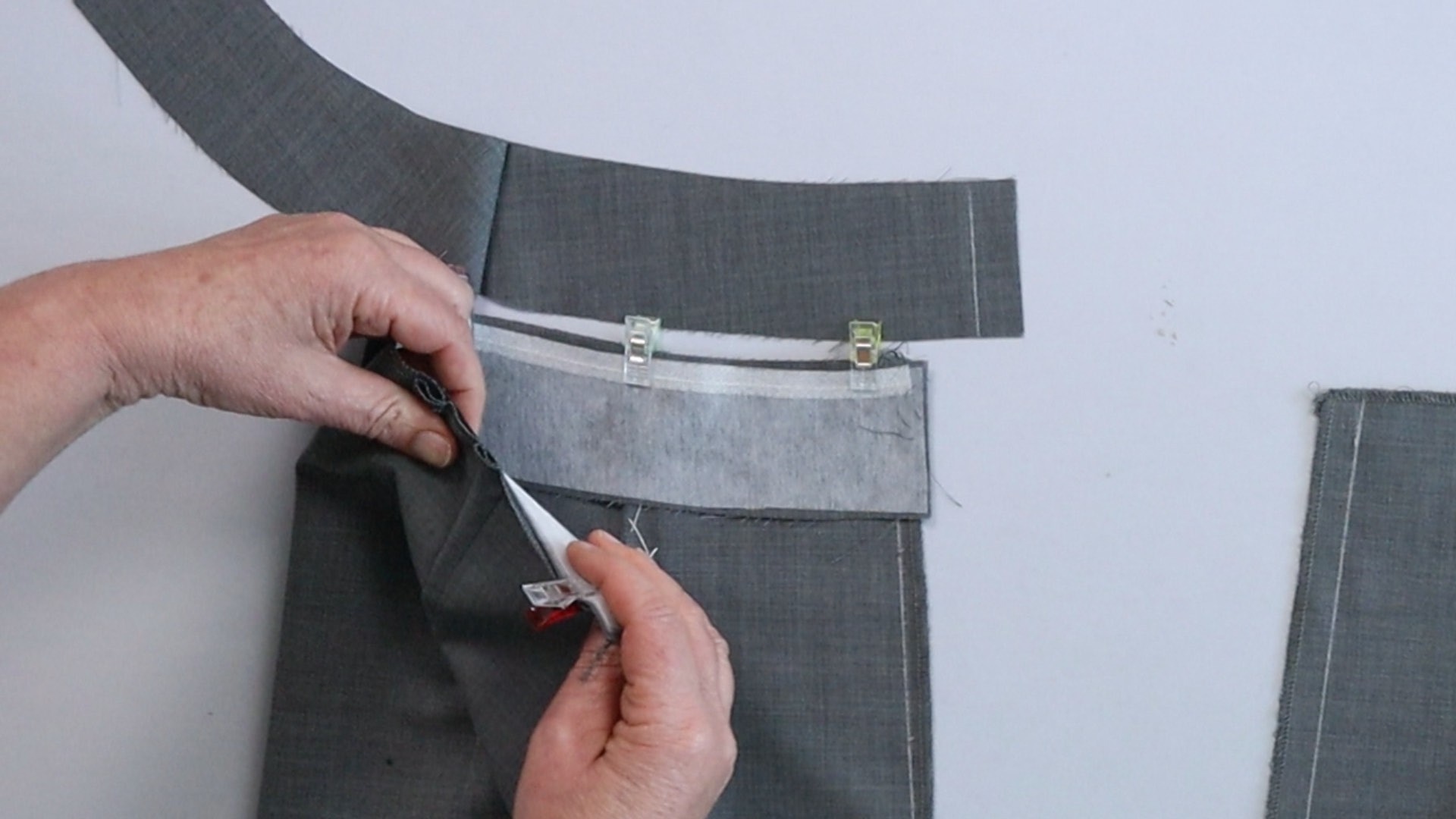
The center front and center back of the waistband and trousers also meet exactly.
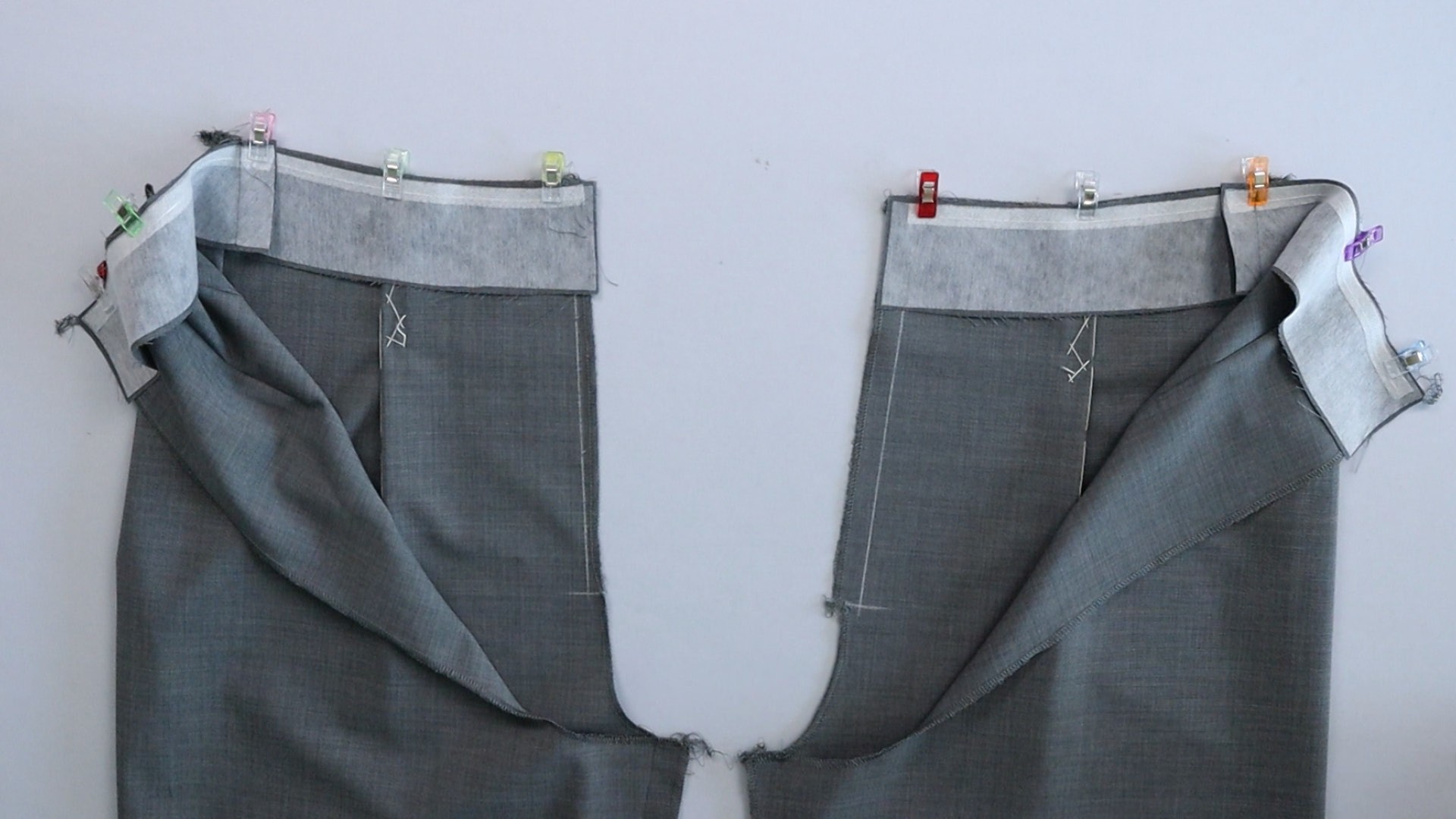
This is what the prepared trousers look like and the waistband facings can be sewn on.
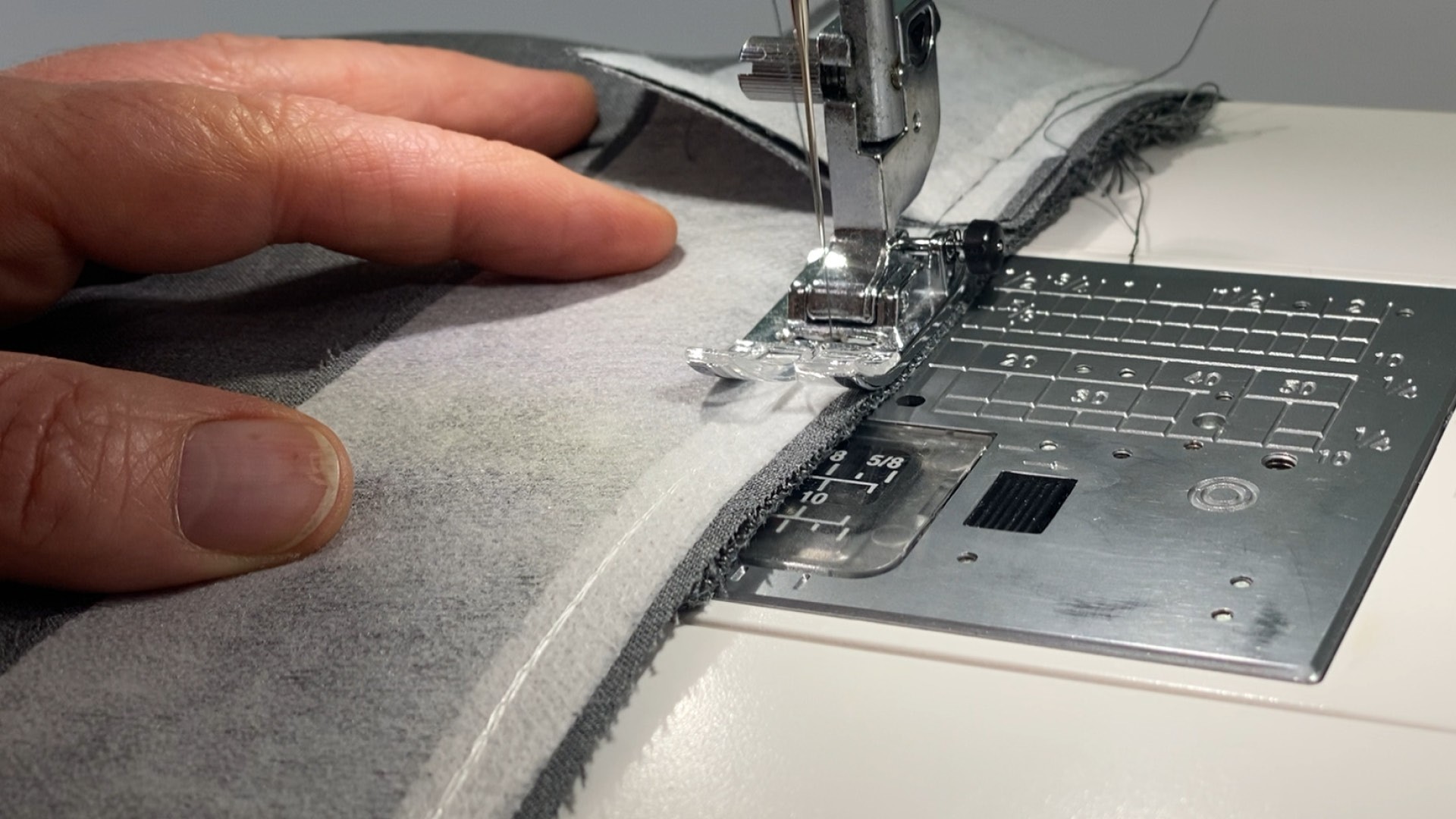
I sew the top edge together with a 1 cm seam allowance and a long stitch length.
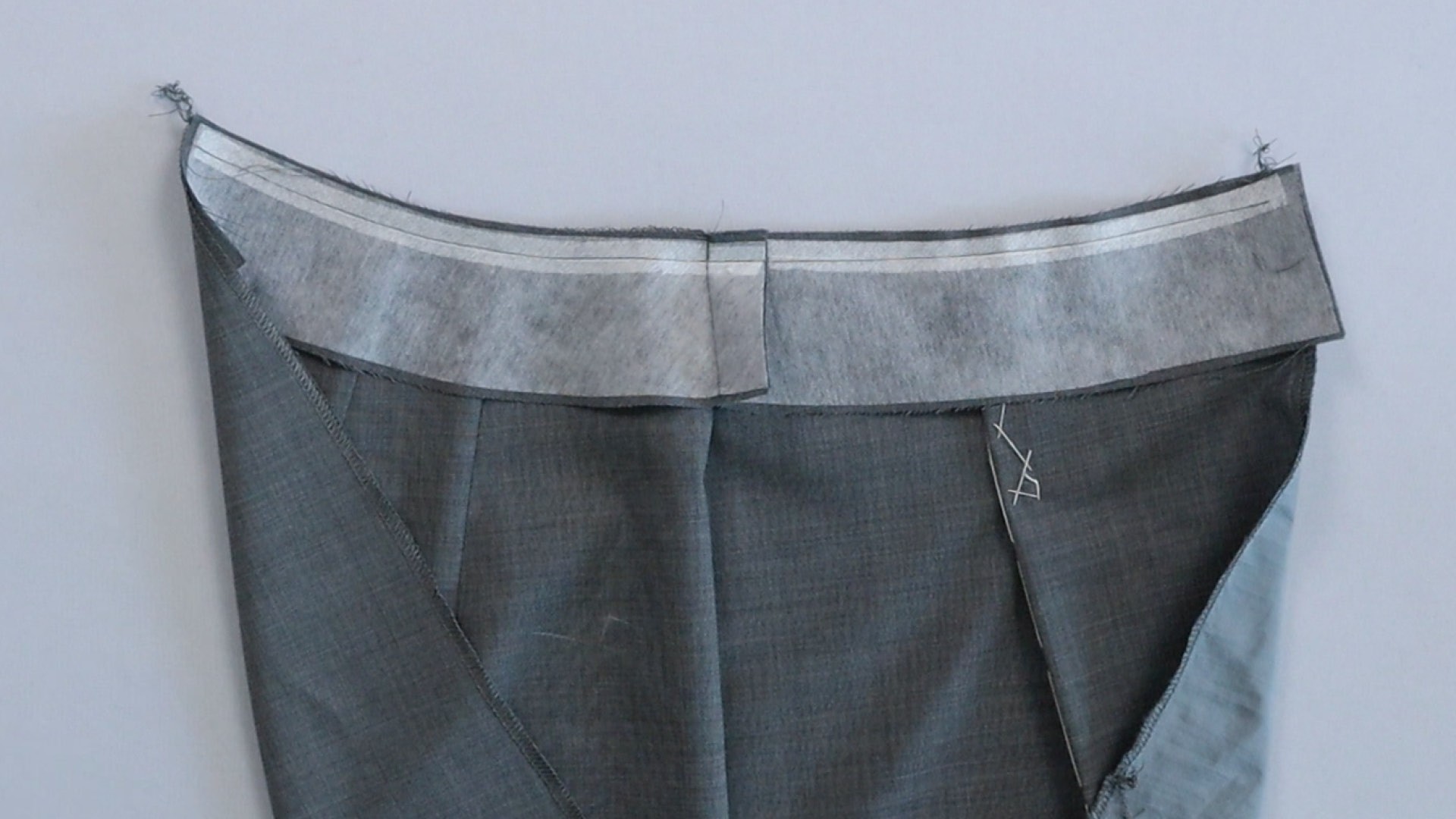
This is what it looks like when the waistband facing has been pinned to the trouser leg.
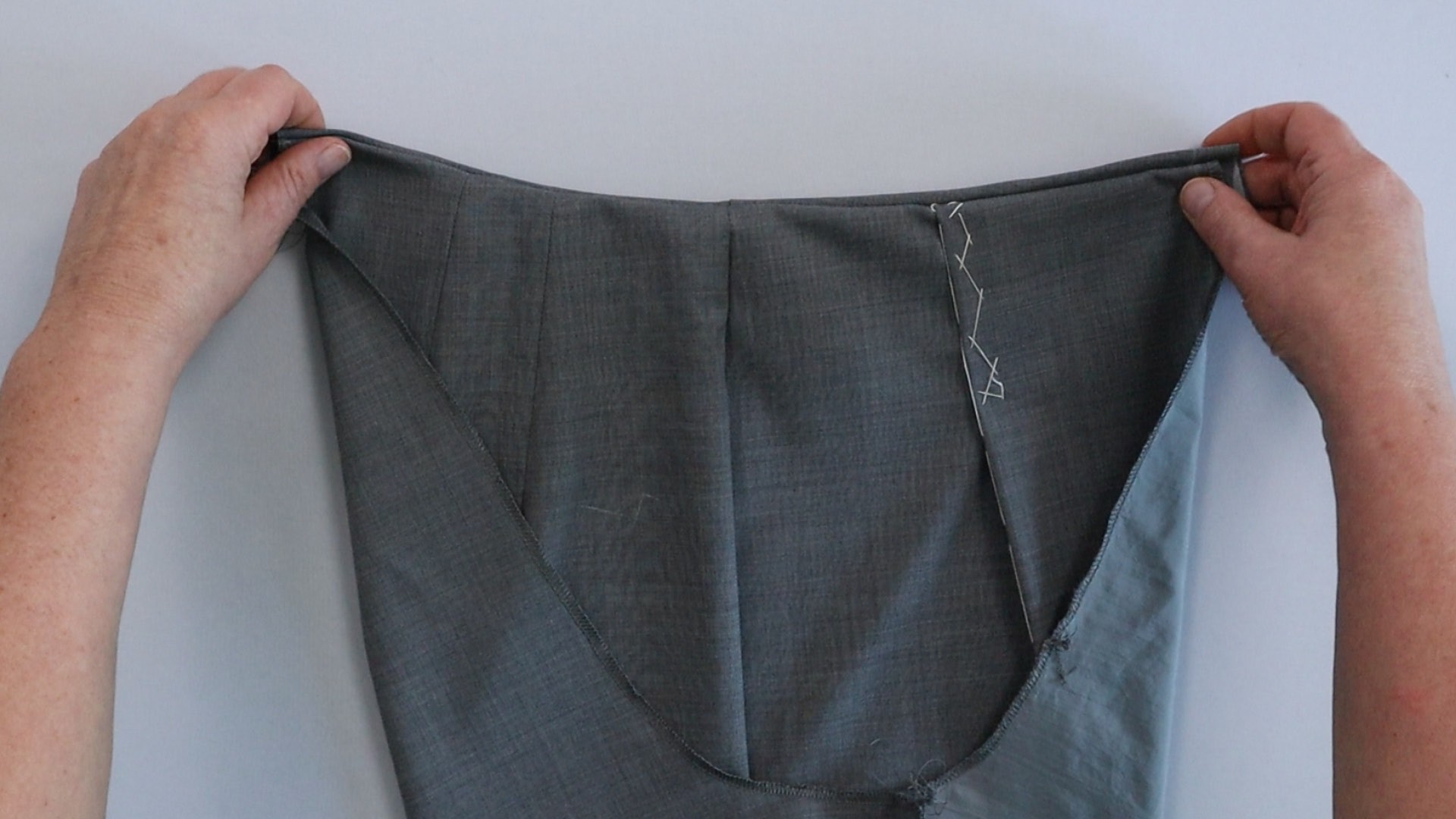
The waistband is turned inside out. This will give you a first impression of what the trousers will look like later.
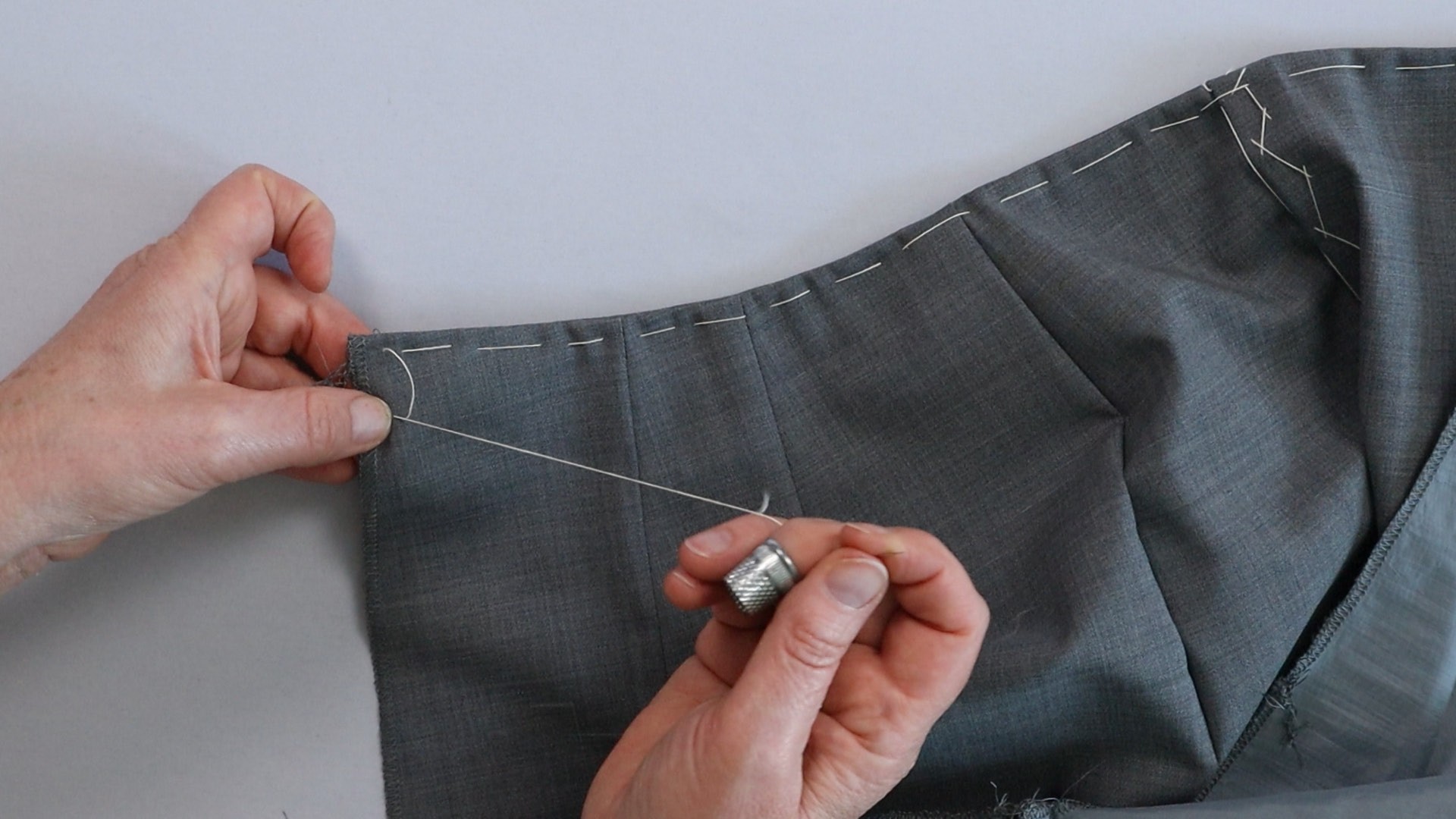
To prevent the cut-on waistband from slipping during the fitting, I pin it in place with a large hand stitch.
8. basting the crotch and seat seam
The two trouser legs can now be joined together.
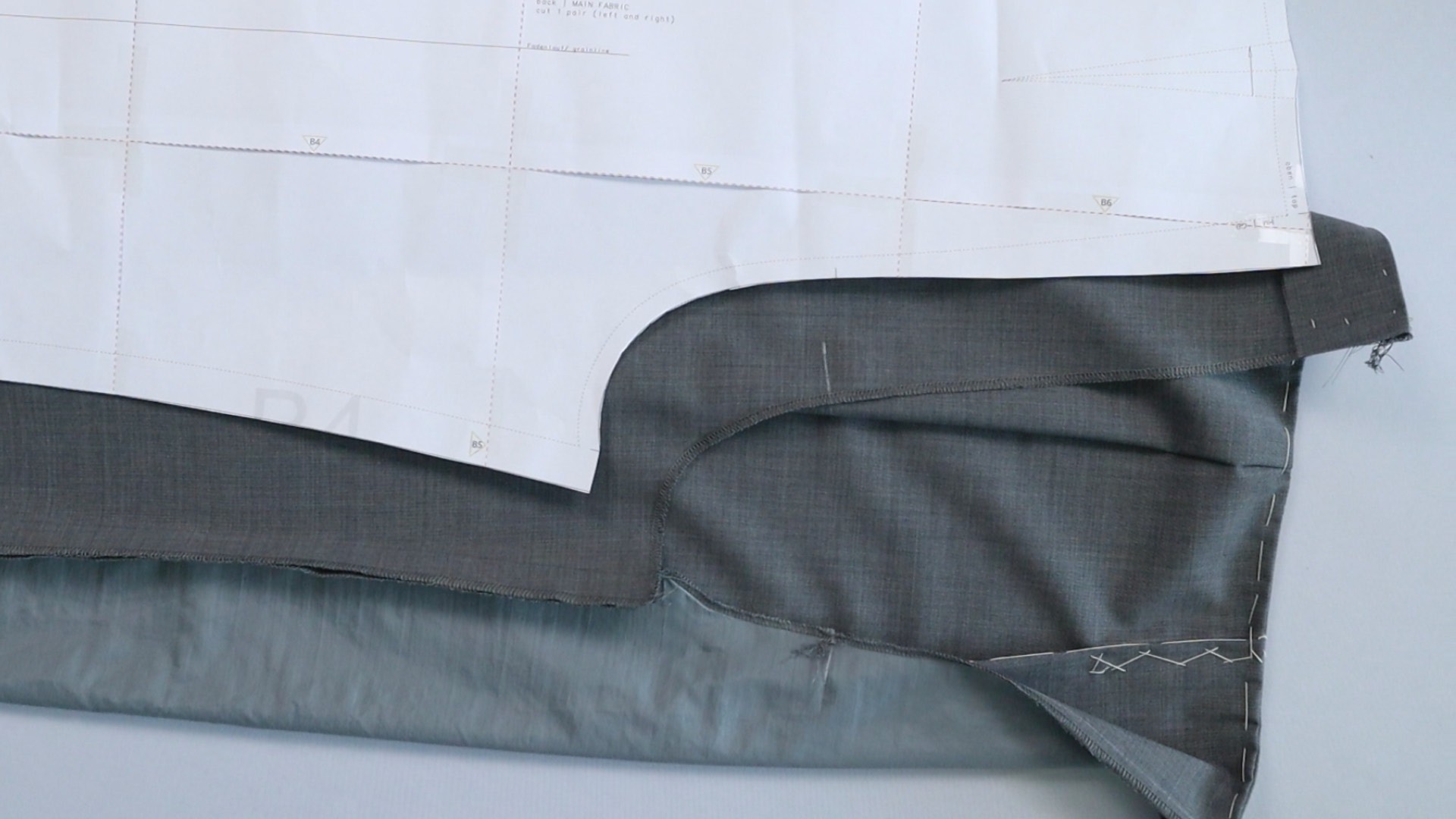
I mark the width of the seam allowance in the center back on the wrong side of the right trouser leg. You can tell the exact width by the notch at the waist edge. You can also measure in the pattern piece.
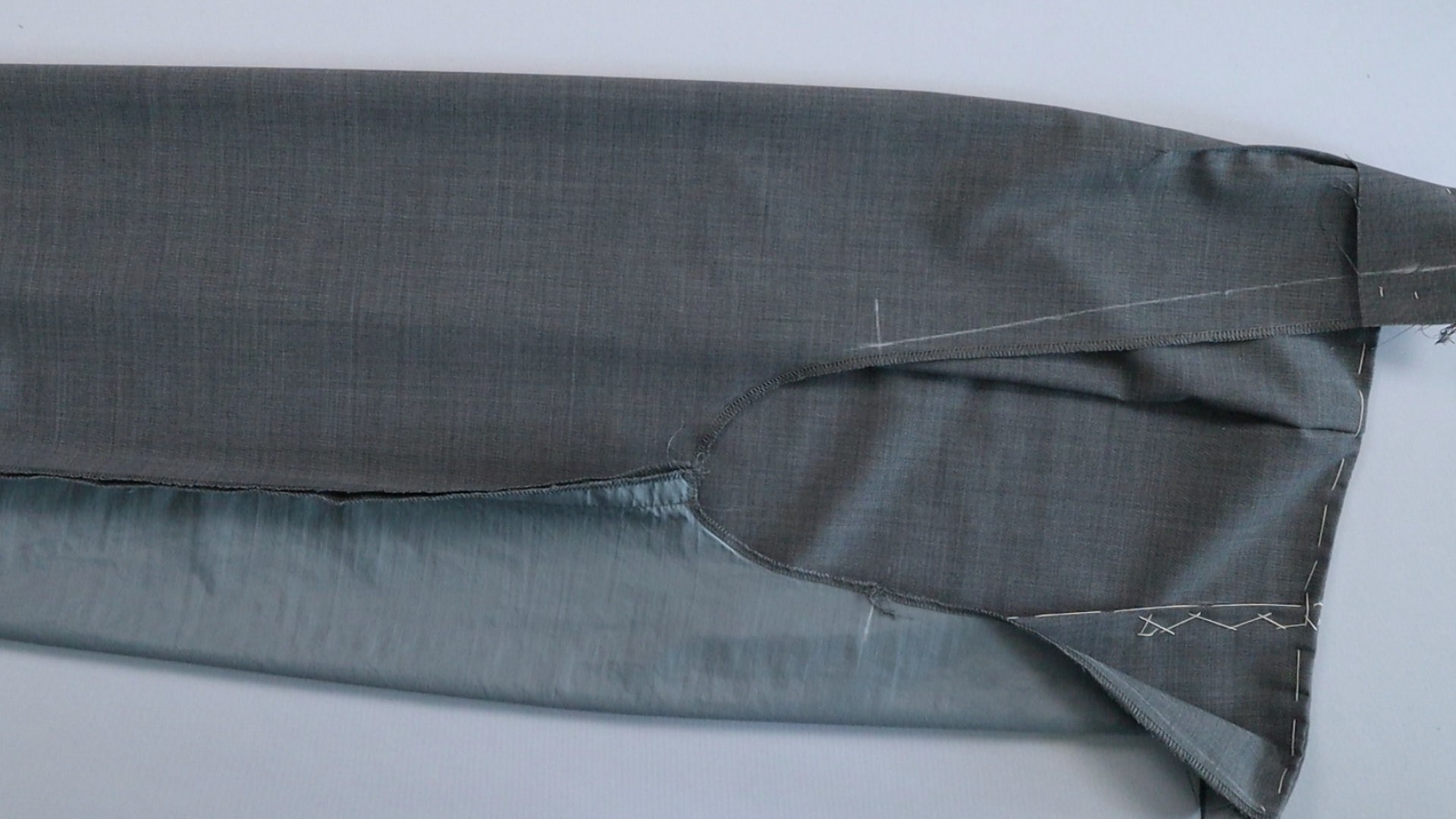
Then I transfer the snap to the lower crotch curve.
The course of the seat seam is determined by joining the two markings on the back trousers. With classic trousers, the seam width is usually wider towards the upper waistband edge so that adjustments can be made later if necessary.
I mark the fly end on the front trousers. The seam allowance is the same width between the two notches on the back trousers and the fly end. You can find the exact measurements in the pattern.
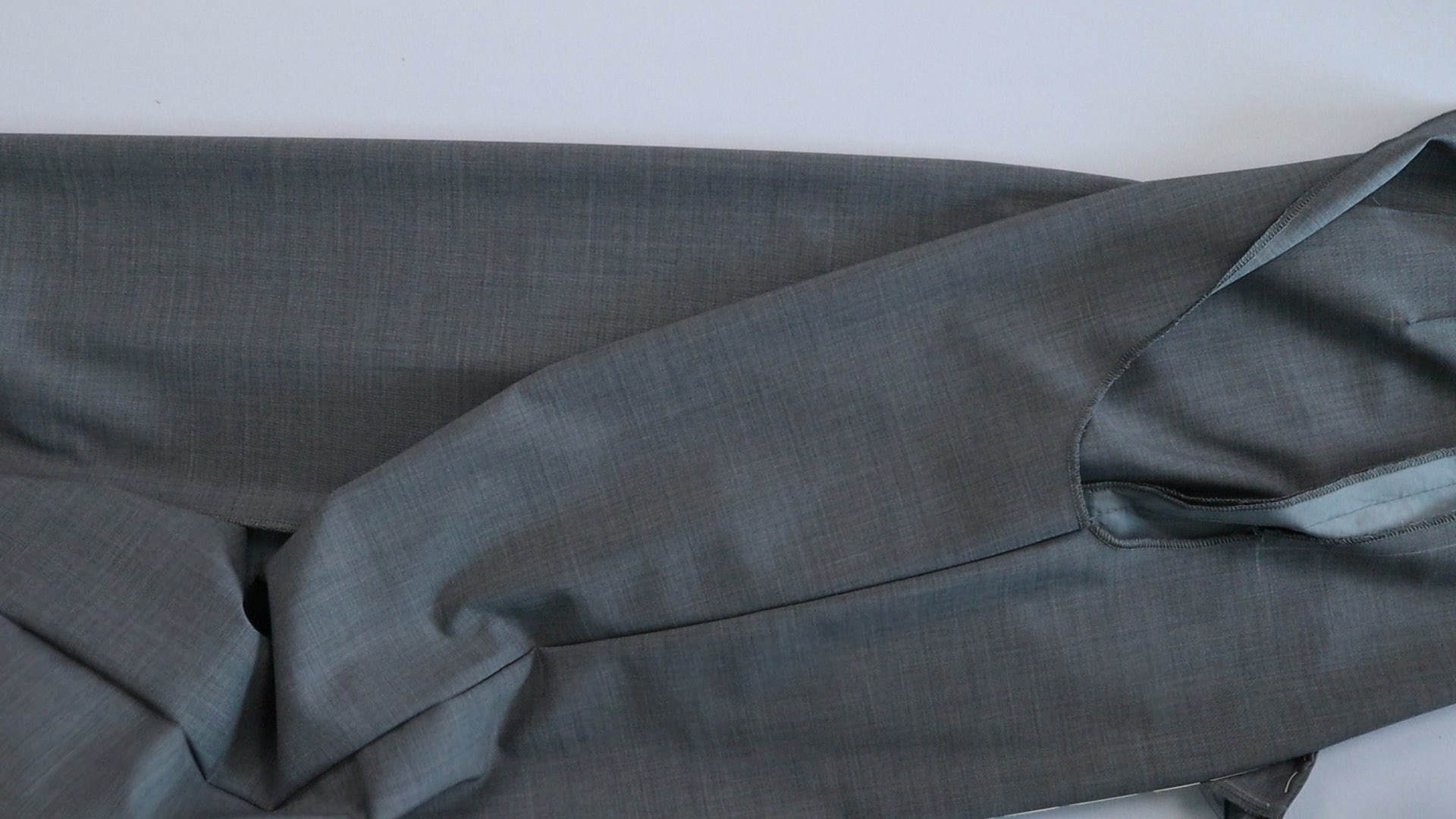
Then place the two trouser legs inside each other, right sides facing.
To do this, first turn the left trouser leg over so that the right side is visible on the outside.
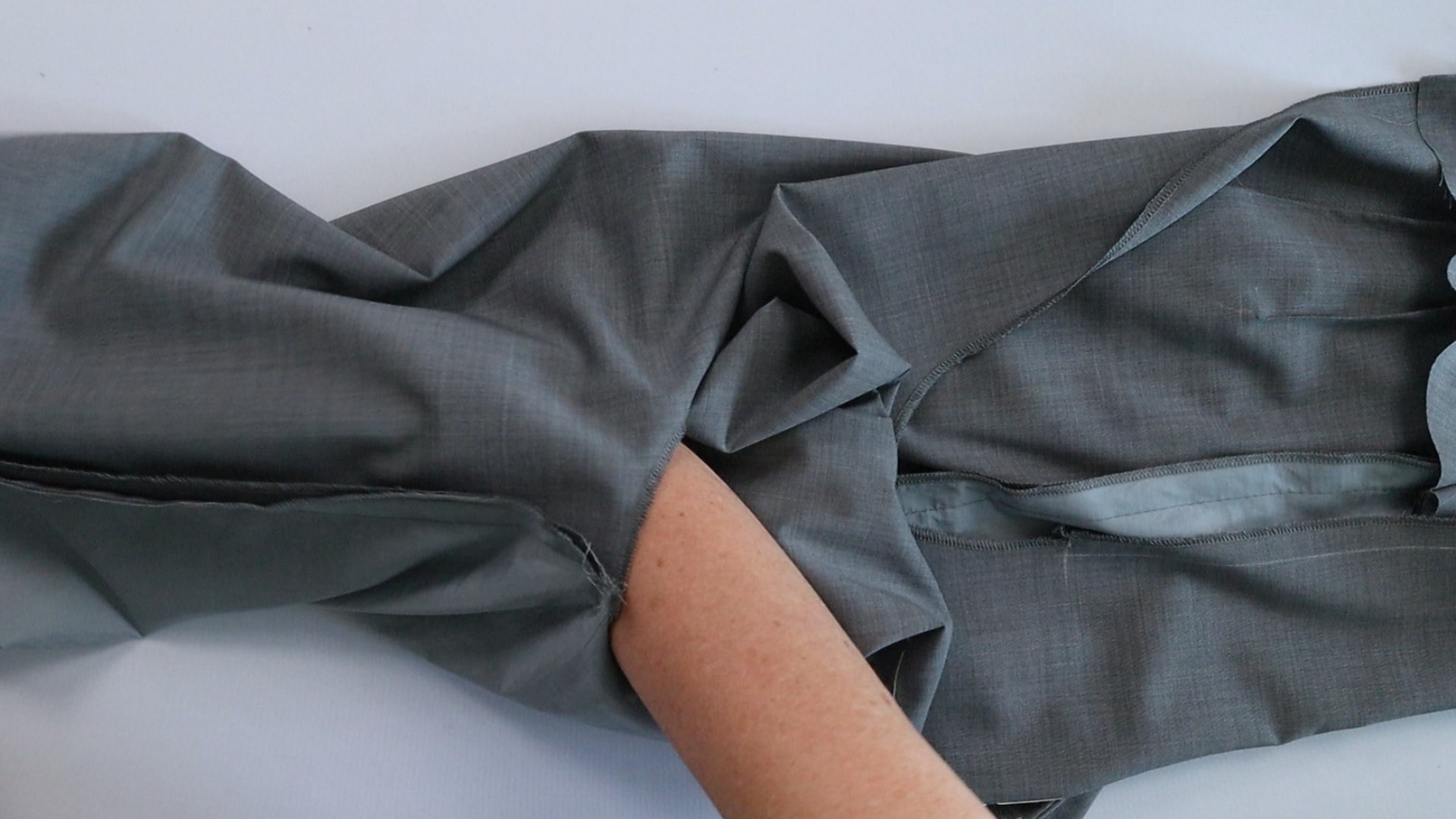
Then slide the turned left leg into the right trouser leg (on which you have marked the seam line in the crotch beforehand).
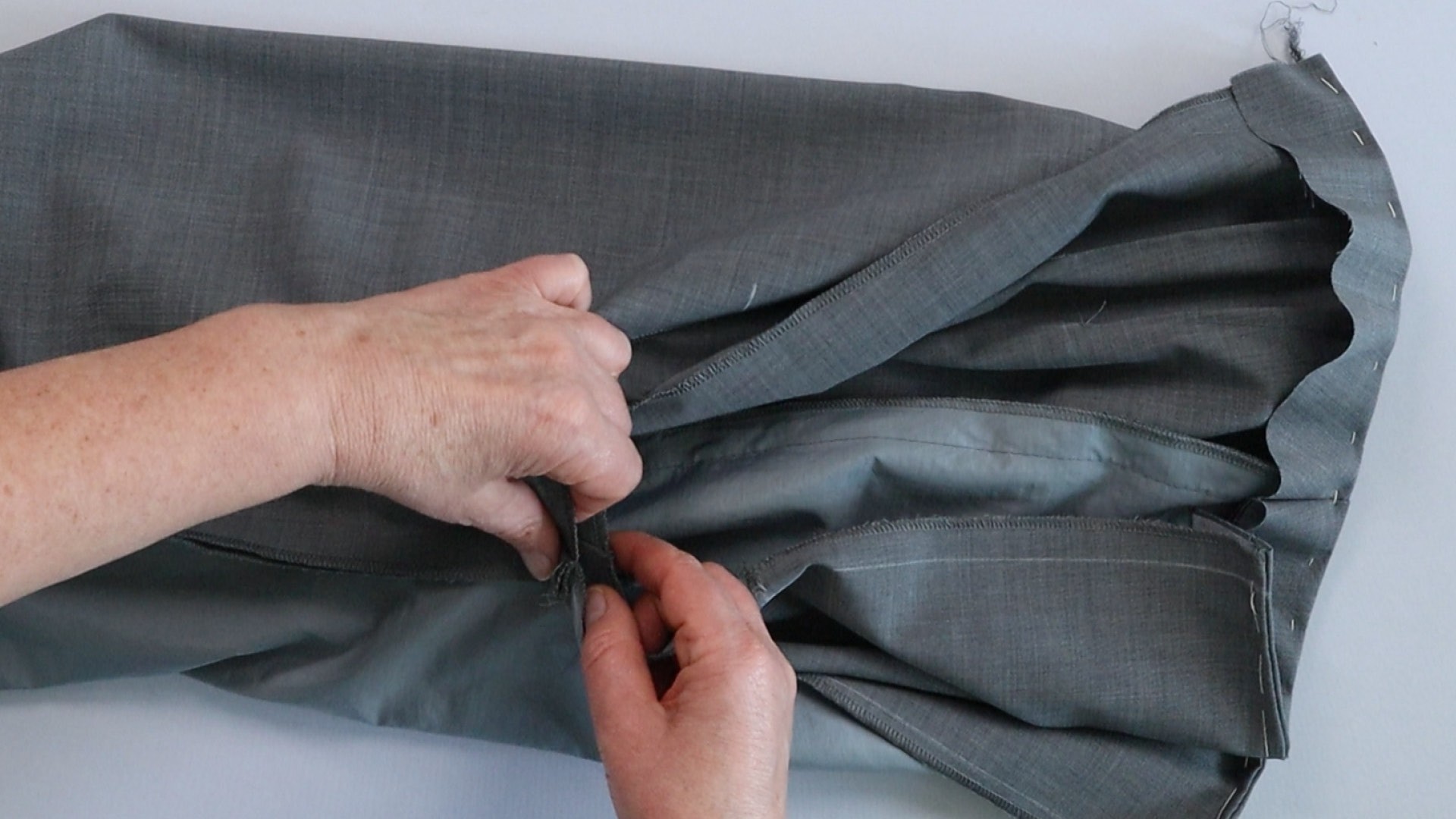
Make sure that the inner leg seams meet exactly in the crotch curve before you pin them.
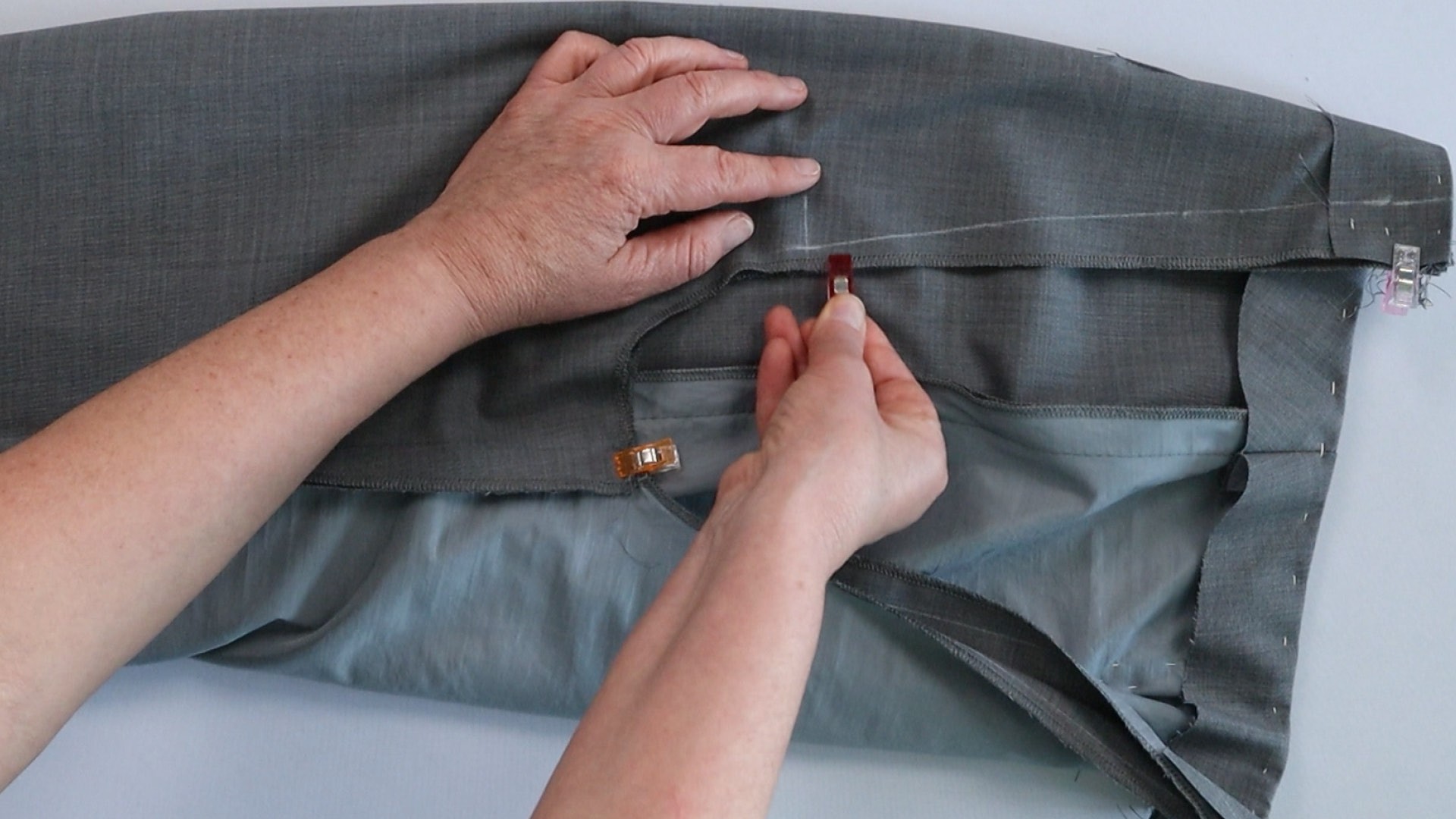
I lay the back trousers flush on top of each other at the seat seam and pin them together starting from the waistband edge.
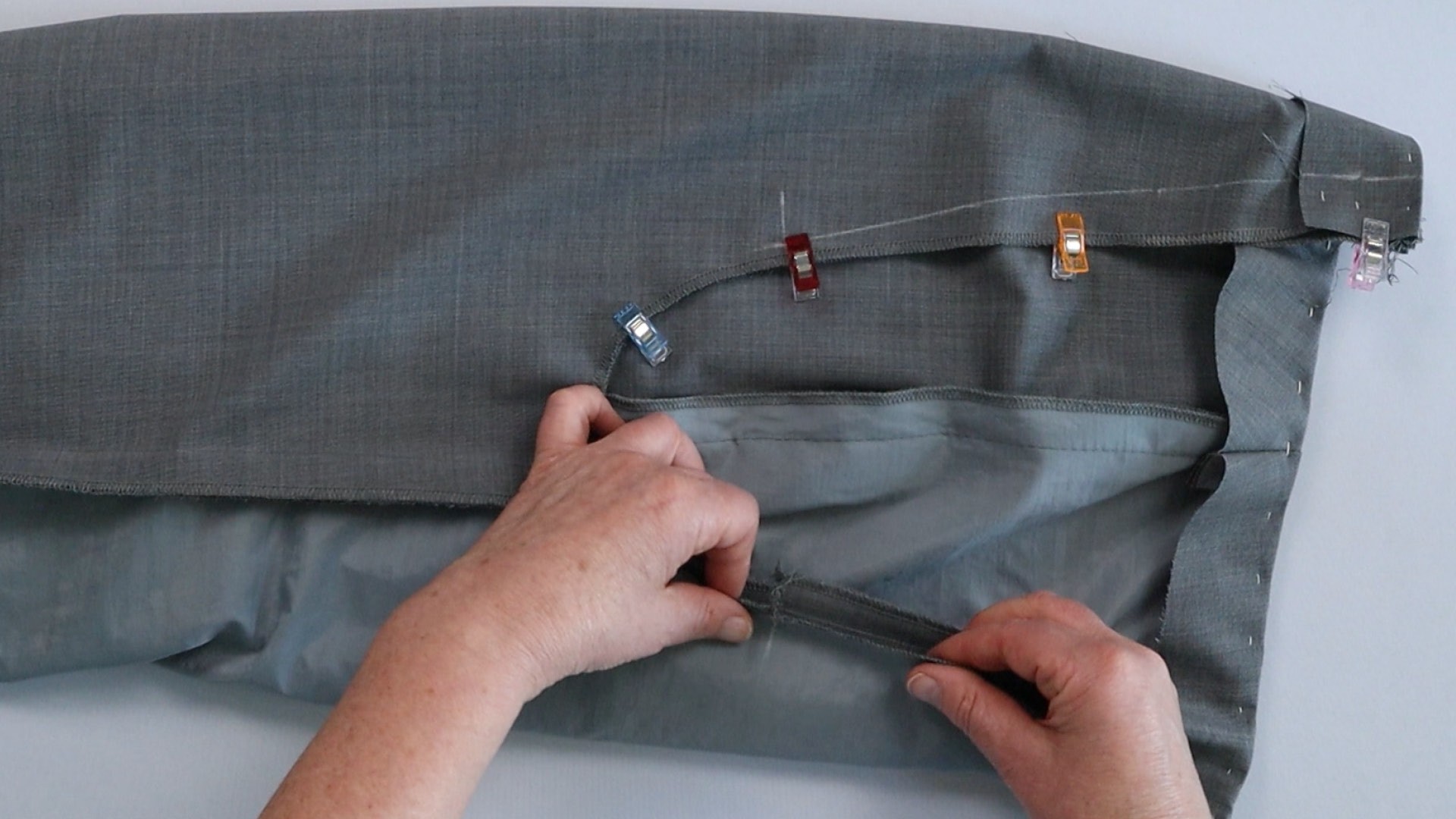
At the front, I also make sure that the pieces are flush at the crotch curve and that the center front fits exactly on top of each other.
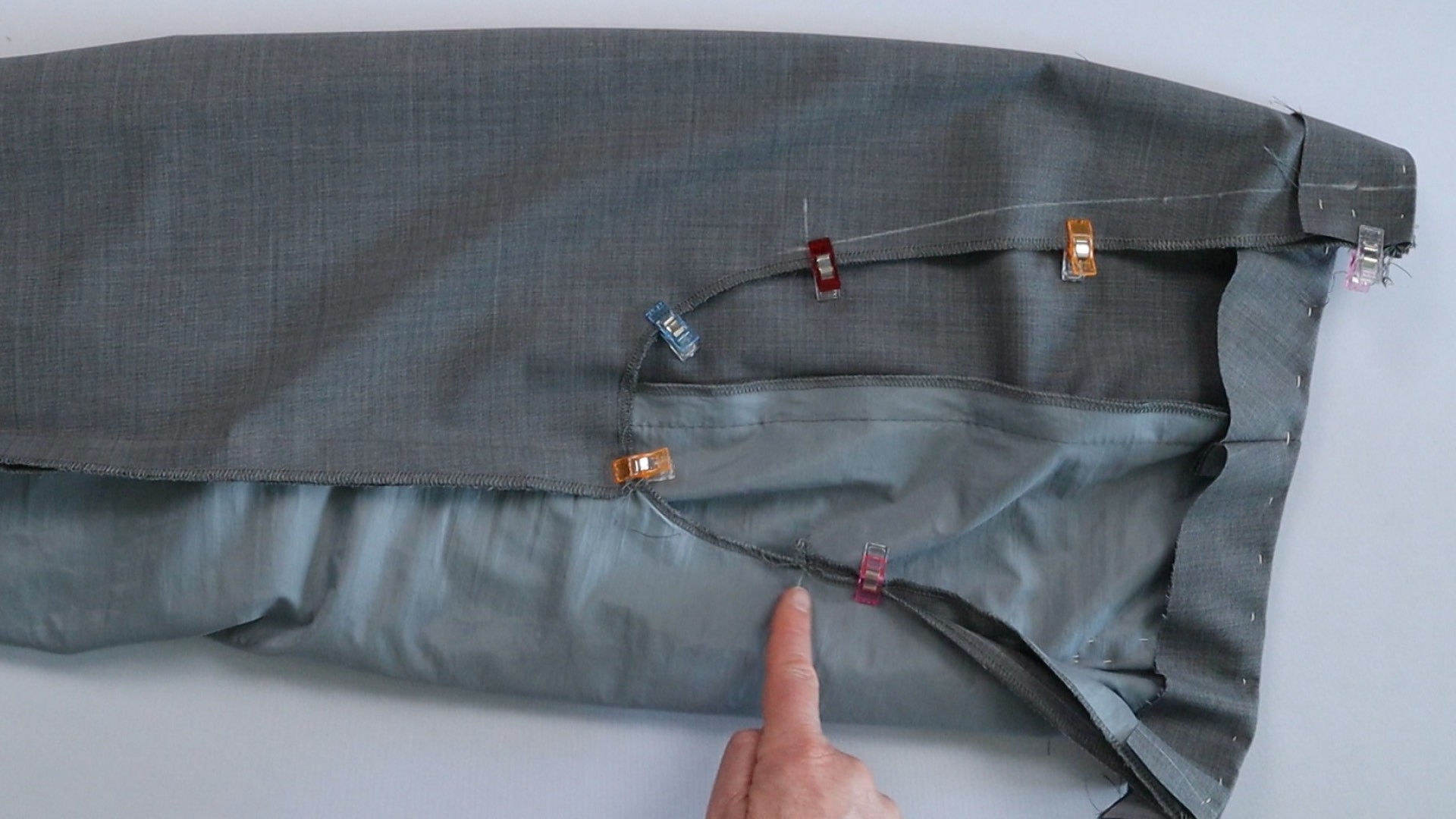
I pin the front trouser parts together until just above the marking for the fly end.
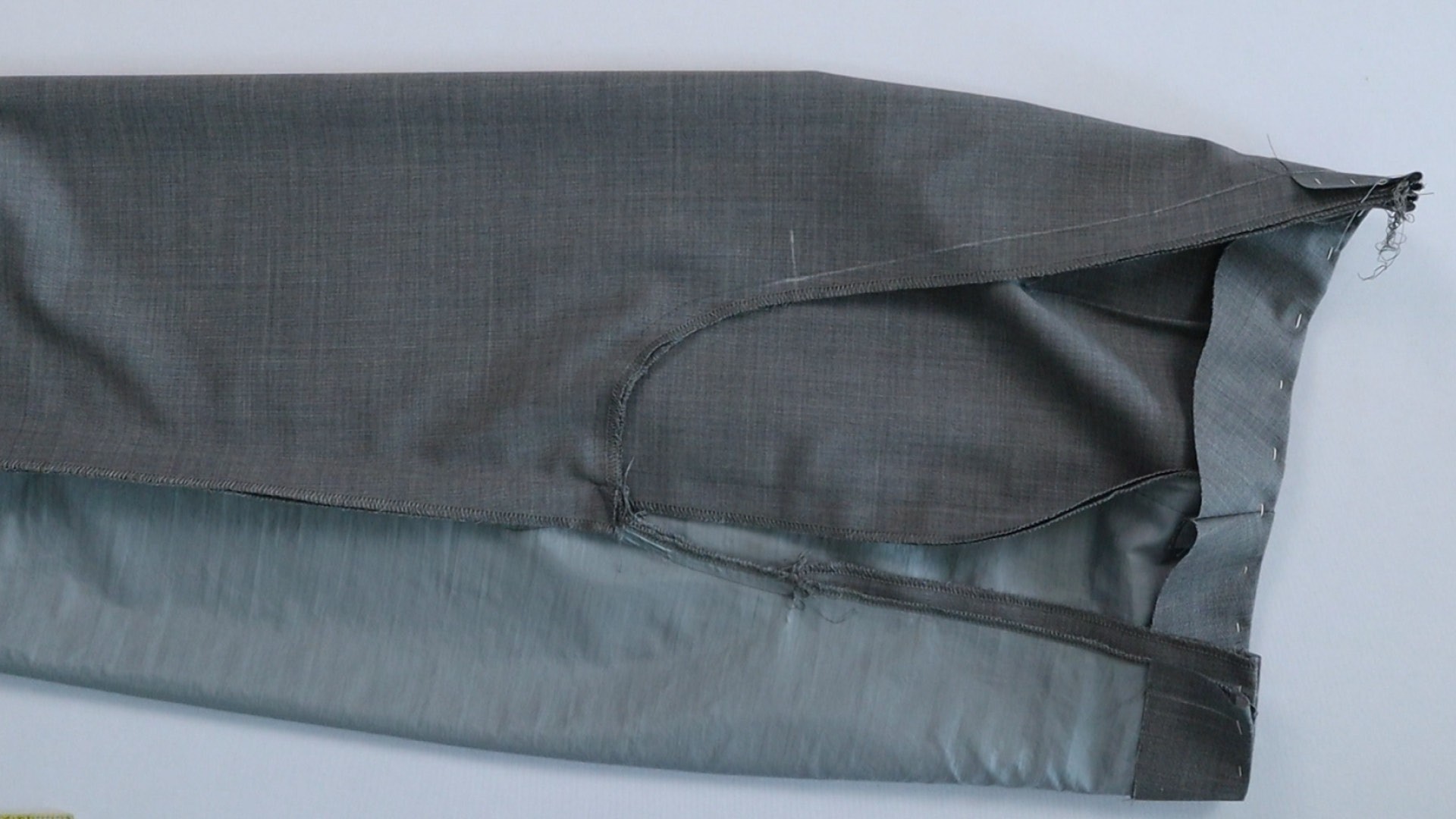
Now I sew from the waistband edge at the center back to the fly end on the front trousers using a large machine stitch. Alternatively, you can also baste the seam with a hand stitch.
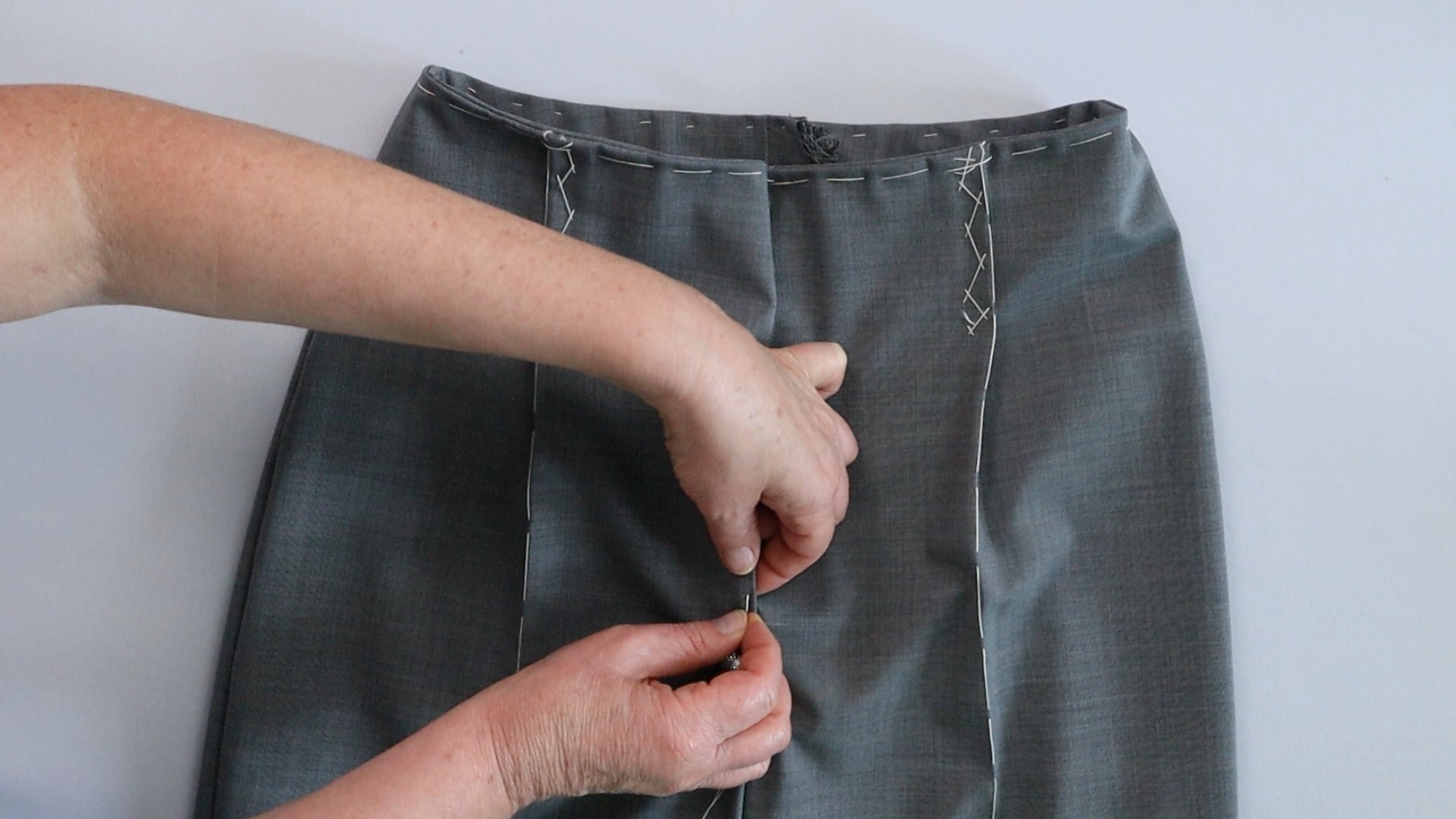
Then I turn the trousers so that the right side of the fabric is on the outside and baste the edge on the right front piece at the center front to the inside.
9. trying on the trousers
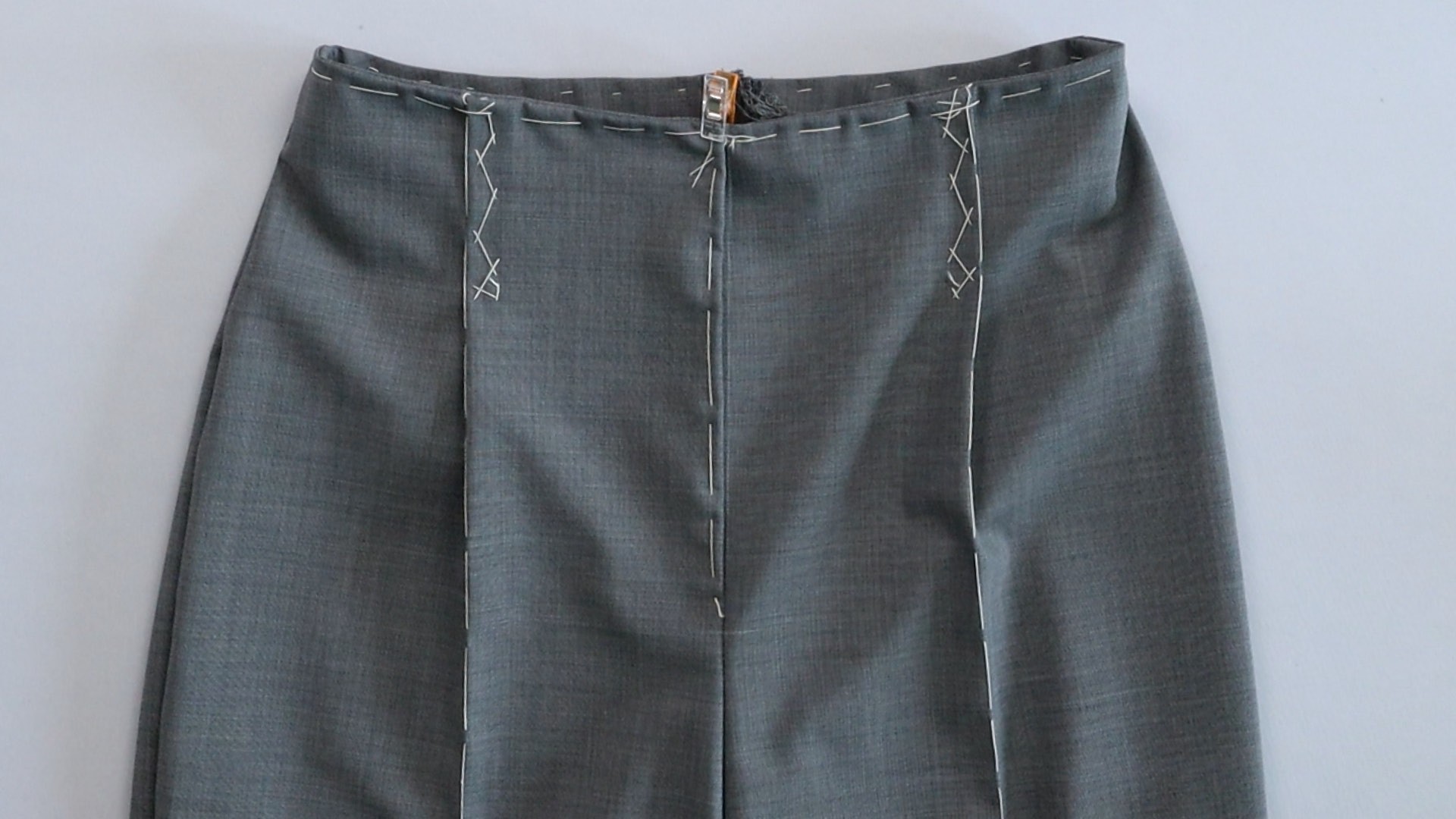
The pants are ready to try on for the first time!
Make sure that the center front lies exactly on top of each other and pin it to the edge of the waistband with a safety pin or clip.
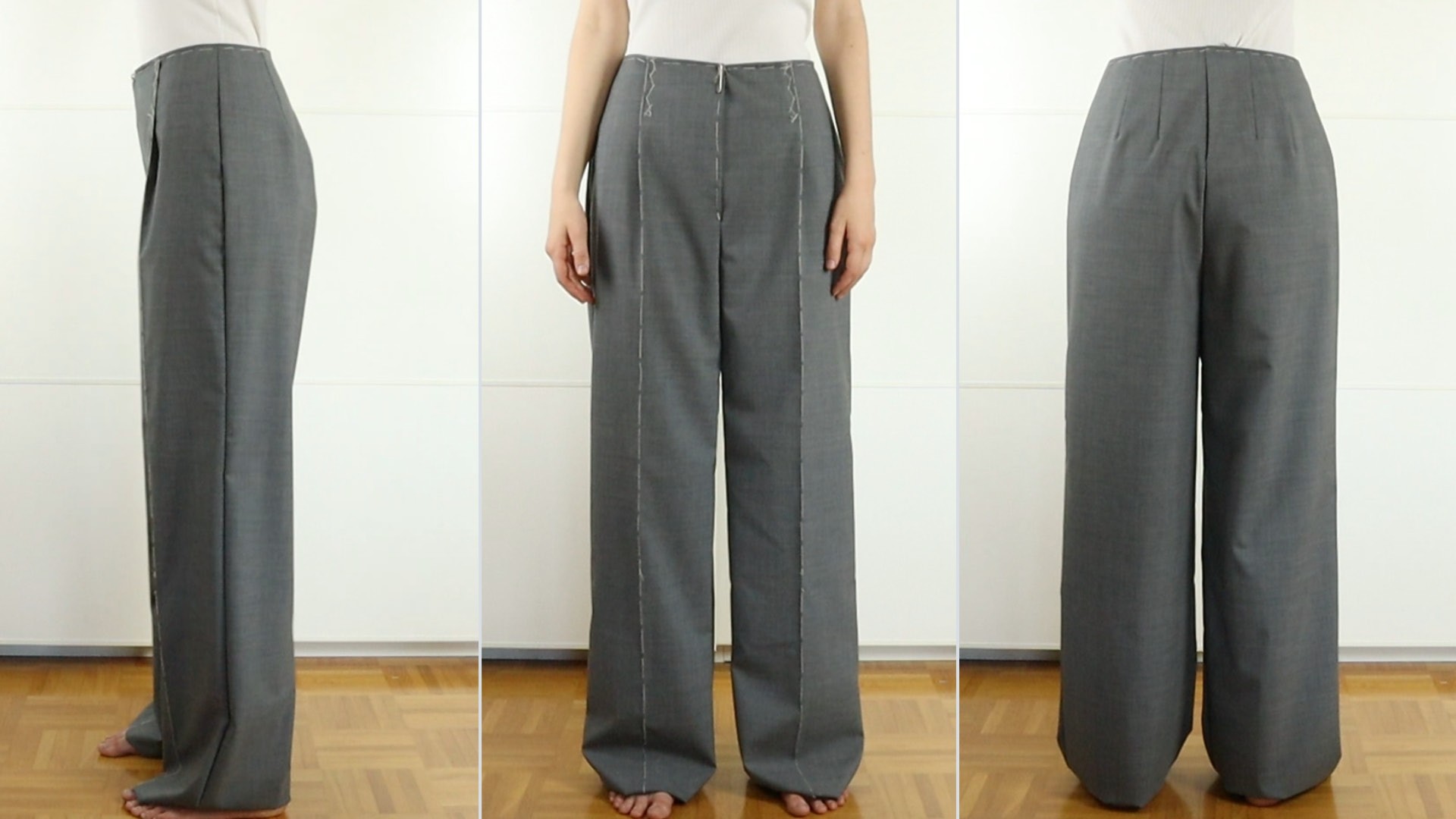
Here are a few tips on what to consider when trying on:
- To get an impression of how the trousers fit, I recommend taking photos that include at least the three perspectives in the picture above. You should take the photos as straight as possible – i.e. not at an angle from above or below.
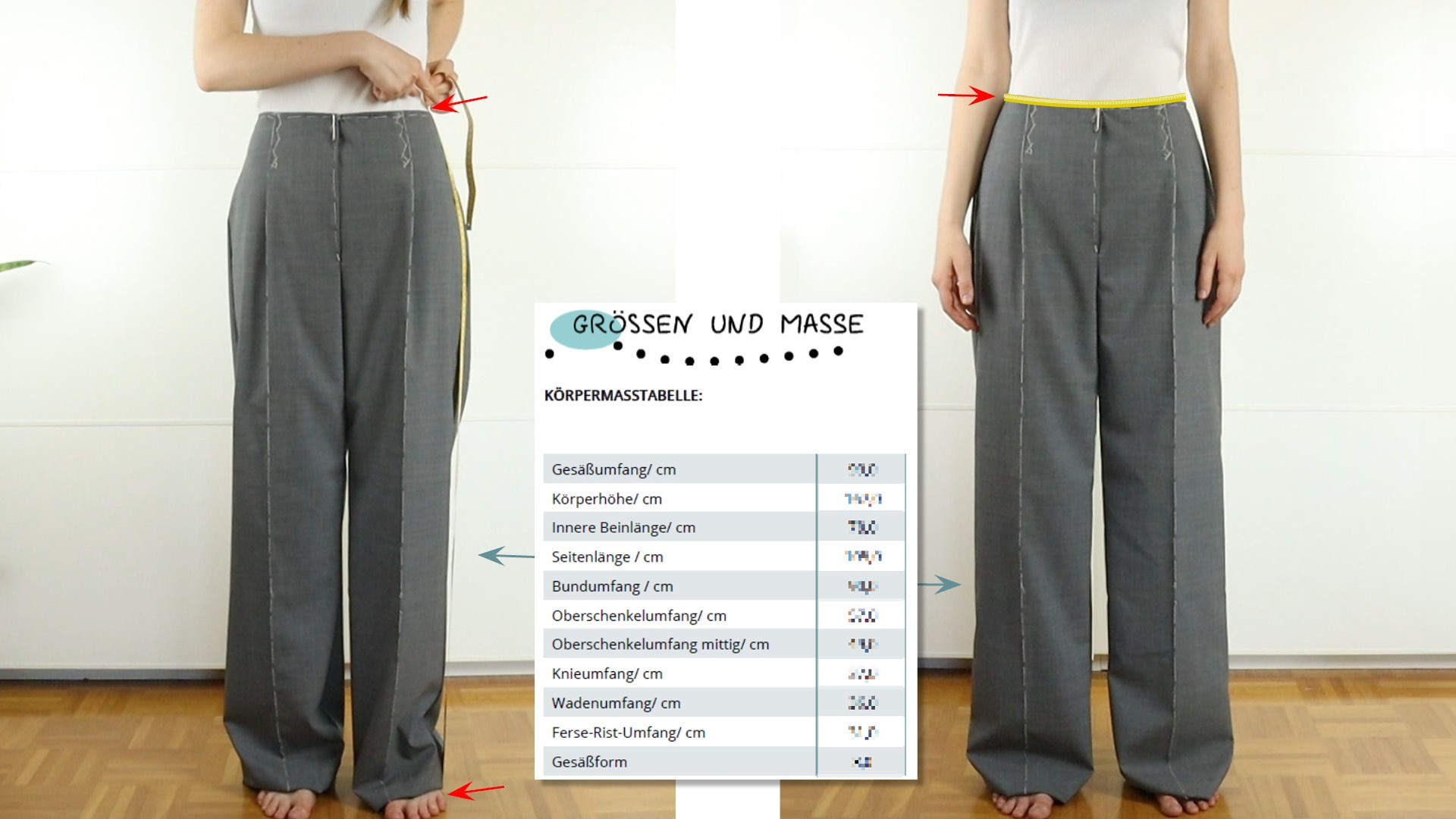
- Make sure that the cut-on waistband is at the right height. As there is still no button to close the pants properly, they can easily be pulled up a little too high or too low. To check this, you can measure the side length from the floor to the top edge of the waistband (see marking) and compare it with the side length you entered in the configurator.
- If the waistband ist at the right height but is still too tight or too wide, compare the measurement you entered when configuring with the circumference measurement at the point where your waistband now ist.
- If the trousers seem a little too wide at the hips, remember that pockets are still being worked in. Depending on the thickness of the fabric, they also need a little space. It is best to try the trousers on again briefly before sewing the waistband on the inside.
- The tighter the fit you have chosen and the less stretchy your fabric is, the more likely it is that the trousers will wrinkle at the back of the legs. This is because they have an “extra length” at the back, which you need so that you can sit down comfortably.
- Wrinkles sometimes look worse in photos than they actually are. Be sure to take another look in the mirror to see what it really looks like.
If you still have problems with the fit, please send me an e-mail with pictures of how the trousers look when worn (see above). I will then try to help you with the adjustments. This works much better at this point than at a later date.
10. transfer changes and undo seams
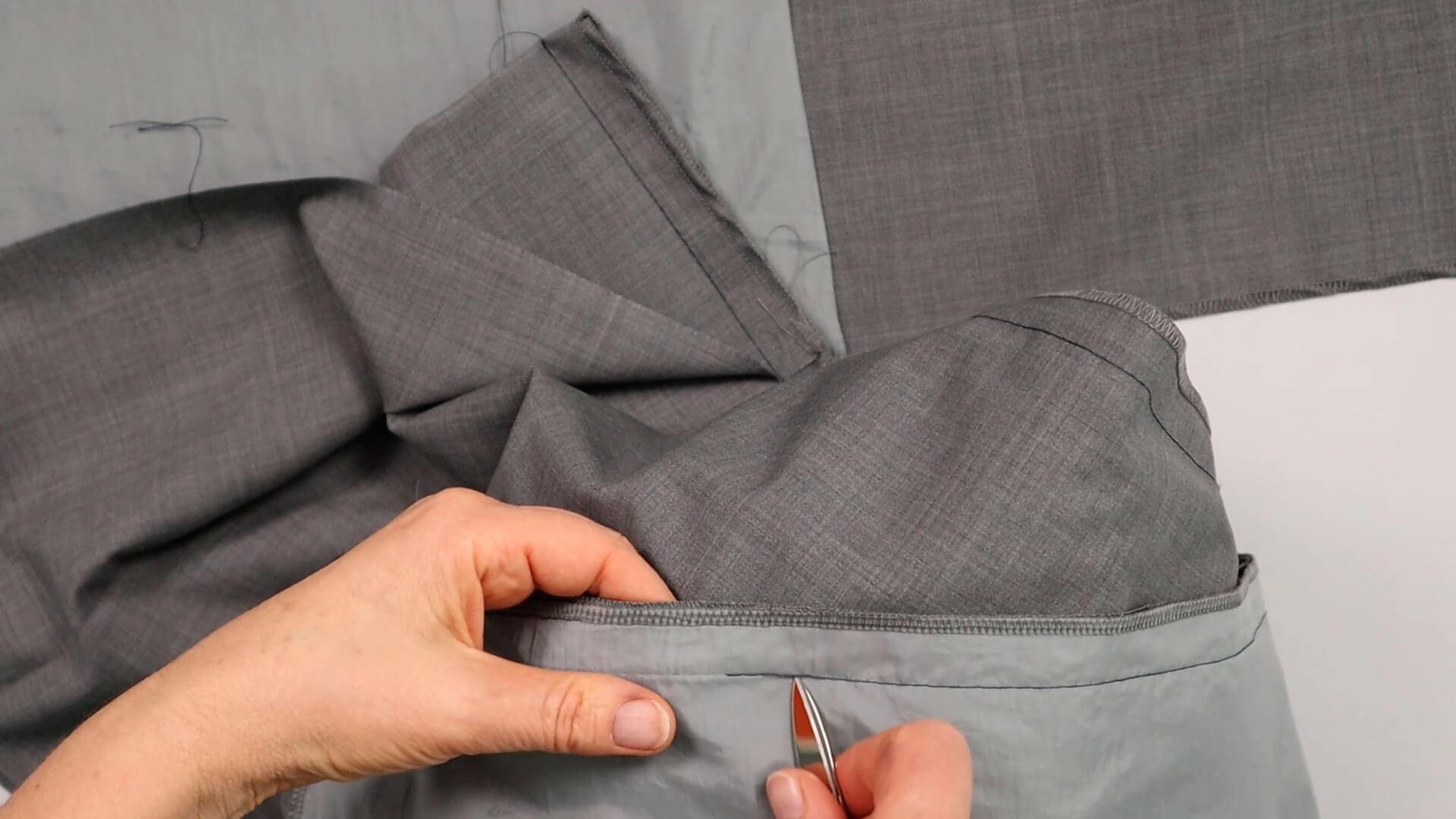
When you have finished trying on the trousers and have made any adjustments to the pattern, all the seams can be undone. Please note: the basting seams of the waistband and pleats are not removed.
If you have opted for closed pleats, you will find the next steps here.
11. cut the pocket opening of the front trousers to size
If the trousers have front wing pockets (not welt or seam pockets), these must now be cut to size.
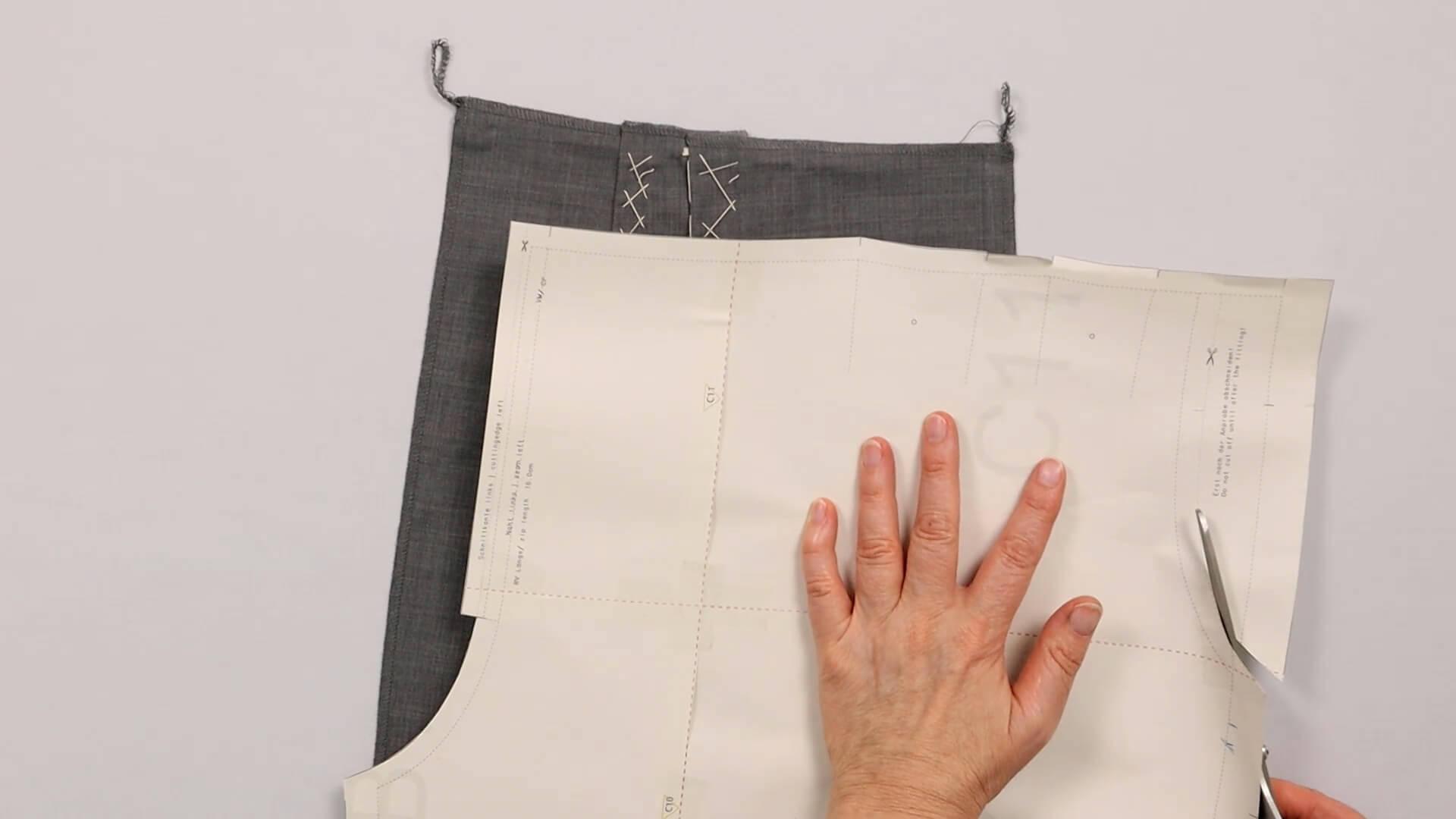
First, I cut away the pocket opening on the paper pattern according to the marking.
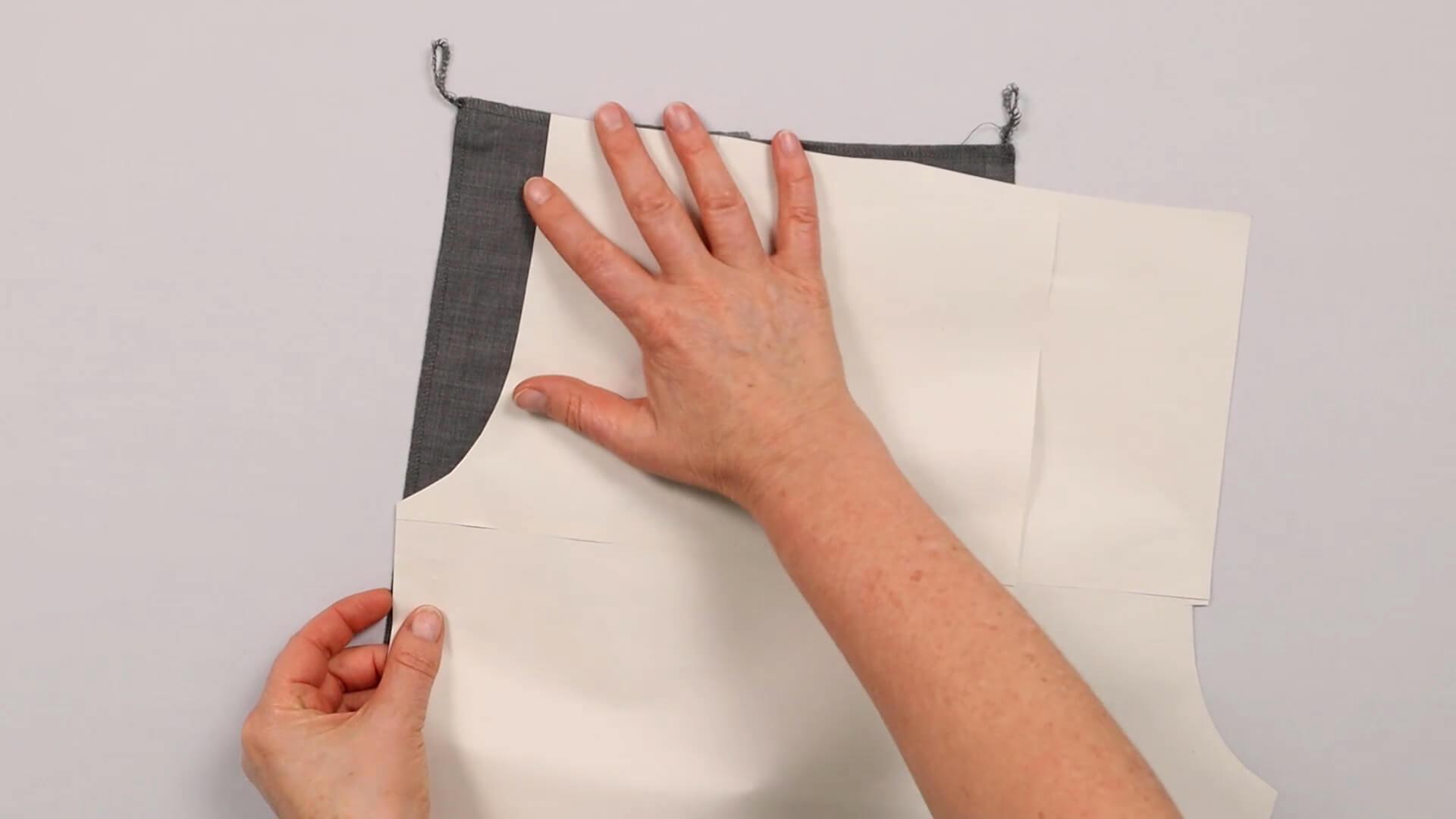
Then I place the pattern piece on the front trousers and mark the pocket opening on the right side of the fabric.
If you have unlined front trousers, you can now cut away the pocket opening. Repeat the steps for the second front trousers before continuing with the next step (see links below).
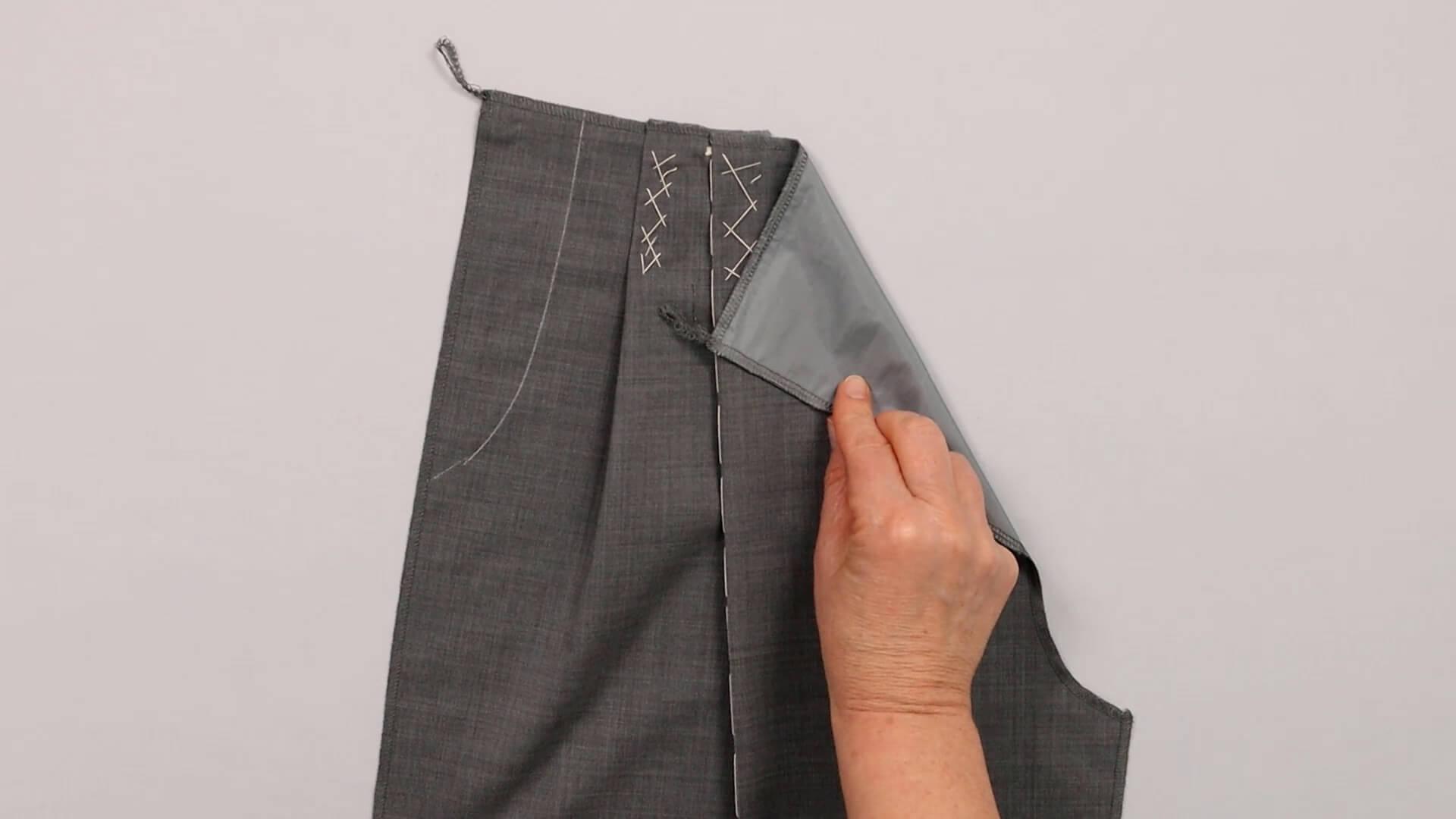
On the lined front trousers, I first secure the pocket opening before cutting off the excess fabric.
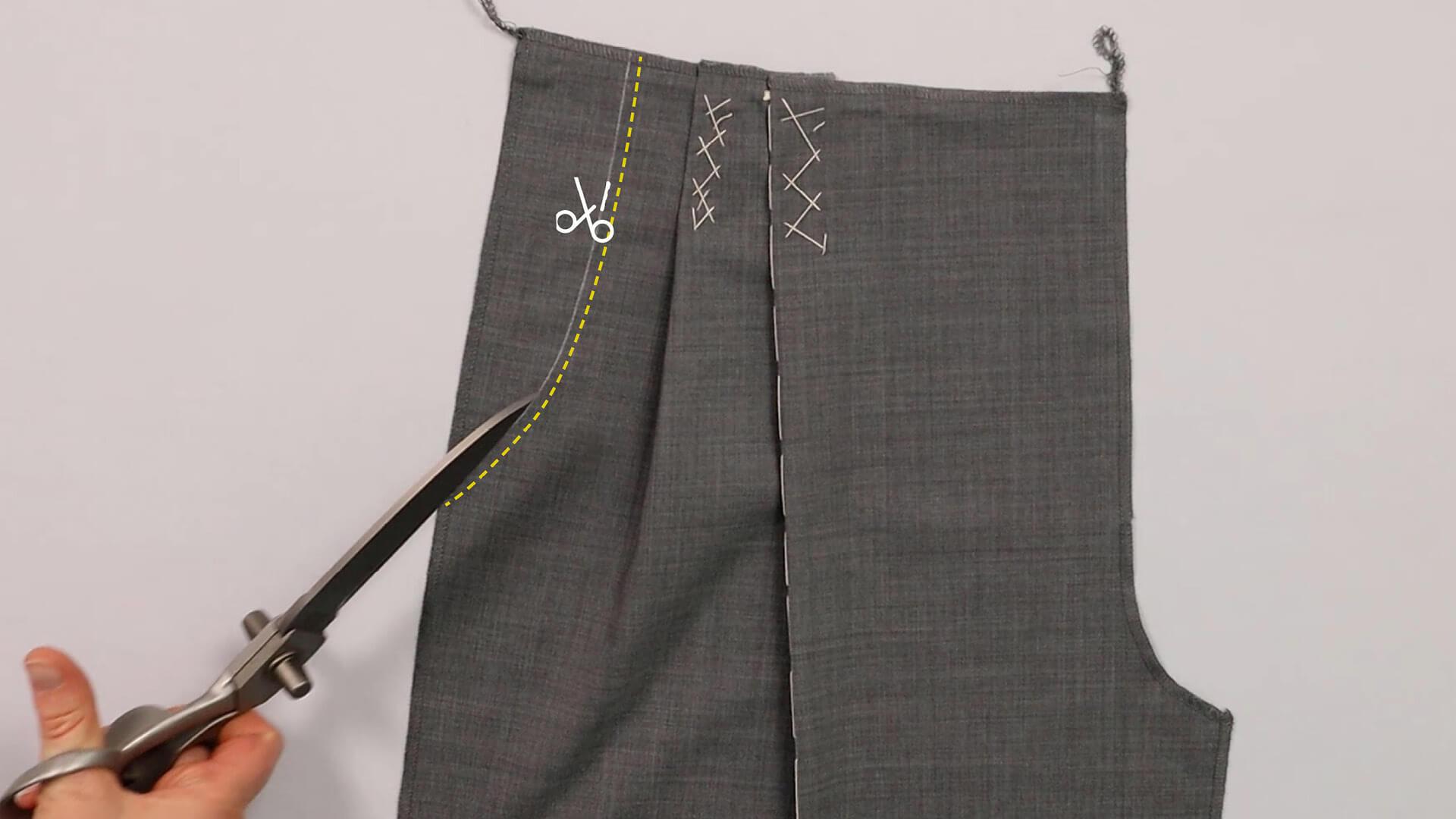
To do this, I sew through both layers of fabric just next to the marking. I can then cut away the pocket opening at the marking. I repeat these steps for the second front trousers.
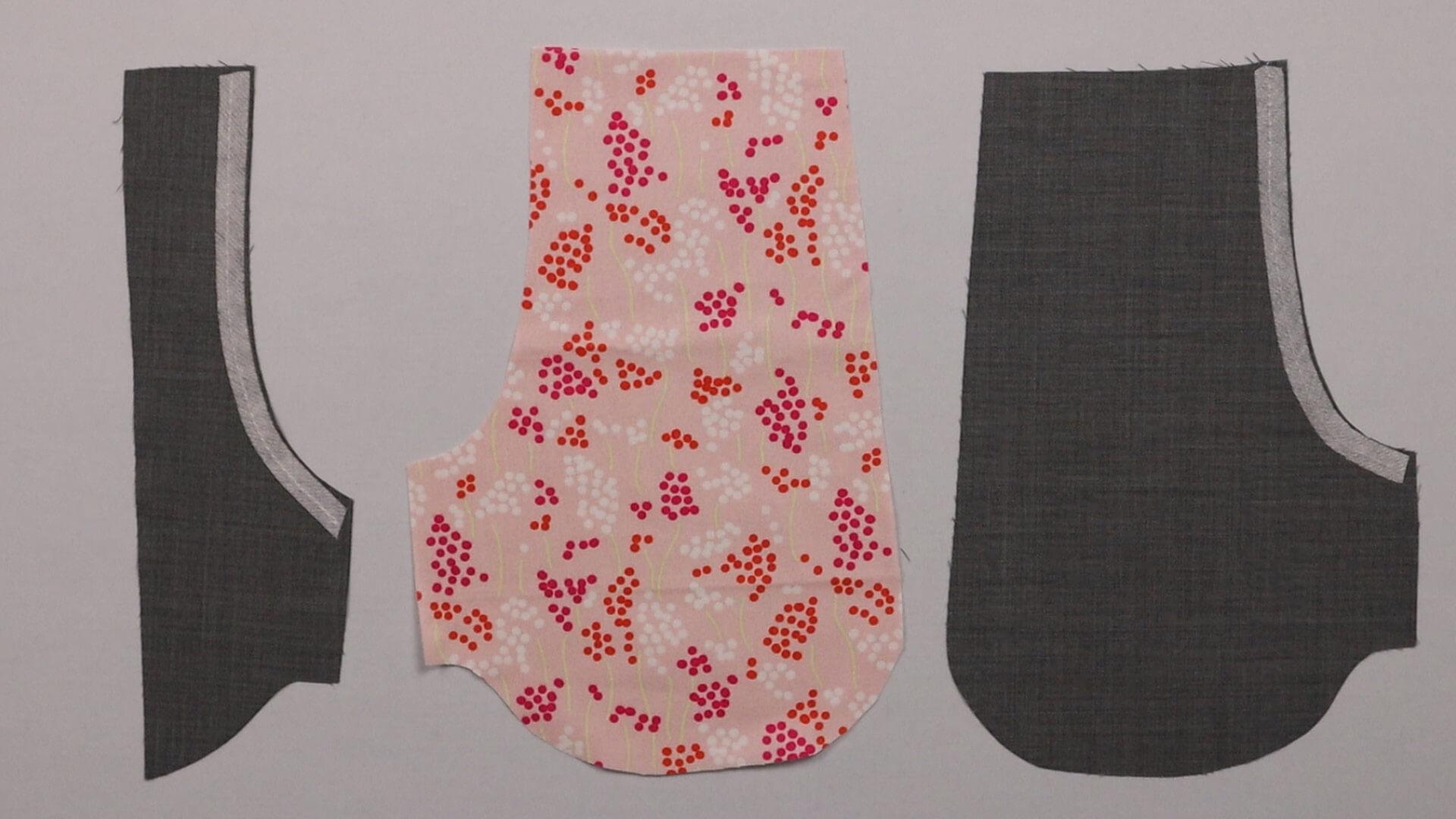
In the case of lined trousers with pockets, reinforcing the edge on the lining of the front trousers would not work well. Therefore, the pocket opening is reinforced on the facing of the upper pocket bag on the left side of the fabric, as shown in the picture on the left.
If you sew the upper pocket bag without a facing, the pocket bag itself will be reinforced (right picture).
Here you will find the links to the next steps. Select the link that belongs to the pocket shape you have chosen.
- Sew patch pockets on trousers #TH01
- Sew double welt pockets on trousers #TH02
- Sew welt pocketsinto trousers #TH03
If you don’t want pockets on the back trousers, continue here:
If you’re not quite ready yet and perhaps want to start at the beginning, you’ll find some links here: